Card games are a fun and simple way to bring the whole family together. Whether you’re at home, on vacation, or waiting at a restaurant, a deck of cards can turn any moment into playtime. They’re easy to pack, quick to learn, and great for building skills like matching, memory, counting, and turn-taking.
This post contains affiliate links. As an Amazon Associate, we earn from qualifying purchases at no extra cost to you.
What You’ll Find in This List
Card games we actually play as a family
Games that work for toddlers through elementary kids
Easy ways to modify games so everyone can join
Don’t Worry About the Age on the Box
I don't use the age recommendation on the box to determine if my child is able to play the game. If it is a game that looks fun and engaging, I will adjust and modify how to play so my child, no matter what age, can join in on the fun. The more we play, the easier it gets for them and eventually we get to play the original way the game was intended to be played. So don't focus on the age, adjust the game so all can play!
Rainbow Pirates: A Rummy-Style Family Card Game
Ages: 7+ (4+ with help)
Play time: 20–30 minutes
Skills: Set building · Friendly competition · Strategy
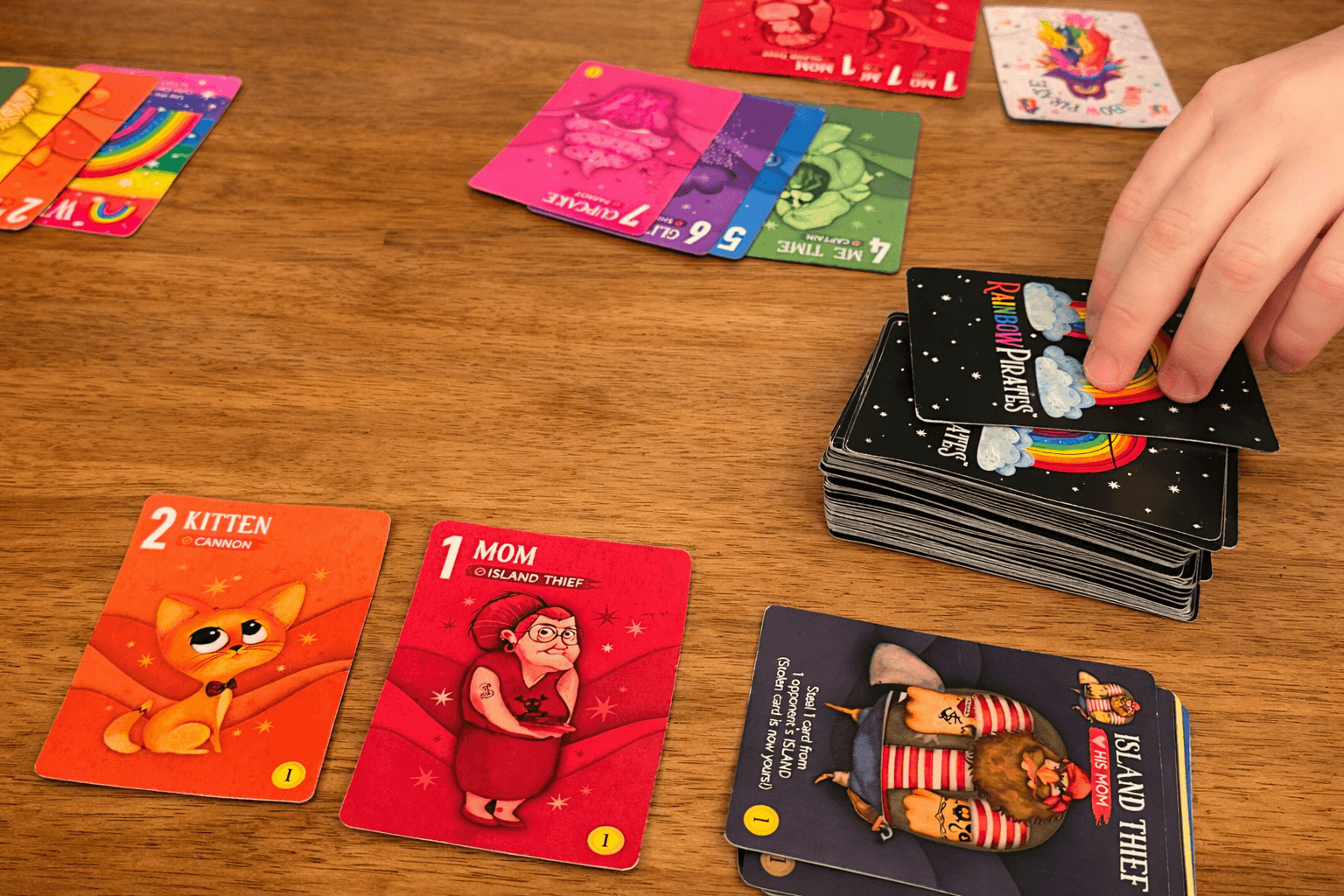
Rainbow Pirates is one of our family's favorite card games because it's easy to learn while still offering plenty of strategy for both kids and adults (In fact, our 5-year-old often beats us!). If you're new to the game, we also have a complete How to Play Rainbow Pirates guide that walks you through the rules before you play.
Players take turns collecting and playing rainbow-colored cards to build color sequences on their board. Longer sequences score more points. But watch out, opponents can play action cards to steal your cards, break up your sets, or block your progress.
The game ends when one player has made two full rainbows of cards. The players total up their points and the player with the most points wins.
With fun and engaging artwork, and a balanced mix of luck and strategy, Rainbow Pirates is THE go-to for our family that is enjoyed by both kids and parents!
🛒 Find Rainbow Pirates on Amazon
Uno: A Classic Family Card Game for All Ages
Ages: 5+ (3+ with help)
Play time: 10–20 minutes
Skills: Color recognition · Number recognition · Learning to win and lose
We have so many different versions of Uno that are played at our house! From Classic Uno, Uno Attack, and even Disney Uno. Uno is a game that our kids began playing at a young age – it's our 3-year-old's favorite game right now! Kids can start by just matching the colors. Once they have that down, they can move on to matching numbers. The strategy part will come later, but that’s part of the fun as they grow with the game.
What makes Uno a favorite for our family is its mix of simplicity and surprise. The rules are easy, match a card by color or number, or draw if you can’t. But the action cards (Skip, Reverse, Draw Two, and Wild) keep everyone on their toes and add just the right amount of strategy. And of course, nothing beats the thrill of being able to shout “Uno!” when you’re down to your last card.
That’s why Uno works for every age. It’s simple enough for little ones to join in, but it still challenges older kids (and parents!) to think ahead. Along the way, kids are building color and number recognition, practicing turn-taking, and learning to win (and lose) with a smile. It’s a family favorite and one of our first games to review for a reason!
Another version we’ve had fun with is Uno Spin! It plays a lot like classic Uno, but certain cards make you spin the wheel when they’re played. And you never know if that spin is going to help you or hurt you!
You might get lucky and be able to discard all the cards of one color from your hand, or you might have to keep drawing until you find a certain color. Other spins can even change the game for everyone, like making each player take two turns instead of one. The spinner adds just enough unpredictability to make every game feel a little different, while still keeping the simple Uno rules that kids already know.
Flip 7: A Press-Your-Luck Card Game Kids Can Grow Into
Ages: 6+ (3+ with help)
Play time: 15–20 minutes
Skills: Simple math · Decision-making · Risk assessment
We love playing this game as a family. It is easy enough for our 3 year old to play, yet still engages our 7 year old. We also play this game with all adults and it is just as fun! This game works for all ages, which makes it a must have in your household!
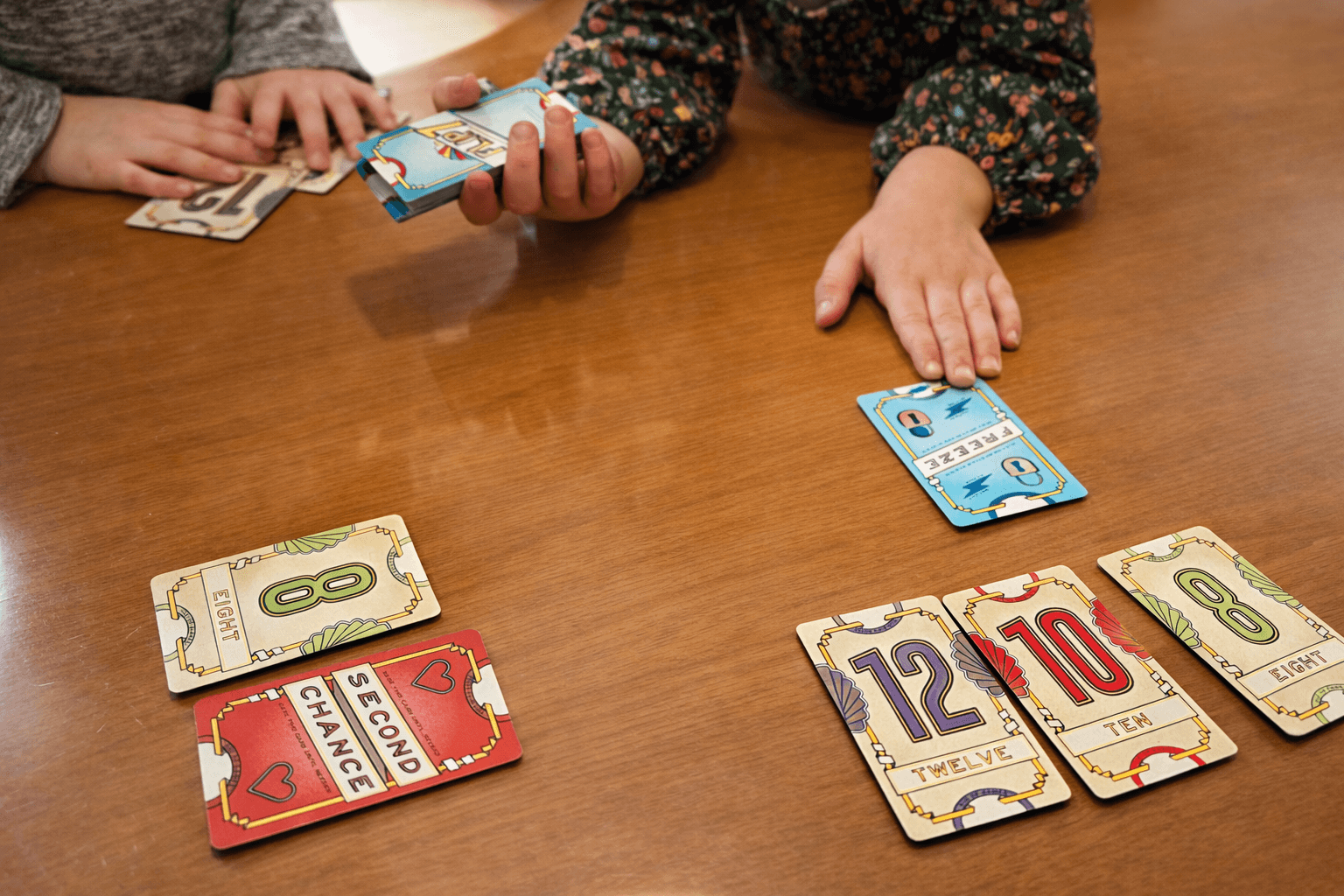
Flip 7 is a push-your-luck card game where players race to be the first to reach 200 points. On your turn, you can “hit” to draw another card or “stay” to keep your points for the round but if you draw a duplicate number card, you bust and score nothing. Collecting seven unique numbers ends the round instantly and earns a 15-point bonus. Action cards like Freeze, Flip Three, and Second Chance can shake things up, while modifier cards add or multiply your score. After each round, players total their number cards, apply multipliers, then add modifiers and any Flip 7 bonus. Rounds continue until someone hits 200 points, and the highest score wins.
When we play with our younger kids, we let them decide if they want to keep going to stop for the round but we do the math part for them. Our older son can do it all on his own. We do still check everyones math at the end of each round. :)
Bold: A Pattern-Matching Press-Your-Luck Card Game
Ages: 6+ (4+ with help)
Play time: 15–25 minutes
Skills: Pattern recognition · Risk assessment · Attention to detail
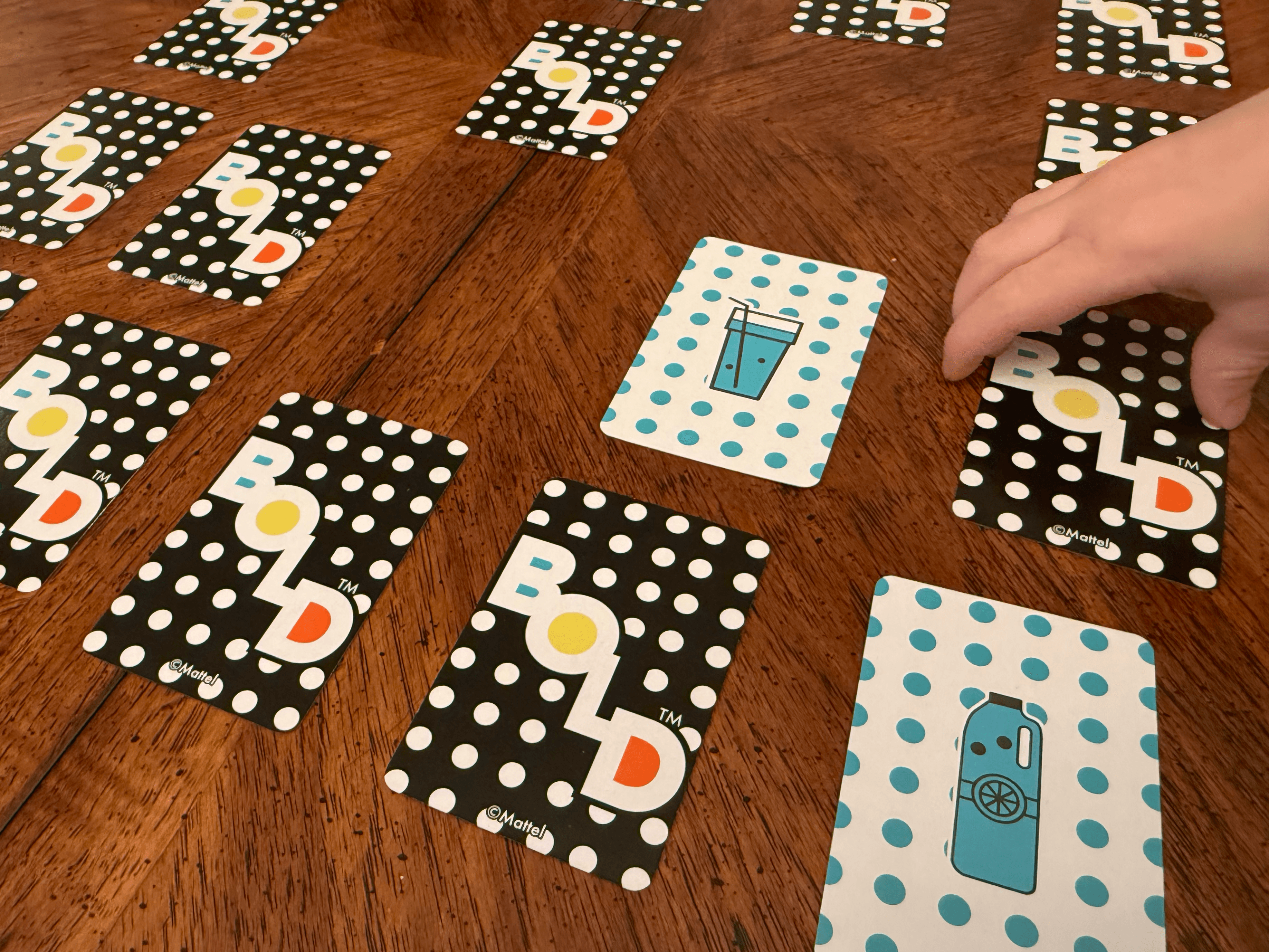
Bold is a matching game mixed with risk and reward. The object of the game is to get the most points by matching the most cards. There are 4 ways you can match a card: container shape, size, color and pattern.
Players start by laying out 20 cards in a 5x4 grid. One player selects 2 cards from the grid and flips them over. If any of the 4 elements match, that player can choose to keep the points or choose to flip another card, being bold, hoping for another matching element that matches the other two cards. They can continue to flip and match elements until they want to stop and collect points, or the cards no longer match. The more matches you get, the more points you earn. You can choose to stop your turn at any time and collect the points.
Players continue to refill the 5x4 grid with 20 cards until you run out. Then the game is over and whoever has the most points wins.
Go Fish: The Best Intro Card Game for Young Kids
Ages: 3+
Play time: 10–15 minutes
Skills: Memory · Turn-taking
Go Fish is a classic card game that’s easy to learn and fun for kids of all ages. The goal is to collect the most matching sets of two cards by asking other players for specific cards.
On your turn, you ask another player if they have a certain card, like “Do you have any threes?” If they do, they give you their three, and you get another turn. If they don’t, they say “Go fish,” and you draw a card from the pile. When you collect two of the same card, you lay the set down.
The game continues until all the cards have been matched into sets. The player with the most sets at the end wins. Go Fish is a great game for practicing memory, number recognition, and turn-taking in a fun and friendly way.
For the younger players, you can get go fish games with pictures instead of numbers.
Snapping Turtles: A Fast-Paced Matching Card Game
Ages: 4+
Play time: 5–10 minutes
Skills: Matching · Reaction time · Self-control
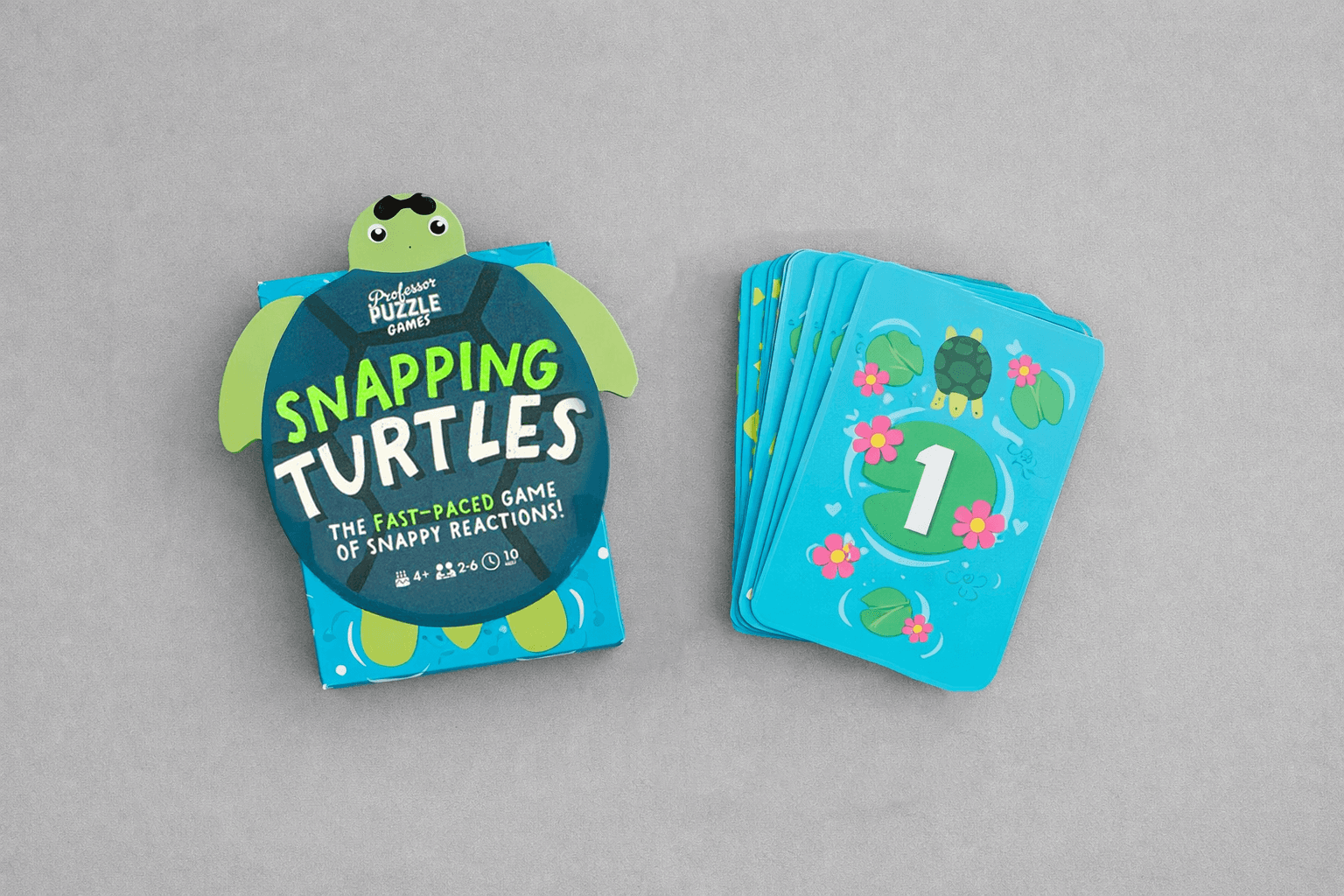
Snapping Turtles is a fast and fun card game for kids that combines matching and quick reflexes. The goal is to collect the most turtle cards by snapping your hand on the pile when you spot a match.
Players take turns flipping over colorful turtle cards. When two matching numbers appear back to back, everyone races to be the first to slap the pile. Some special cards can surprise you so players need to stay sharp and focused.
This game is easy to learn and full of energy. It helps kids practice matching, paying attention, and reacting quickly. Snapping Turtles is a great pick for family game night or a quick burst of fun with friends.
Jell-O Jiggler Slap: A Silly Color-Matching Card Game
Ages: 3+
Play time: 5–10 minutes
Skills: Color recognition · Reaction time · Self-control
Jell-O Jiggler Slap is a colorful and silly card game full of fun and fast reactions. Players take turns flipping over Jell-O-shaped cards, looking for matching colors. As soon as a match appears, everyone races to be the first to slap the stack. The catch is, the calling cards state a specific hand players have to slap the cards with. Players must slap the correct match with the correct hand to keep the card. If a player smacks the wrong match or one they already have, they must put back that card or the match they have previously collected.
This game is easy to learn and packed with energy. It helps kids build quick thinking, focus, and reaction time. Jell-O Jiggler Slap is a great pick for parties, playdates, or family game nights when you want something fast and fun.
As a parent, I love the practice my little kids get with color recognition. I also like the practice they get with learning their right vs. left hand. If I am calling the cards, I wait until they hold up the correct hand before calling the color. When I play with my 3 and 4 year olds, we don't play for speed but focus on accuracy of colors and correct hand, but when I play with my 7 year old, we play for speed!
Tips
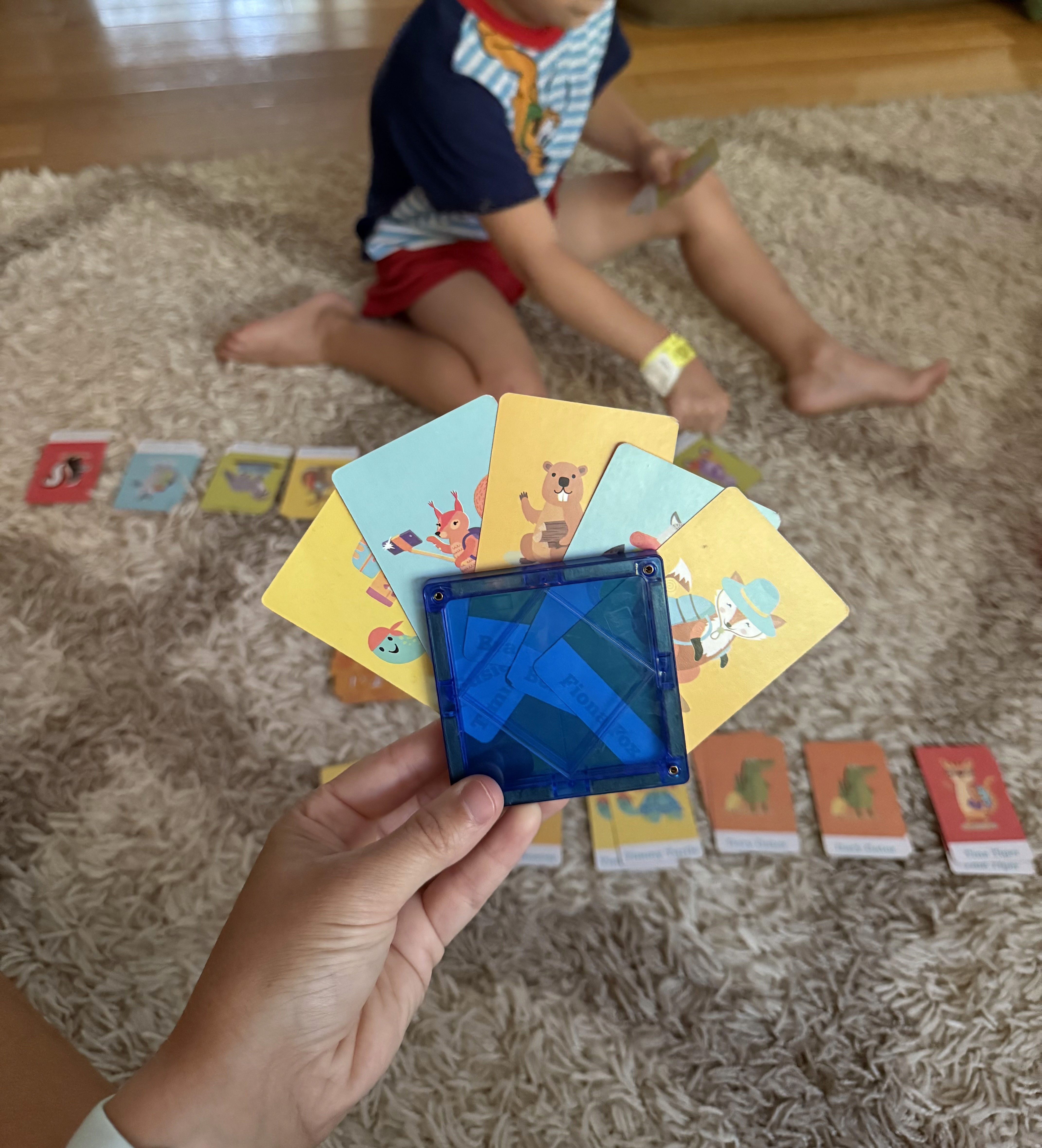
If you’ve ever played a card game with young kids, you know how tricky it can be for little hands to manage a full hand of cards. Cards get bent, dropped, or accidentally revealed, which can make the game frustrating instead of fun. That’s where card holders come in!
Card holders are a simple but incredibly helpful tool that lets kids focus on the game instead of struggling to hold their cards. They make gameplay smoother, encourage independence, and help kids of all ages (especially toddlers and preschoolers) enjoy family card games with confidence.
I have multiple options that works well for a variety of games. You can find them below:
If you already have Magnetic Tiles at home, you can place your cards between two of those and they work great for a card holder too!
Summary
Card games don’t have to be competitive or complicated to be fun. With a little flexibility and the right games, they can become some of your family’s favorite moments together—whether you’re at home, traveling, or waiting for food at a restaurant.