
Games
The Ultimate List of Sports-Themed Games for Kids
We have a pretty wide range of sports interest in our family. Some of us could watch or play sports all day, while others could honestly take it or leave it. But one thing we all have in common is that we love playing games together. These sports-themed games have been a really fun middle ground. They bring a little extra excitement for our sports lover, but are still simple and fun enough for everyone else to enjoy.
The best part is you really don’t have to know much about the sport to play. Whether your kids follow sports closely or not, these games are still easy to jump into and enjoy together.
We rounded up our family's favorites, from quick card games to strategy games and classic board games, so you can find one that's perfect for your next family game night.
Quick Picks
Best Overall: NFL UNO
Best for Preschoolers: NFL Matching
Best for Basketball Fans: Pickup
Best Strategy Game: Baseball Dice Board Game
Best Under 15 Minutes: Spot It!
Pickup Basketball Card Game
Recommended Age: 8+ (6+ with help)
Play Time: 20–30 minutes
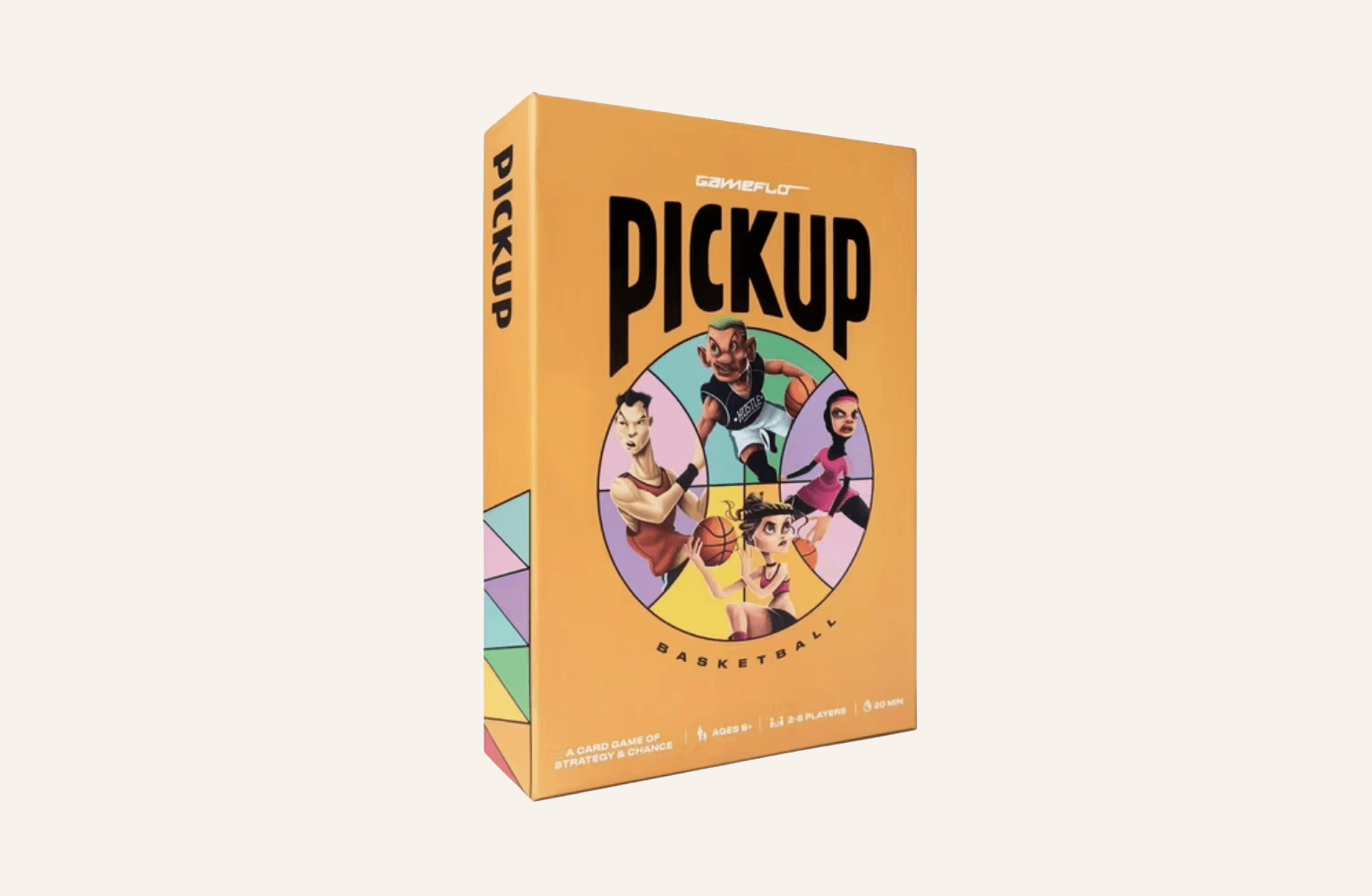
If you have a kid who loves basketball, this is a really fun one to add to your game shelf. Pickup is a fast-paced card game that feels a bit like playing a real pickup game, but in a simple and easy-to-learn format.
Players build their team, make plays, and try to outscore their opponent using a mix of strategy and a little bit of luck. It is quick to play, which makes it great for family game night or even just a short game before bedtime.
🛒 Find Pickup Basketball online
NFL Spot It!
Recommended Age: 4+
Play Time: 15 minutes
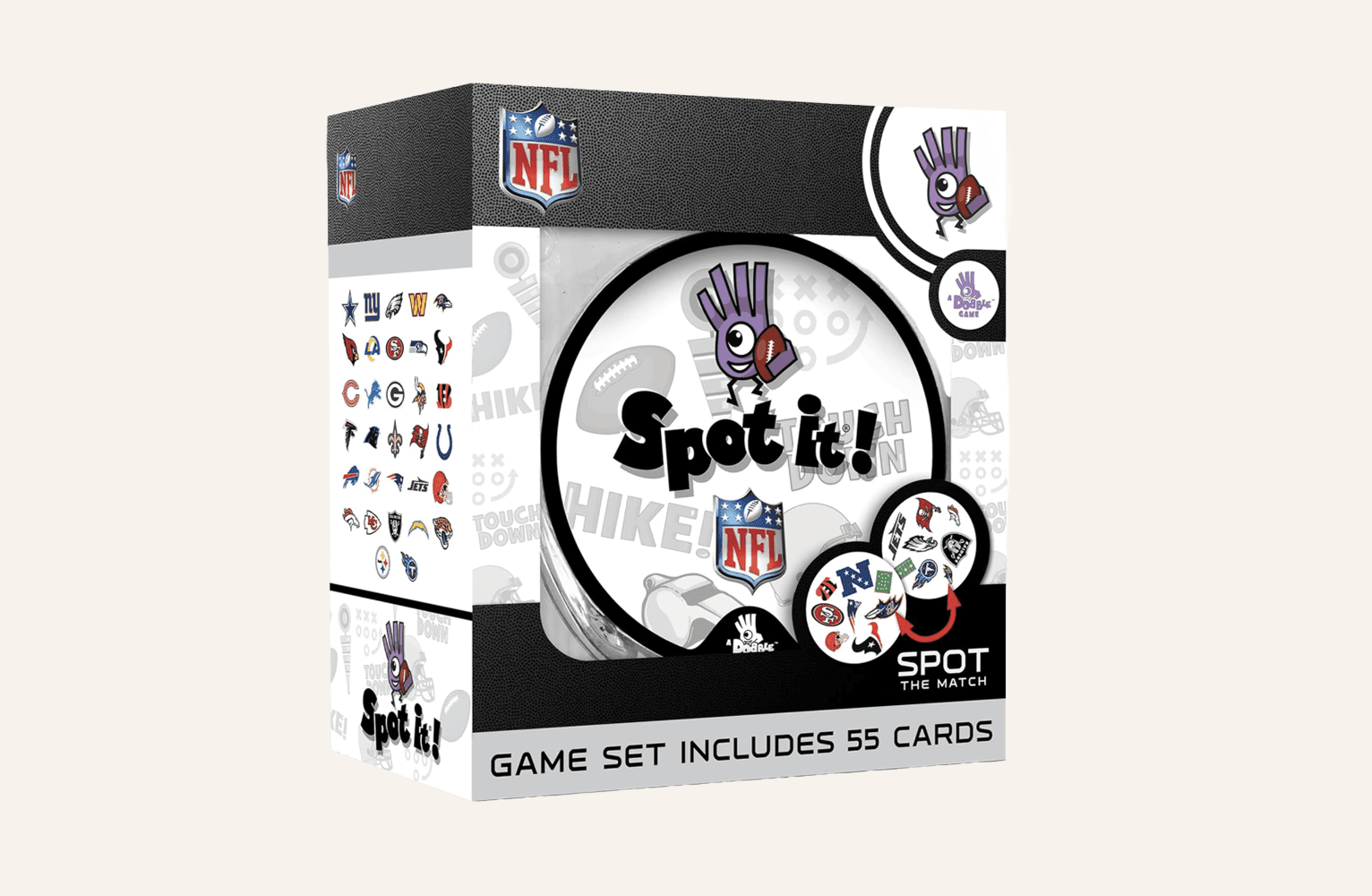
This is a really fun and fast-moving game, especially if you have a sports lover who enjoys a little competition. Spot It is all about quick reactions and sharp eyes.
Each round, players race to find the one matching symbol between two cards. In this NFL version, those symbols include team logos and football-themed icons, which makes it extra exciting for kids who recognize their favorite teams.
It is a great option when you want something quick and easy that still keeps everyone engaged.
One thing I really like about this game is that your kids do not need to know the NFL or recognize every team logo to enjoy it. They can simply call out what they see, like “a blue lion” or “a C,” and still fully play along. It keeps the game fun and accessible for everyone, even if they are just getting into sports.
🛒 Find Spot it! on Amazon
NFL UNO
Recommended Age: 7+ (4+ with help)
Play Time: 15–30 minutes
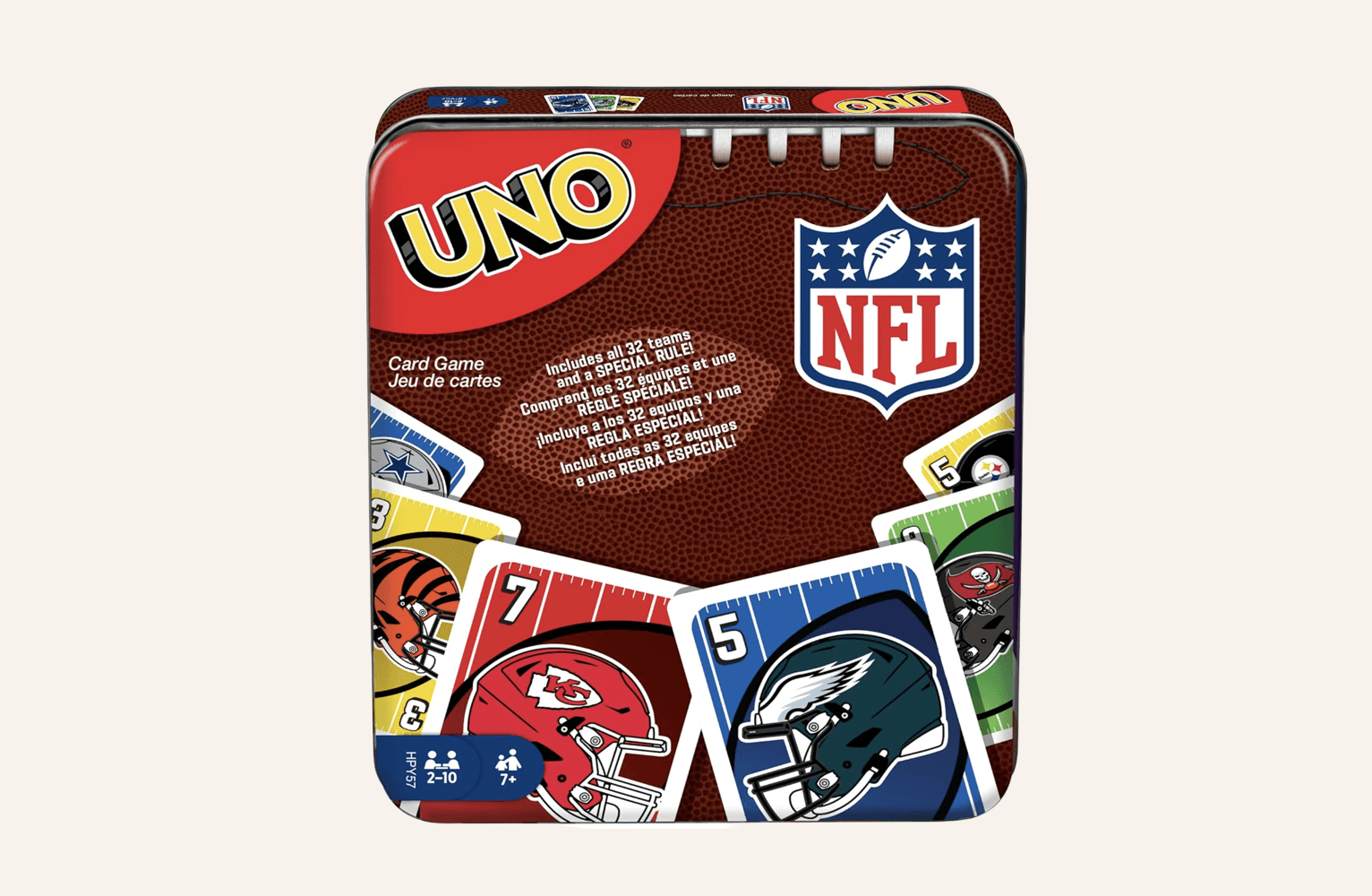
If your family already loves UNO, this NFL version is an easy one to pick up. It plays just like the classic game, where players take turns matching colors and numbers to get rid of all their cards first.
What makes this version fun for sports lovers is that the cards feature NFL team logos, so kids will recognize their favorite teams while they play. It is a simple way to add a sports twist to a game most families already know.
There is also a special rule included that adds a little extra excitement and keeps things interesting from game to game.
🛒 Find NFL UNO on Amazon
UNO Elite
Recommended Age: 7+
Play Time: 15–30 minutes
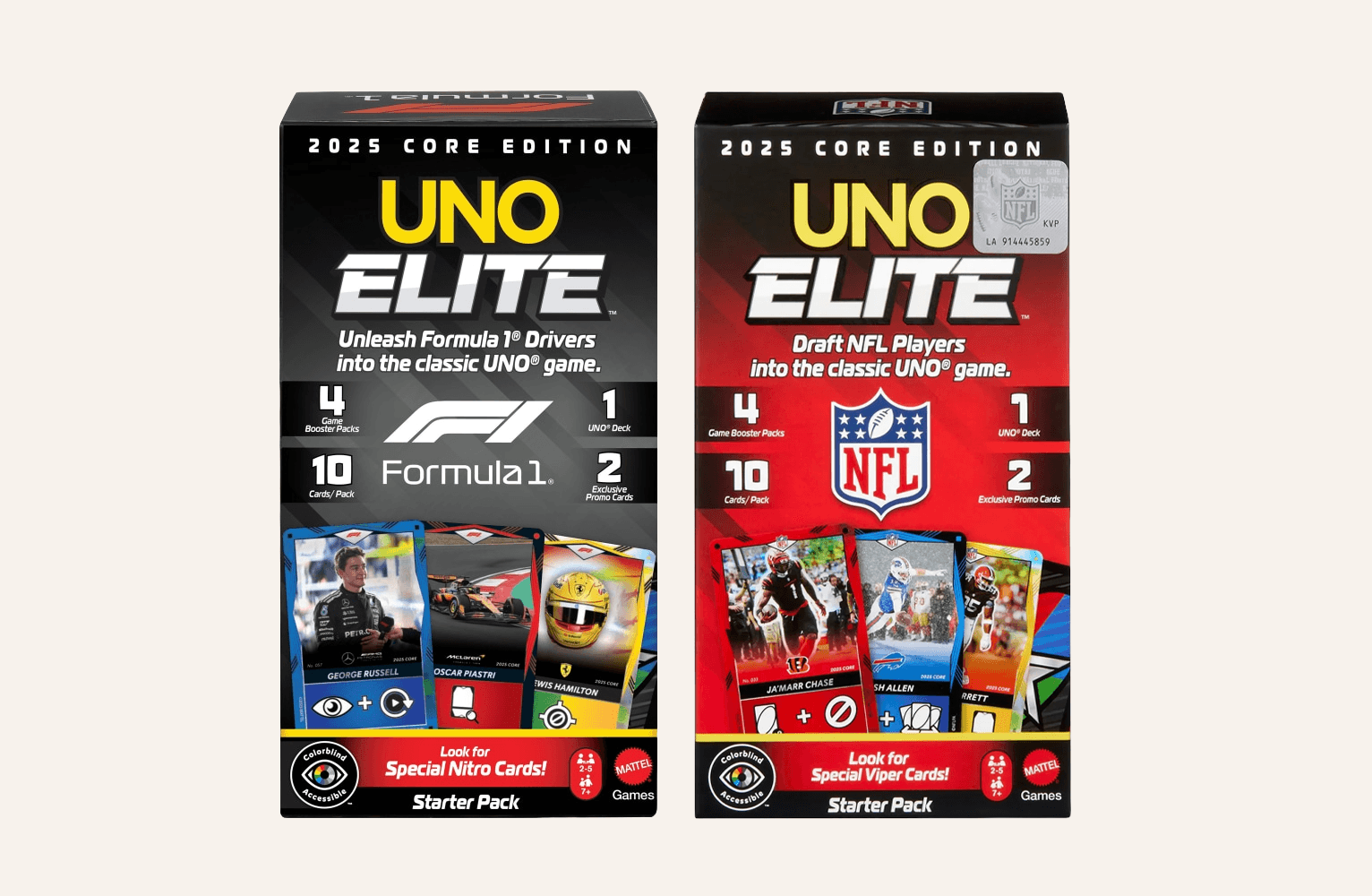
If someone in your family already enjoys UNO and collects sports cards, UNO Elite is a fun way to change things up. It still has the familiar matching gameplay everyone knows, but adds collectible athlete cards and special abilities that make each game feel a little more competitive.
Players take turns matching colors and numbers just like traditional UNO, but the Elite cards introduce unique powers that can shake up the game and keep things fresh. It adds a little more strategy and customization without making the game complicated, so it still works well for family game night.
One thing I like is that you don't need to know anything about the athletes featured on the cards to enjoy the game. Sports fans will have fun recognizing some of the names, but everyone else can jump right in and play without feeling left out.
This is available in both NFL and Formula 1 editions. You start with a Starter Deck and can continue building your collection over time by purchasing Booster Packs. Similar to other trading card games, each new pack adds athletes and abilities that keep the game fresh every time you play.
🛒 Find UNO Elite: NFL on Amazon
🛒 Find UNO Elite: F1 on Amazon
Guess Who NFL Edition
Recommended Age: 6+ (4+ with help)
Play Time: 15–20 minutes
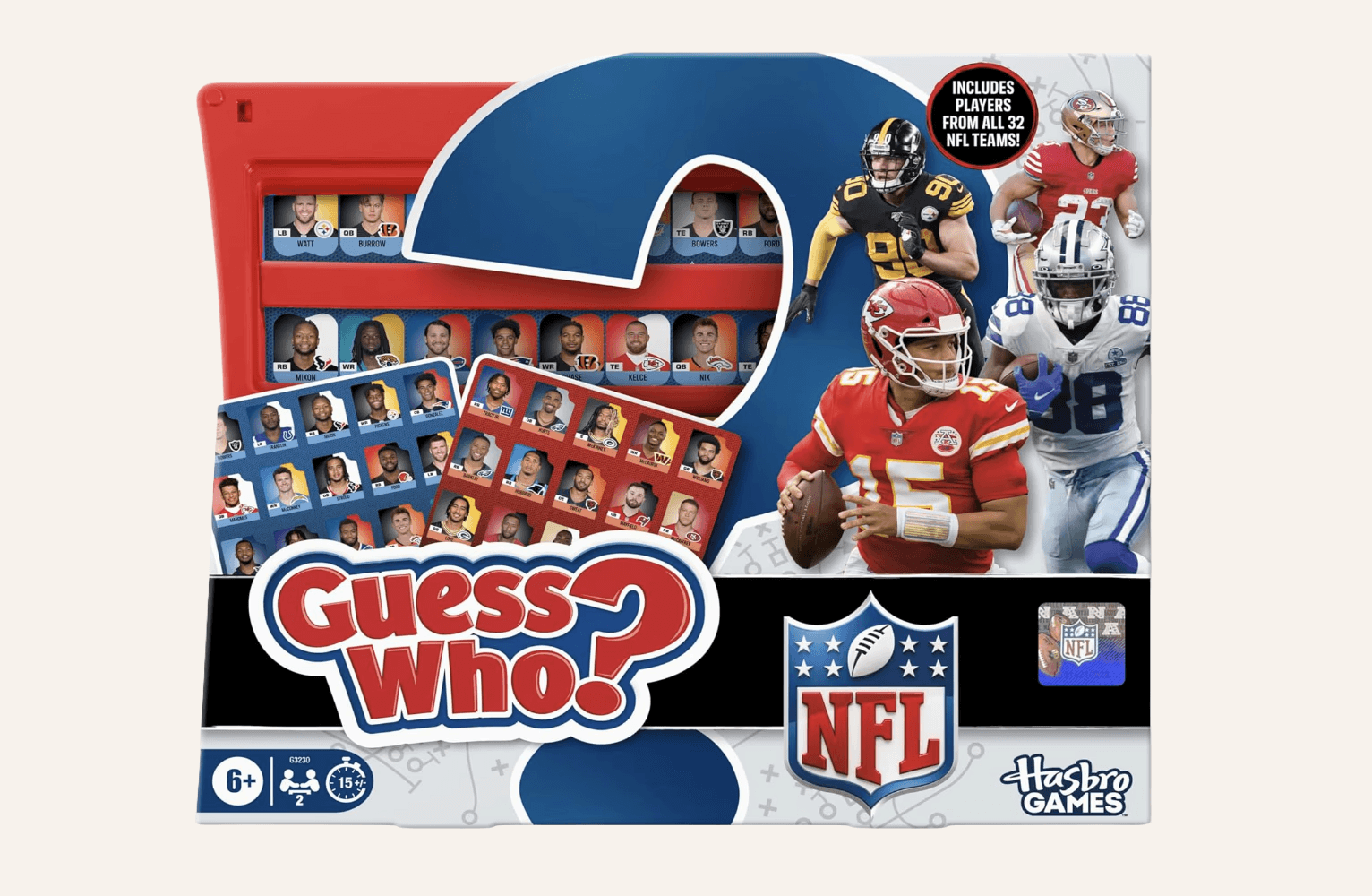
This NFL version of Guess Who takes the classic game most of us grew up with and gives it a fun football twist. Instead of guessing characters, players try to figure out which NFL player their opponent has chosen.
Players take turns asking simple yes-or-no questions to narrow it down, like what team the player is on or what position they play. The game includes players from all 32 NFL teams, so there are plenty of familiar faces to keep kids interested.
It is a great mix of thinking and fun, especially for kids who enjoy football. If your sports lover likes guessing games, this one is an easy win for family game night.
🛒 Find Guess Who NFL Edition on Amazon
Soccer Basketball Volleyball Football Tennis
Recommended Age: 6+
Play Time: 15–20 minutes
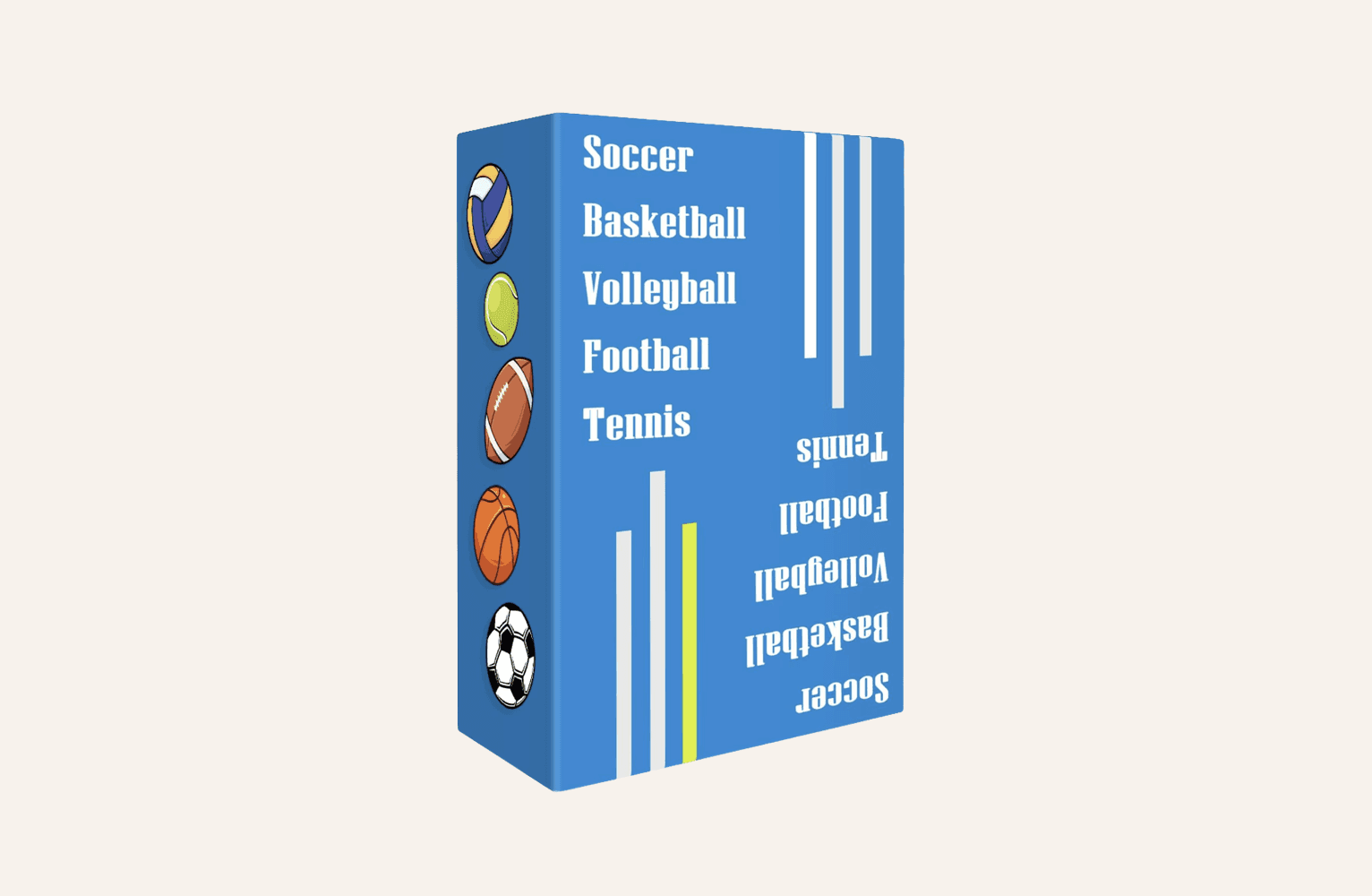
This fast-paced card game is perfect for kids who have lots of energy and love a little chaos during game night. It reminds me a lot of Taco Cat Goat Cheese Pizza, where everyone is racing to react at the right moment.
Players take turns placing cards while saying the names of different sports like soccer, basketball, volleyball, football, and tennis. When the word matches the card, everyone has to react quickly and slap the pile. The last one to slap the pile has to keep all the cards. The goal of the game is to get rid of all your cards first.
🛒 Find Soccer Basketball Volleyball Football Tennis on Amazon
🛒 Find Taco Cat Goat Cheese Pizza on Amazon
MLB-Opoly Junior
Recommended Age: 6+
Play Time: 30–45 minutes
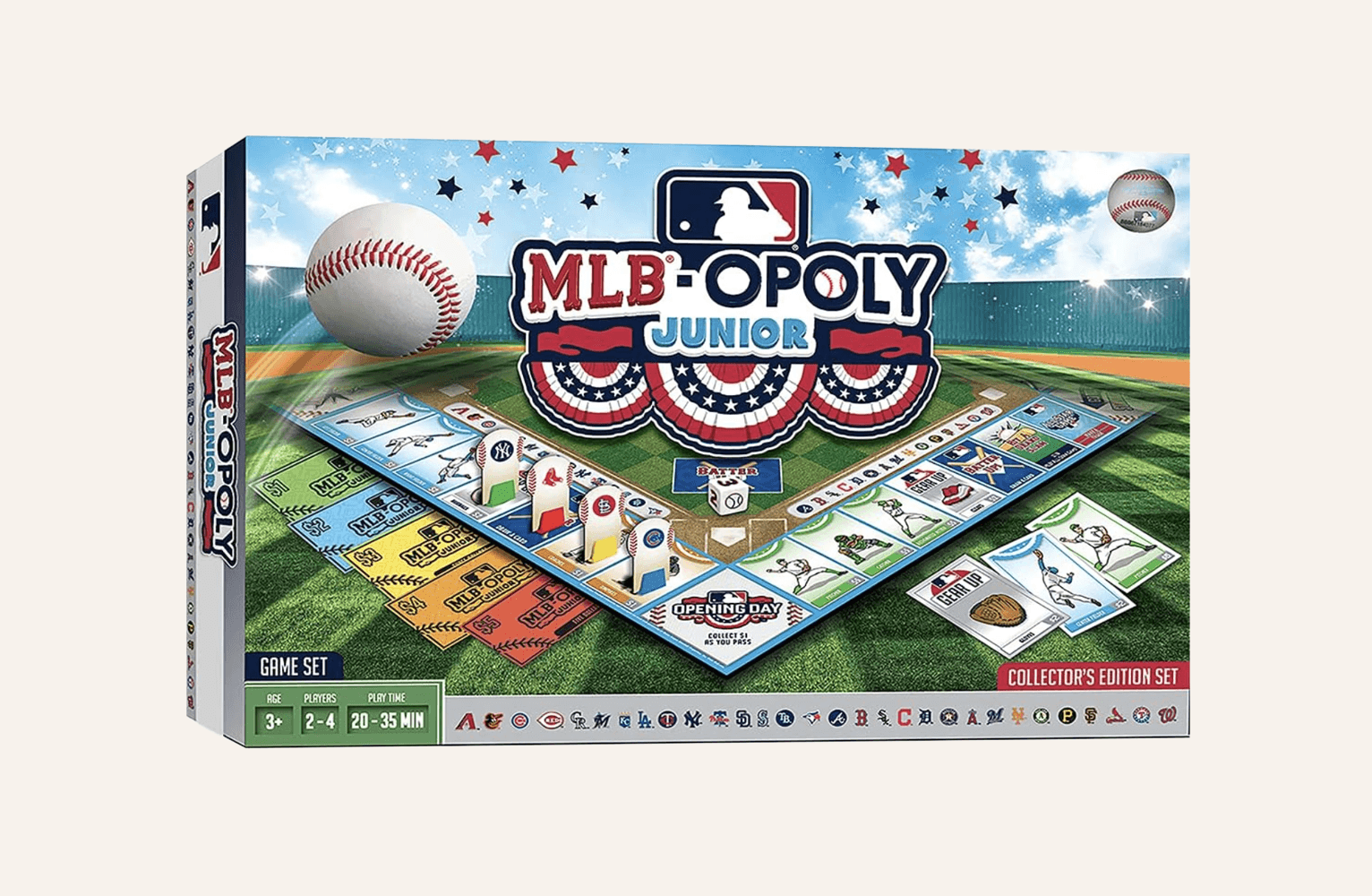
This baseball-themed version of Monopoly is a fun option for younger kids who love the game but are not quite ready for the full-length version. MLB-Opoly Junior keeps things simple and faster-paced while still giving that classic Monopoly feel.
Players move around the board collecting teams and earning money, all with a fun baseball twist. The board, cards, and pieces are all themed around Major League Baseball, which makes it especially fun for kids who recognize their favorite teams.
It is a great choice if you are looking for a slightly longer game that still keeps kids engaged, especially for a sports-loving family game night.
🛒 Find MLB-Opoly Junior on Amazon
Baseball Dice Board Game
Recommended Age: 6+
Play Time: 15–45 minutes
If your family is looking for a game that feels a little more like watching a real baseball game, this is a fun one to check out. Instead of using cards, players roll custom dice to determine everything from hits and strikeouts to home runs and double plays.
The game moves quickly while still capturing a lot of the excitement and unpredictability of baseball. Every roll can completely change the inning, making it fun for both kids and adults to cheer each other on. It is easy enough for younger players to learn, but still has enough strategy to keep older kids and parents engaged.
🛒 Find Baseball Dice Board Game on Amazon
Baseball Duel Card Game
Recommended Age: 7+
Play Time: 20 minutes
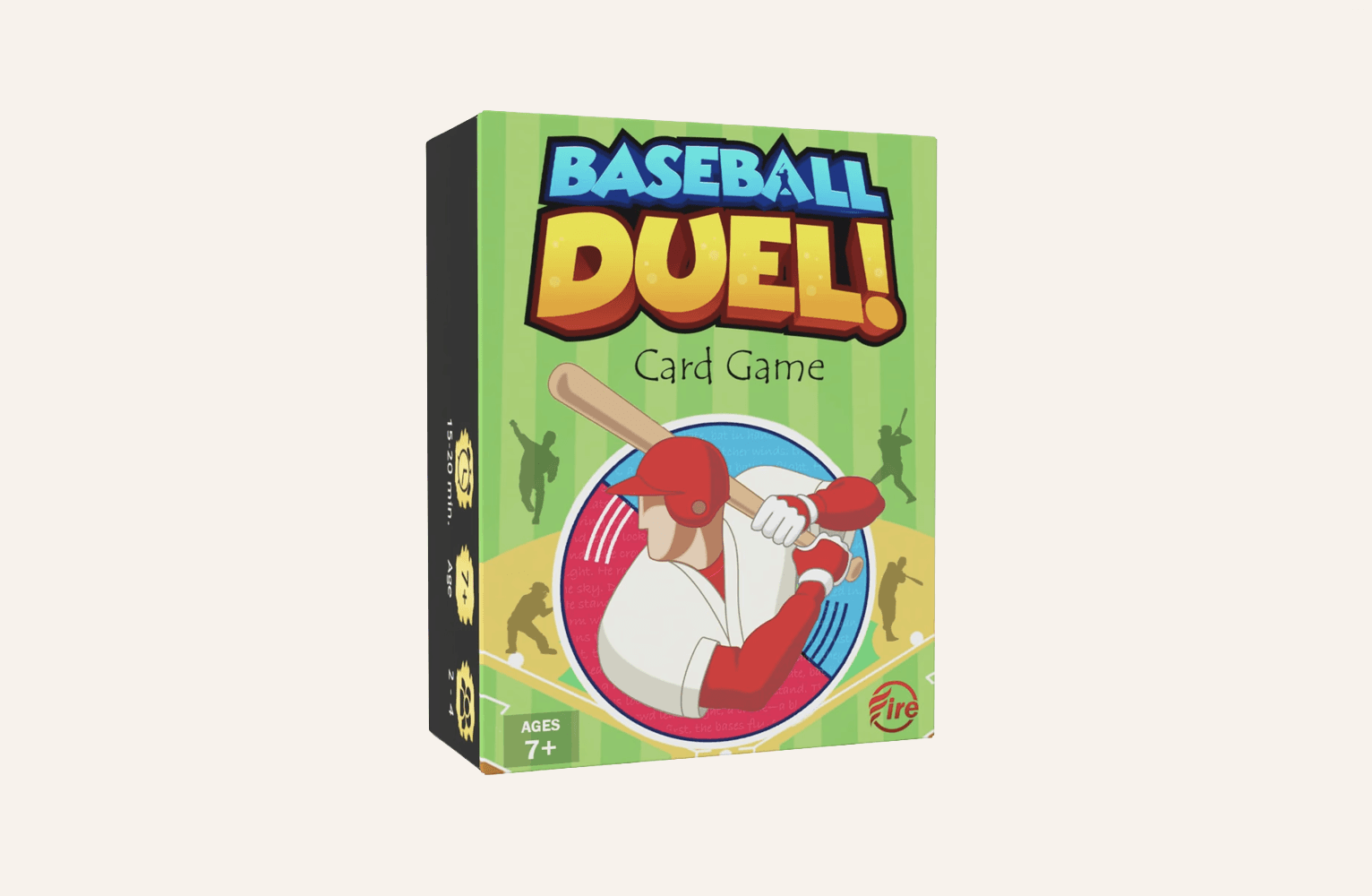
This one is a really unique mix of a puzzle and a game, which makes it stand out from a lot of other sports games.
Instead of just playing cards, players are actually trying to build and complete different baseball items by connecting the right cards together, almost like solving a mini puzzle. Every time you complete one, you score a run, so it feels like you are slowly building your way through a baseball game.
At the same time, there is still that competitive side. You are racing against the other players to finish your sets first, and there are ways to mess with each other along the way, which keeps things interesting.
It is a fun option that kind of feels like a mix between a puzzle game and something like UNO or a quick card game.
🛒 Find Baseball Duel on Amazon
Straight 8 Card Game
Recommended Age: 8+
Play Time: 20–40 minutes
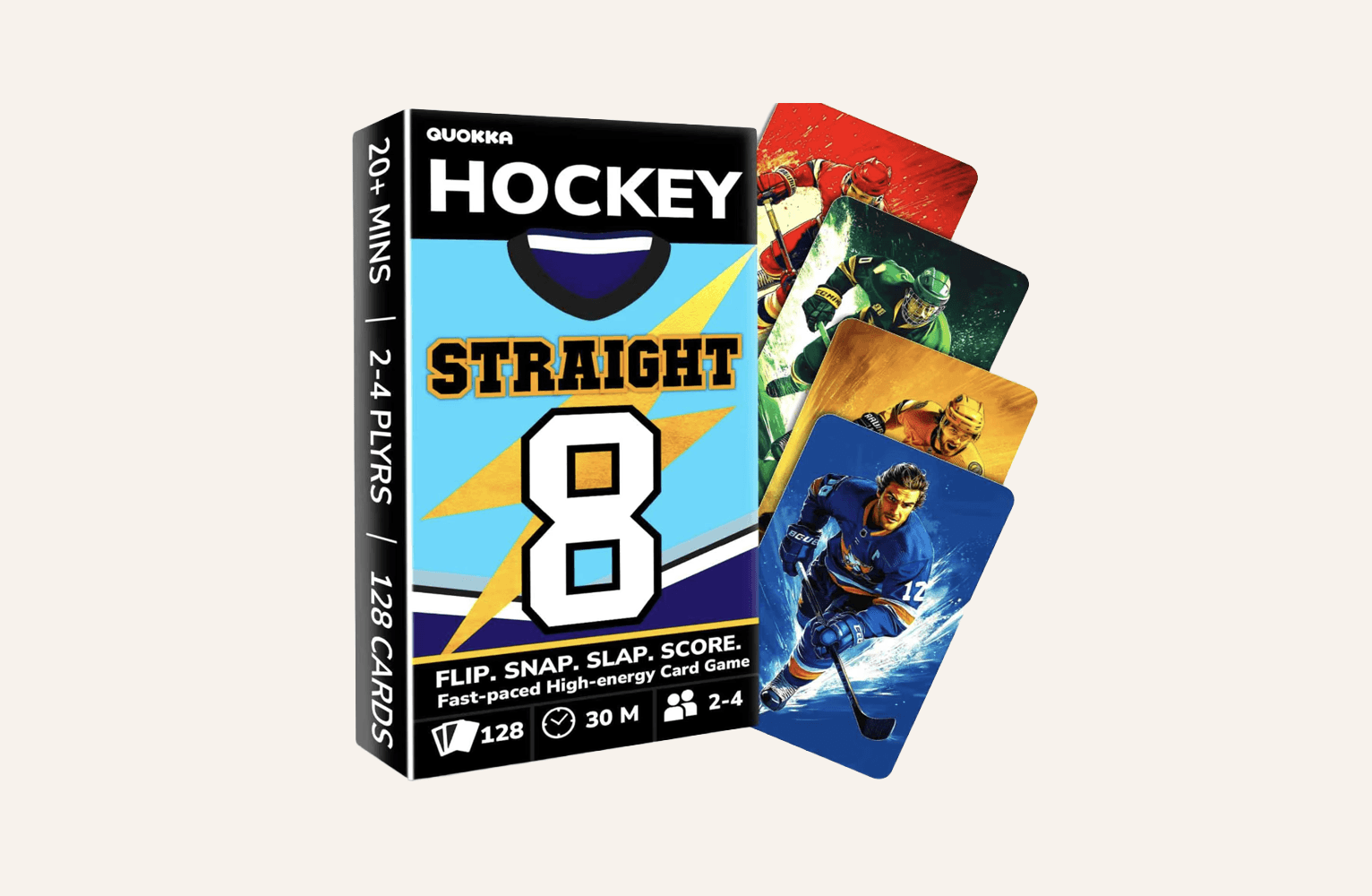
This is fast-paced card game that keeps you paying attention the whole time.
Players are flipping cards and trying to build sequences in order, but you also have to be ready to react quickly when certain moments come up. It kind of has that same feel as Taco Cat Goat Cheese Pizza, where things can switch fast and everyone is watching closely.
What I like about this one is that they make it in different versions like football, soccer, baseball, and hockey, but they all play the same way. So if your kids have a favorite sport, you can just pick that version and they will be into it right away.
🛒 Find Hockey Straight 8 on Amazon
Also available in Baseball, Basketball, Soccer, Football, Tennis, Golf
Matching Games
Recommended Age: 3+
Play Time: 10–15 minutes
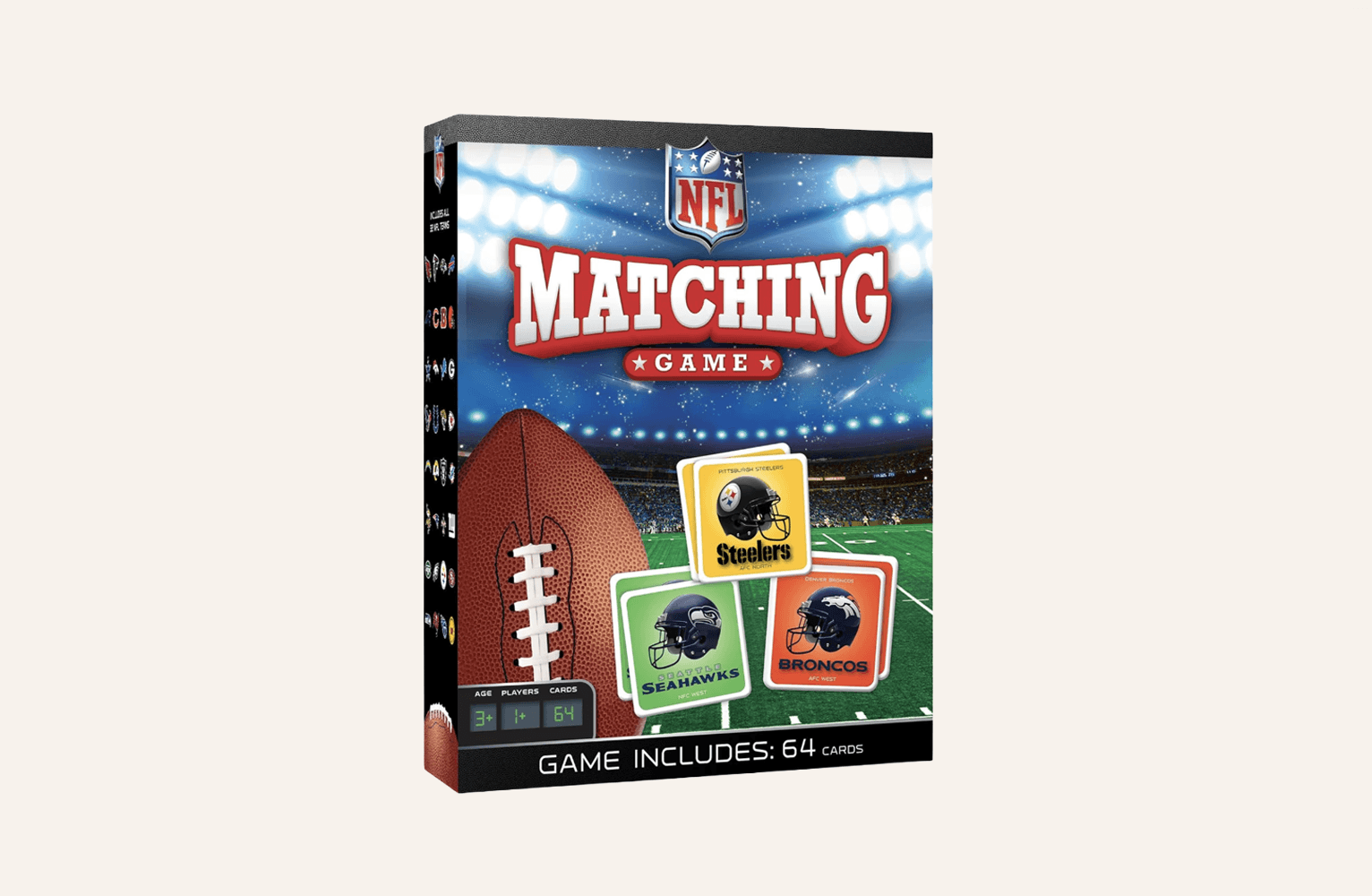
This is a great option for your youngest gamers. It is a simple matching game where players flip over cards and try to find pairs of NFL team logos.
It is easy to learn and perfect for younger kids who are just starting to get into games, but still fun enough to keep everyone involved.
One thing I like about this one is that you can get it as a full NFL version with a mix of teams, or even choose a version that focuses on a specific team. That makes it a fun way to get your kids excited about their favorite team while they play.
🛒 Find NFL Matching Game on Amazon (Also available in each team)
NFL Monopoly Deal
Recommended Age: 8+ (6+ with help)
Play Time: 15–20 minutes
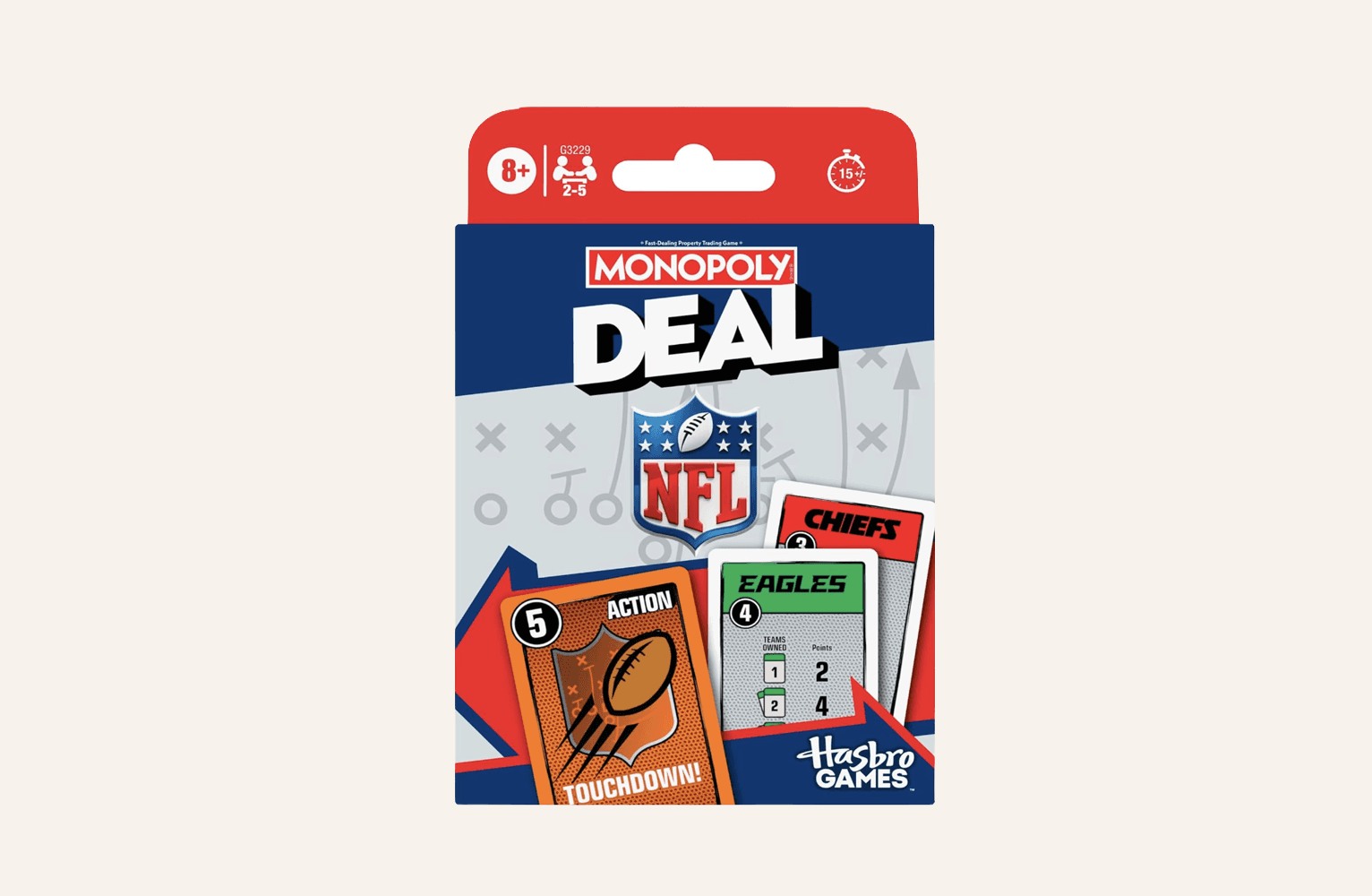
This is a fun, sports-themed version of the fast-paced Monopoly Deal card game. If your kids already know how to play Monopoly Deal, they will pick this up right away since it plays the same way, just with an NFL twist.
Players collect team sets, use action cards, and try to be the first to complete their properties. The NFL version adds team names, logos, and football-themed cards, which makes it extra fun for sports fans.
🛒 Find NFL Monopoly Deal on Amazon
🛒 Find FIFA World Cup Monopoly Deal on Amazon
At the end of the day, these games have been a really fun way for us to spend time together as a family. They bring in just enough of that sports element to make it exciting, but are still simple and enjoyable for everyone to play. If you are looking for something new for your next game night, hopefully one of these becomes a new favorite in your home too.
Related Articles
Best Logic & Strategy Games for Kids
Cooperative Games for Kids
Classic Games for the Kids
Fun Card Games for Kids
Memory & Recognition Games for Kids
How to Play Rainbow Pirates

Games
How To Play: Rainbow Pirates
Rainbow Pirates is a favorite in our house. It was originally gifted to our oldest when he was six, but it didn’t take long for our younger kids to fall in love with it too. Now it’s a go to Family Game Night pick, and yes, we’ve definitely been beaten by our kids more than once 🙂
The Cards
In Rainbow Pirates, there are two main types of cards: color cards and pirate cards.
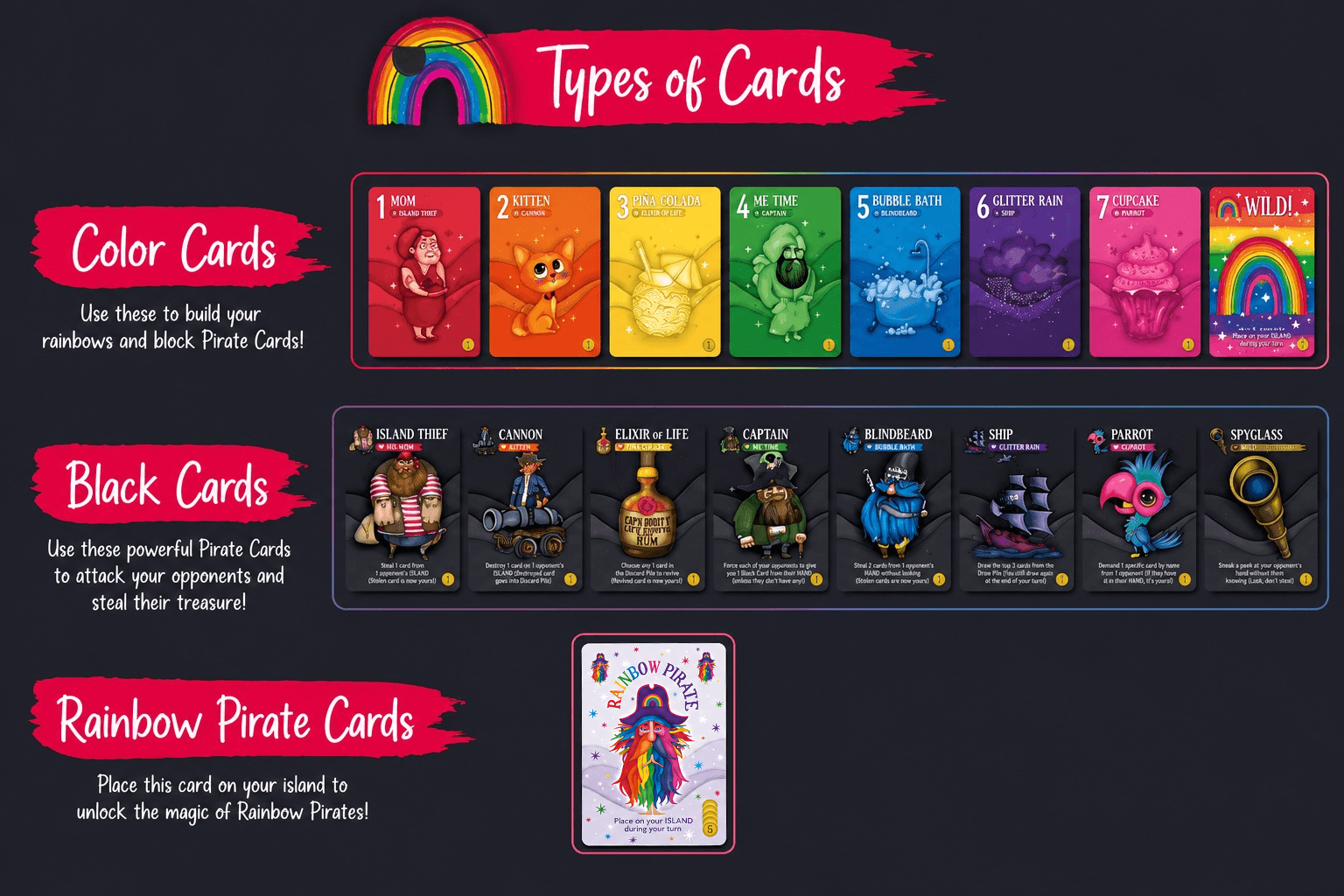
The color cards come in seven colors: red, orange, yellow, green, blue, purple, and pink. Each color also has a matching pirate card.
Pirate cards let you perform special actions during the game, while color cards are used to block those actions when they match the pirate card’s color. There are also Wild cards and Rainbow Pirate cards, which can be especially helpful as the game goes on.
The Goal of the Game
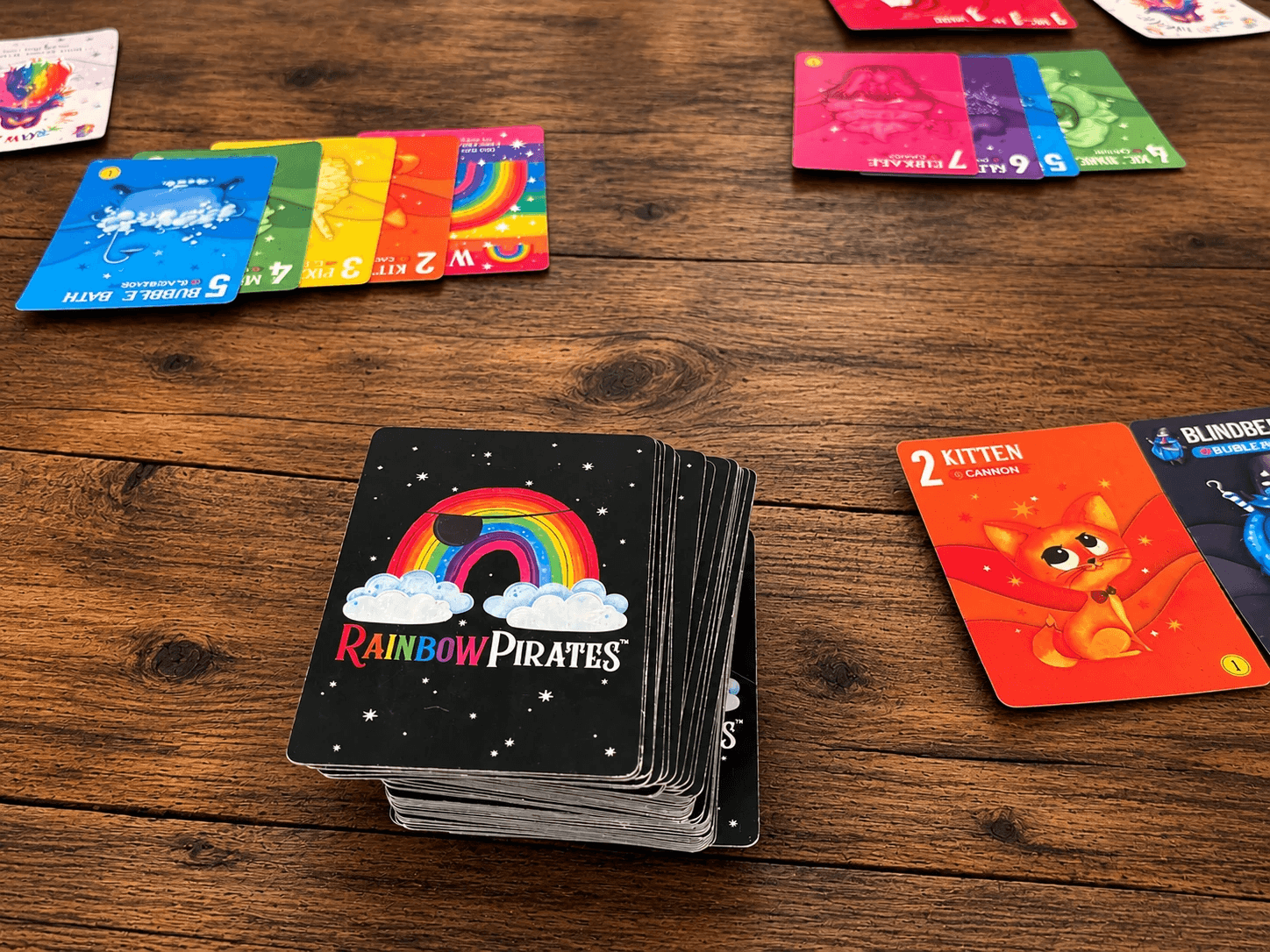
The goal of the game is to earn the most points. The game ends when a player completes two full rainbows and empties their hand.
A full rainbow is made by laying numbered cards in order from red to pink, or one through seven. Being the first player to end the game does not always guarantee a win. Points are earned based on the cards you’ve played on your “island,” which is the space in front of you where you lay your cards during the game.
How to Start
To start the game, deal seven cards to each player. Place the remaining cards in a draw pile in the center and flip the top two cards face up next to it.
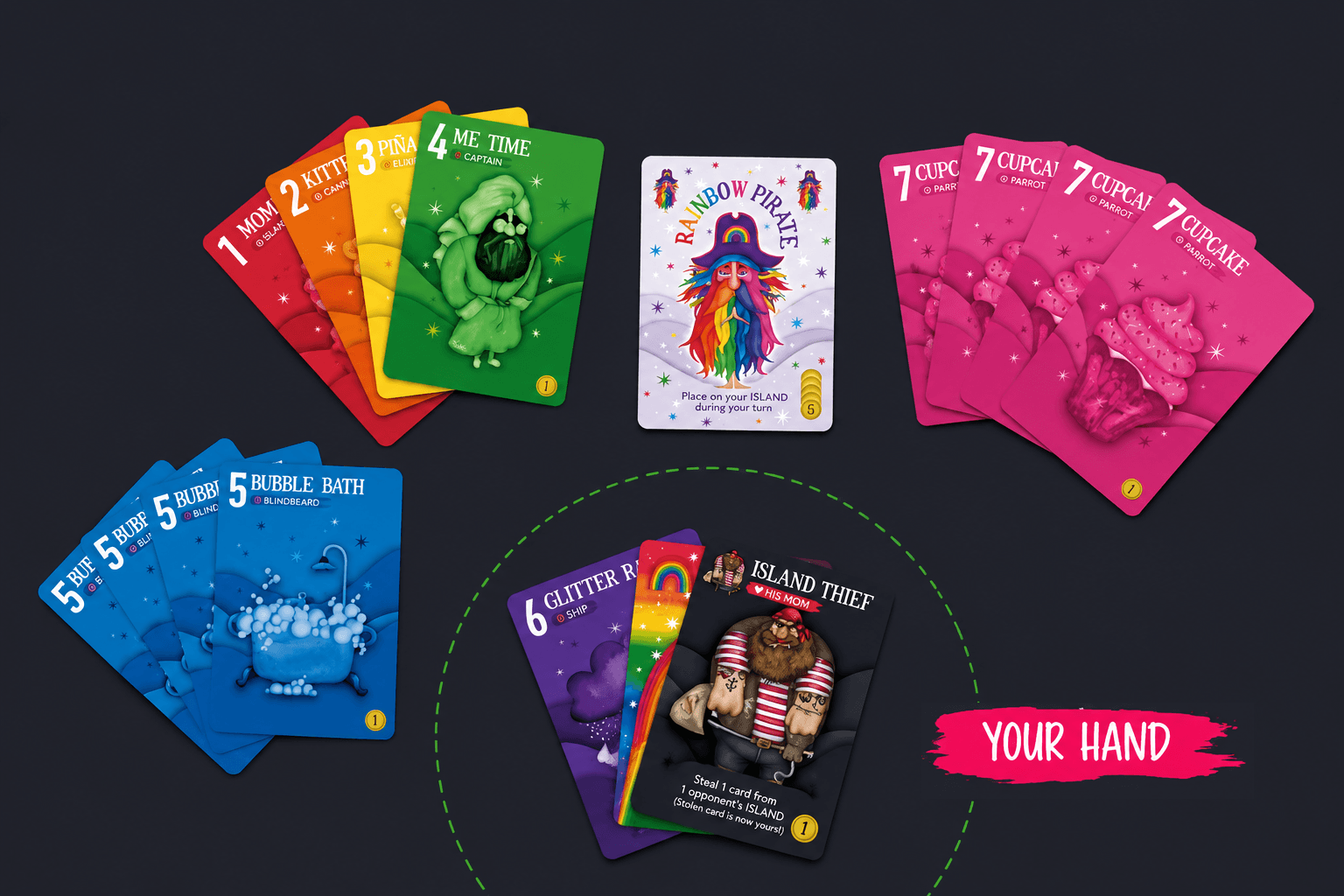
On your turn, you can lay down colored number cards, but when starting a new group on your island, you must play at least three cards at once. For example, you could lay down a green, blue, and purple card (numbers 4, 5, and 6) or a red, orange, yellow, and green card (numbers 1, 2, 3, and 4). You can also lay down three of the same card, such as three blue cards (three number 5s), which will earn you points later.
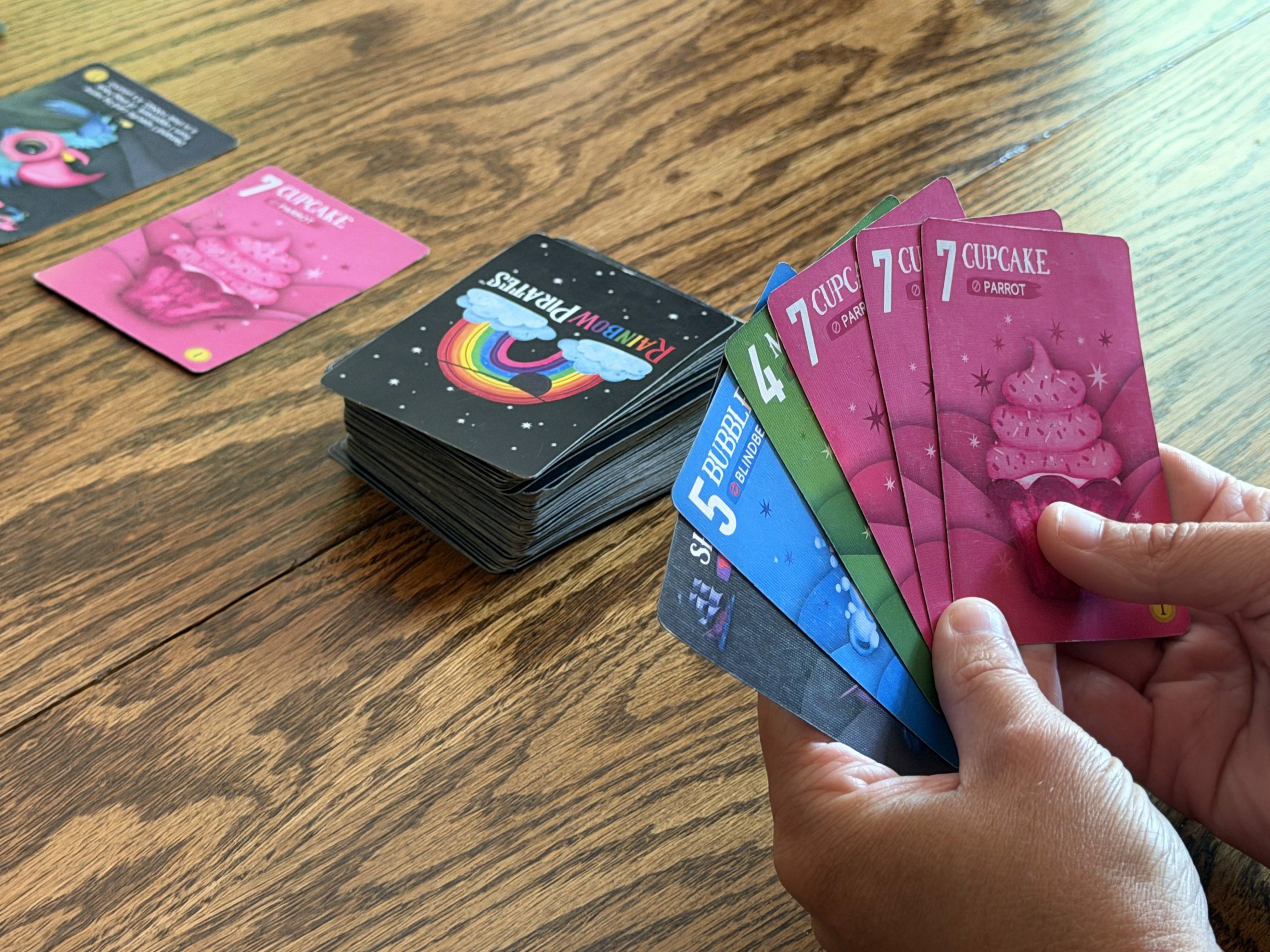
One important rule to remember is that if you have a Rainbow Pirate card in your hand, you must play it on your turn.
If you cannot play any number cards, you may instead play a pirate card as an action. Pirate cards allow you to do things like steal cards from another player’s island or hand, draw extra cards, or look ahead in the deck.
At the end of your turn, draw two cards. You can either draw from the face down draw pile or take the two face up cards. If you take the face up cards, flip two new cards over to replace them.
Once you have a set of three cards on your island, future turns are easier. You can add just one card at a time to an existing group. The three card rule only applies when you are starting a new group of colored cards.
You are also allowed to rearrange cards on your island. For example, if you used a Wild card but later draw the exact number card you need, you can replace the Wild card and return it to your hand or use it elsewhere on your island.
Blocking Pirate Cards
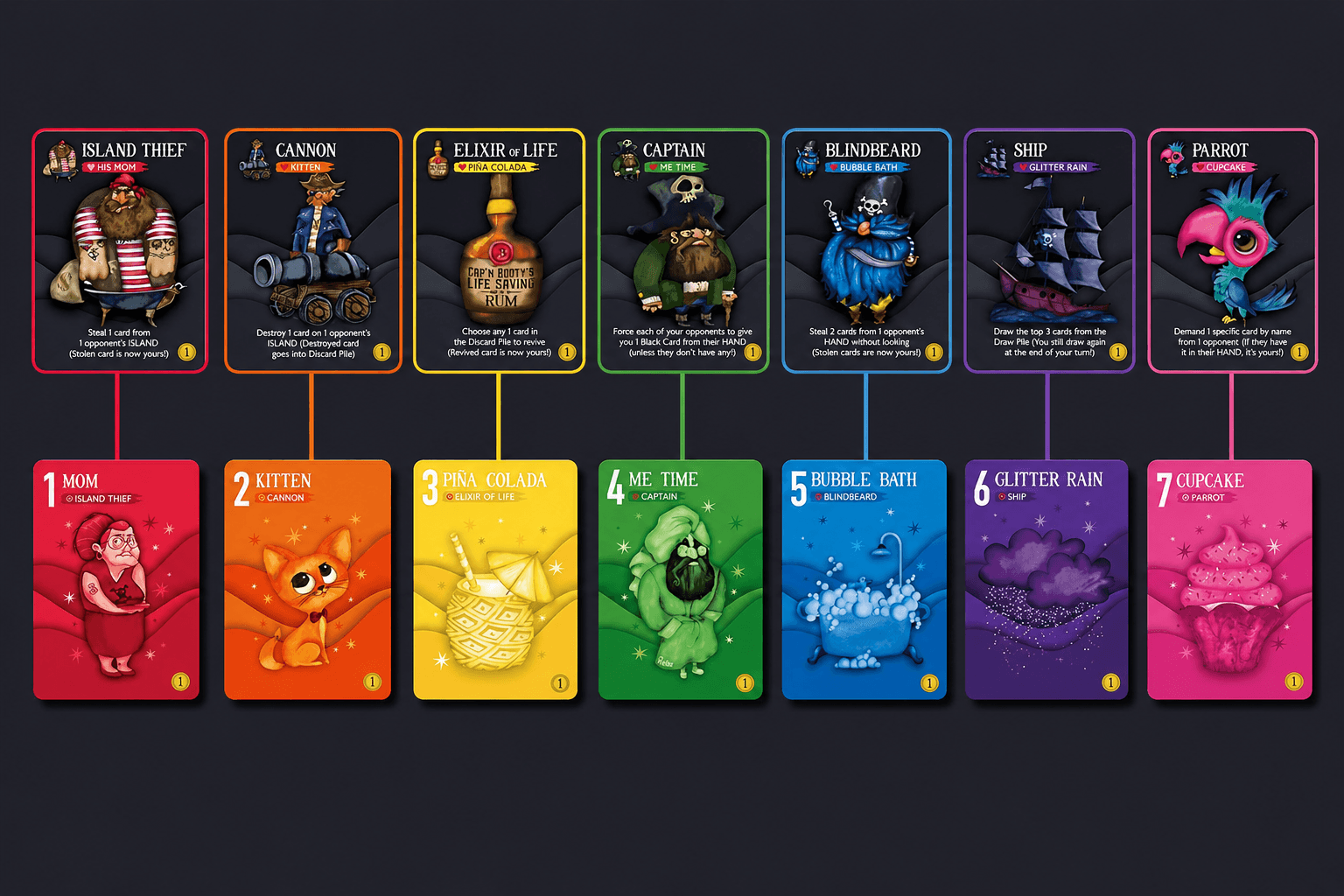
If another player uses a pirate card against you, you can block it by playing a matching color card from your hand. For example, if a red pirate card is played to steal a card from your island and you have a red number 1 card in your hand, you can play that card to block the action.
You may block as many pirate cards as you are able, as long as the blocking cards come from your hand and not from your island. Because of this, it can be helpful to hold onto a few color cards instead of playing everything right away.
Ending the Game and Scoring
The game ends when a player completes two full rainbows on their island and plays all the cards in their hand. That player immediately earns a five point bonus.
Once the game ends, all other players get one final turn to play whatever cards they can from their hand. These cards still count toward their final score.
Each card has coins in the bottom corner that indicate its point value. Most cards are worth one point, while the Rainbow Pirate card is worth five points.
After everyone has counted their points, the player with the highest total wins the game.
Want to learn more? Check out this official How to Play video.

🛒 Find Rainbow Pirates on Amazon
Looking for more games like Rainbow Pirates? Check out our collection of fun card games for kids, featuring family favorites for preschoolers, elementary-aged kids, and older children.
Related Articles
10 Princess Themed Games Girls Love
Best Color Matching Games for Toddlers
Best Logic & Strategy Games for Kids
Cooperative Games for Kids
Classic Games for the Kids
Fun Card Games for Kids
Memory & Recognition Games for Kids
How to Play Rainbow Pirates
Games
Disney Games for Kids: Fun Ideas for Family Game Night
If you have Disney fans in your house, you know how much kids love anything that brings their favorite characters to life.
Whether it is princesses, Pixar movies, or classic Disney characters, themed board games are a fun way to bring a little bit of that magic into your home.
We always enjoy finding games that everyone can play together, and Disney-themed games are usually an easy win. They are familiar, fun, and a great option for family game night.
Here are some Disney games that have been fun for our family and would be a great fit for any Disney lover.
Disney Eye Found It!
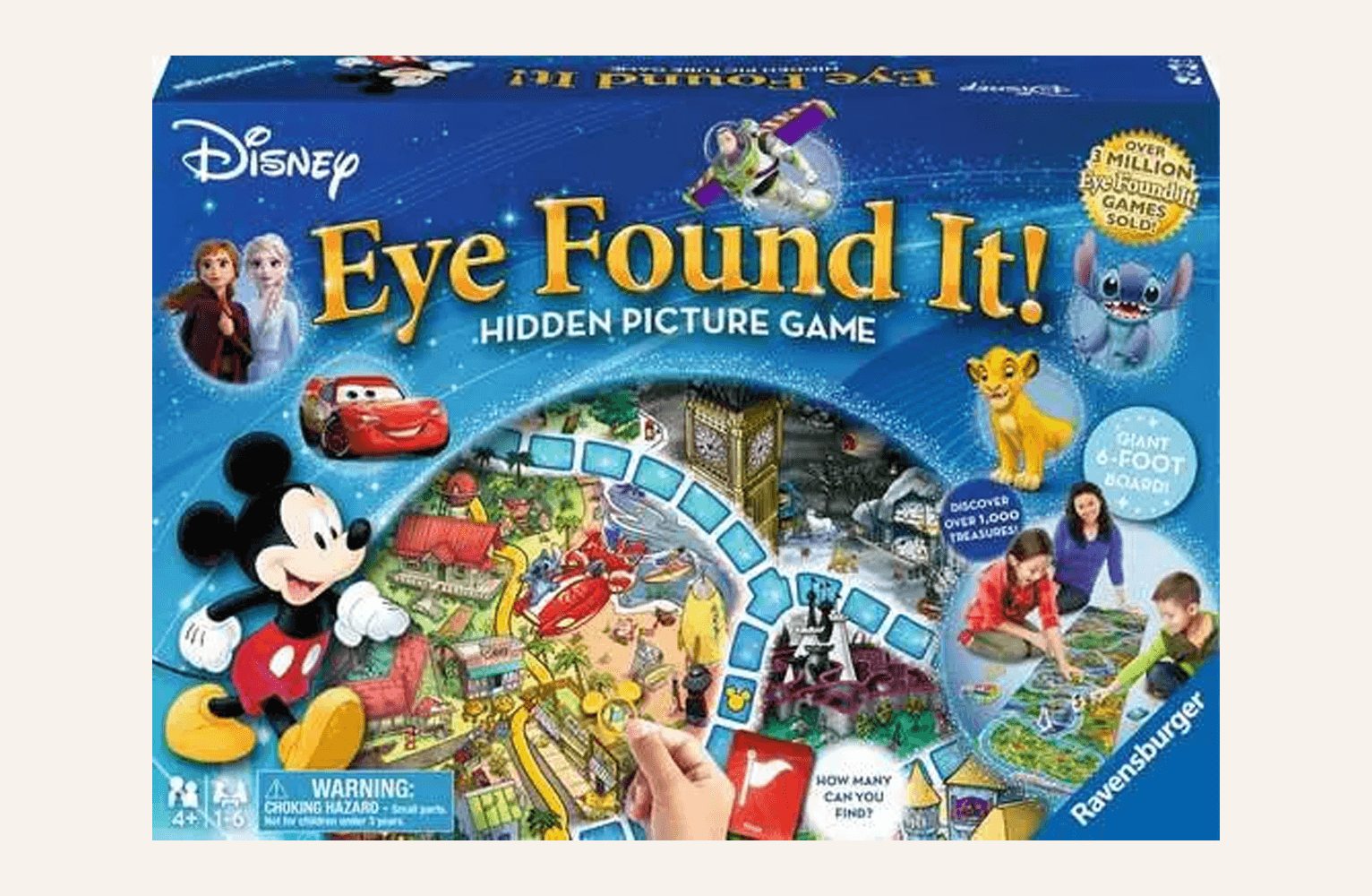
If your family loves Disney and enjoys games that keep everyone engaged, Disney Eye Found It! is one we come back to again and again.
What makes this game stand out is how different it feels every time you play. The board is packed with detailed Disney scenes, and each round challenges players to find specific hidden objects. Even though you’re using the same board, it never feels repetitive because you’re always searching for something new.
Why We Love It
Perfect for mixed ages – Younger kids can spot big, obvious items while older kids (and adults!) hunt for trickier ones
Cooperative gameplay – You work together, which keeps things positive and fun
Great attention builder – It naturally helps kids focus and stay engaged
No reading required – Easy for younger kids to jump right in
A Game That Grows With Your Family
One of the best parts about this game is how it adapts to your kids. When they’re younger, it’s all about finding simple objects and enjoying the colorful Disney scenes. As they get older, they start spotting harder items faster and even competing a little more.
It’s one of those rare games that doesn’t get old quickly, which is a huge win for family game night.
🛒 Find Disney Eye Found It on Amazon
Disney Code Names
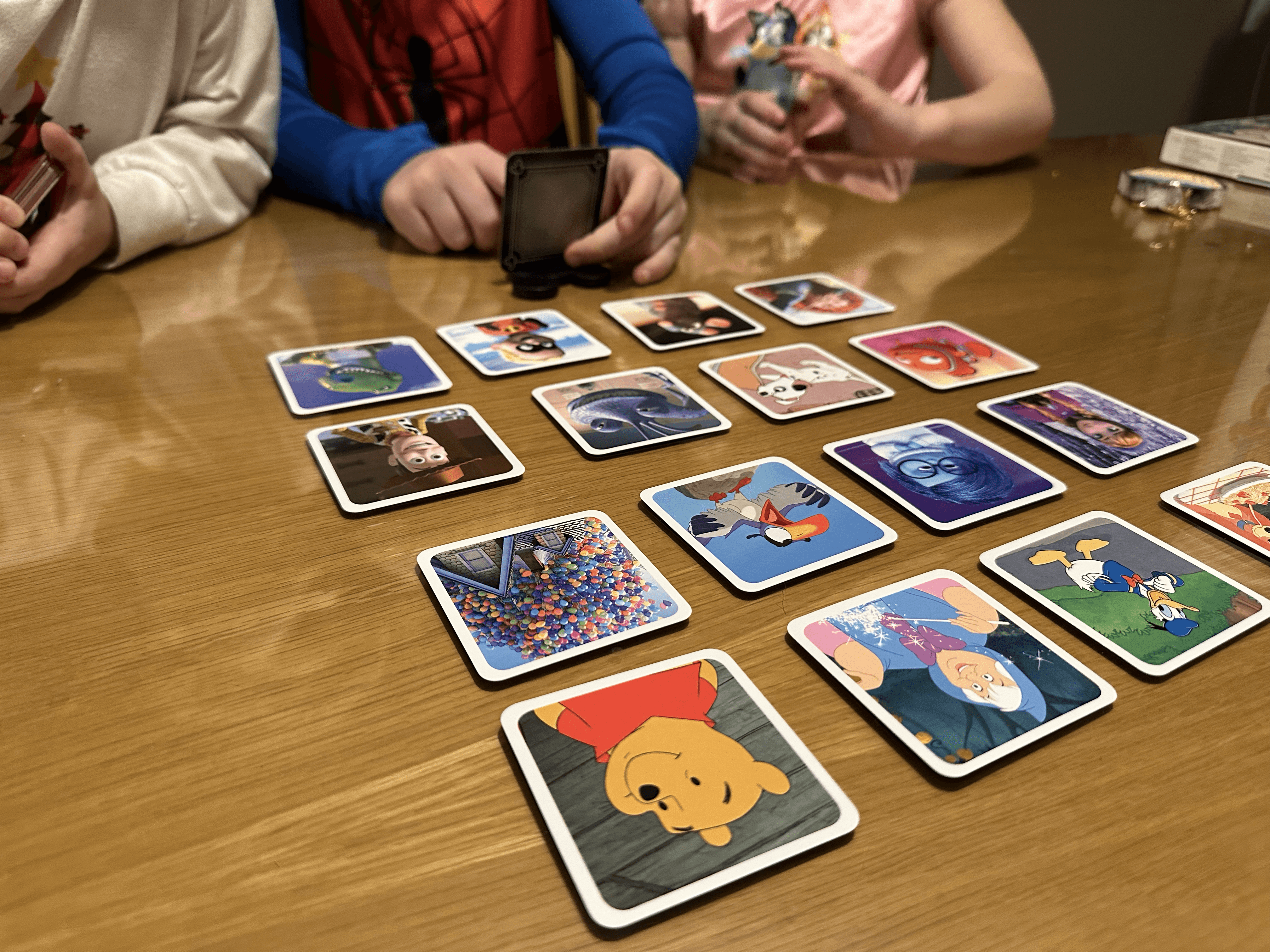
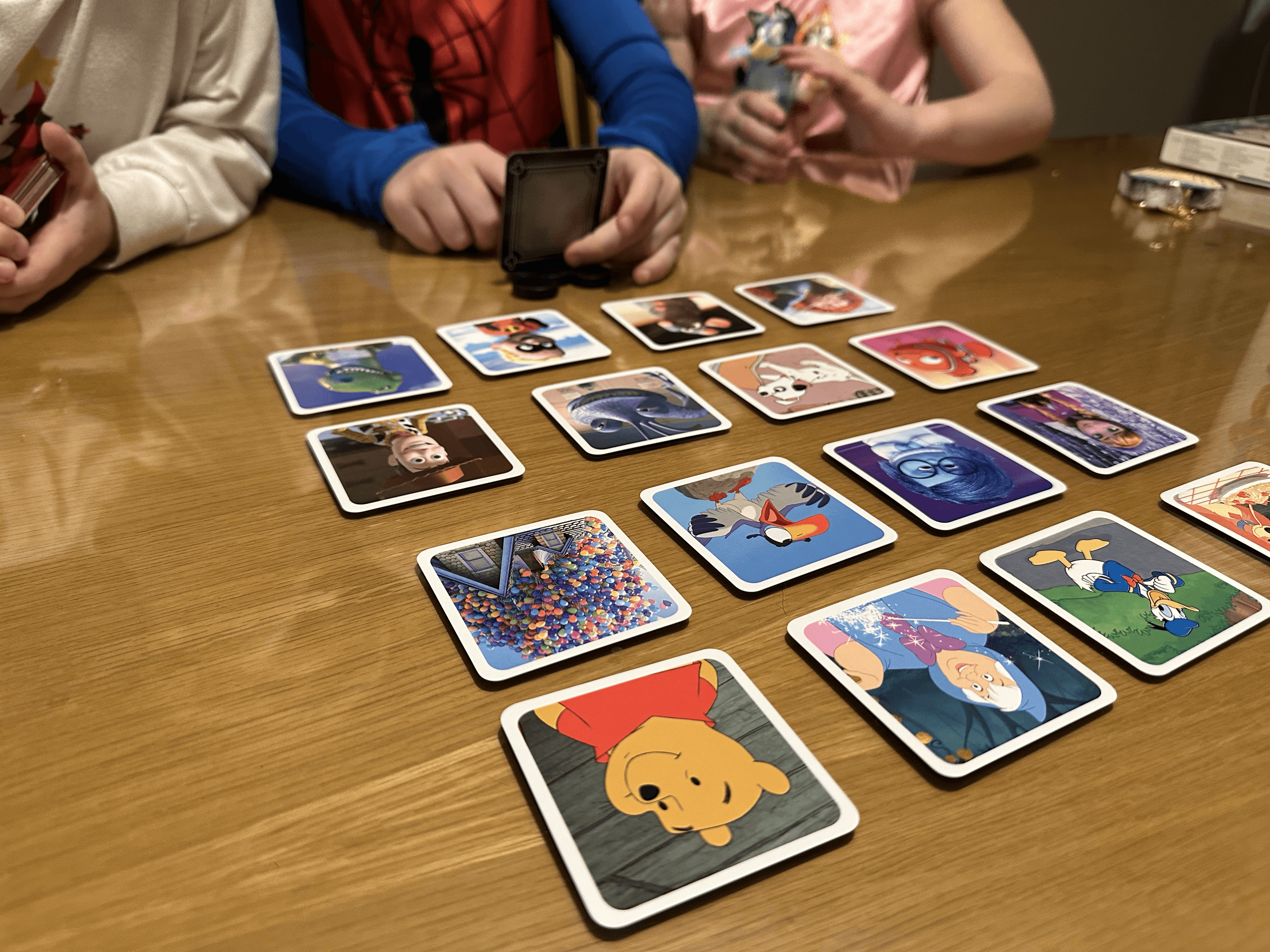
If your family enjoys word games with a little strategy, Disney Codenames is a fun way to bring Disney into game night.
The goal is simple: give one-word clues to help your team guess the right Disney characters on the board. It sounds easy, but it takes some real thinking!
How We Play with Younger Kids
With our kids (ages 4, 5, and 8), we’ve found the best setup is for my husband and I to be the clue givers, while the kids are the guessers.
Being the clue giver actually takes a lot of thought. You have to connect multiple cards with one clue while avoiding the wrong ones, which can be challenging even for adults. We’ve let our kids try being the clue giver, and while they can do it, it definitely takes practice and a lot more thinking than they’re usually up for during game night.
Why We Love It
Great for teamwork
Builds thinking and word association skills
Easy to adjust for younger kids
It’s a game that grows with your family and one that gets even better as kids get older and start creating their own clues.
🛒 Find Disney Codenames online
Disney Hedbanz
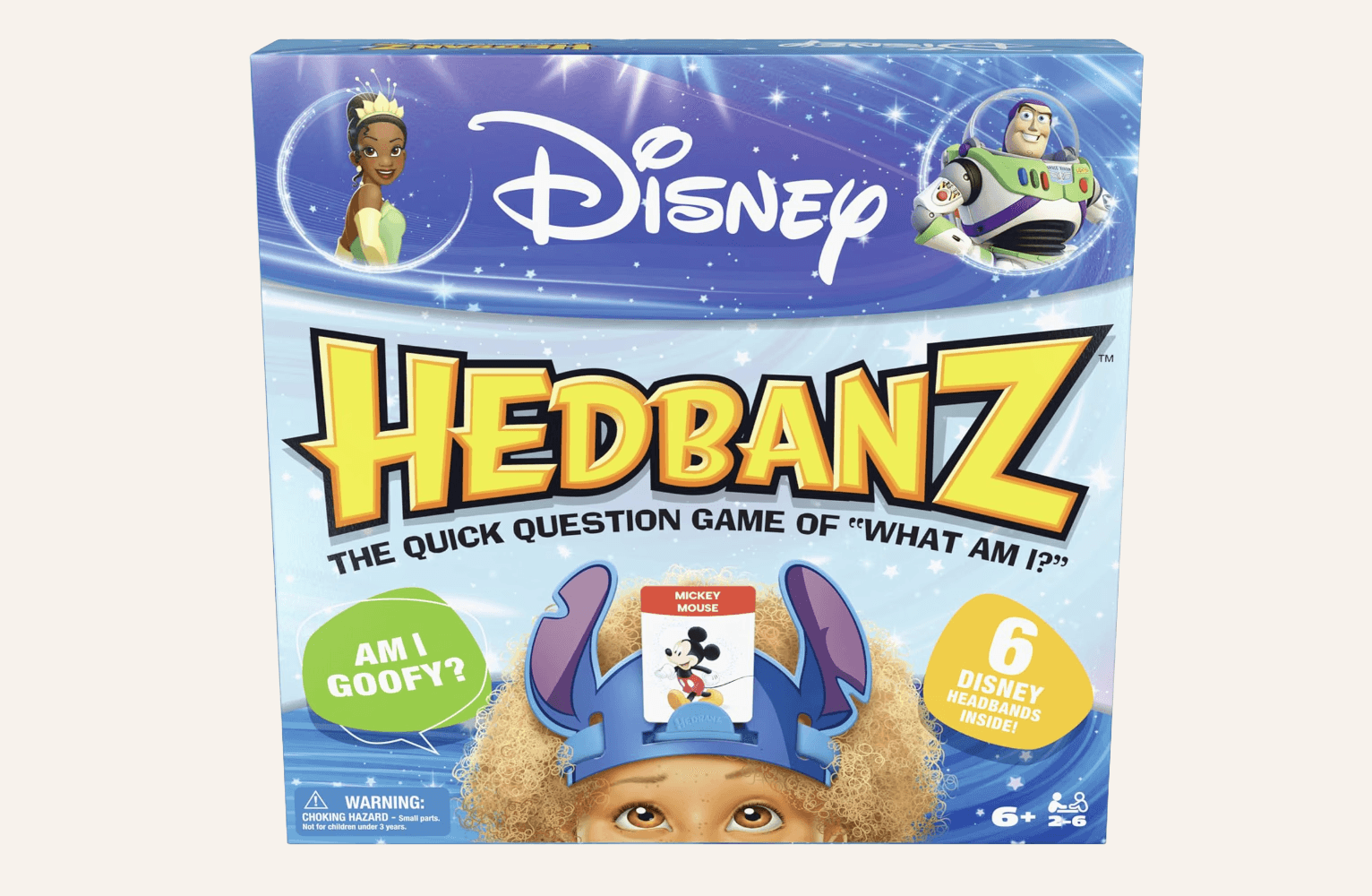
This is a fun and interactive game for the whole family.
Each player wears a headband with a Disney character card they can’t see and asks yes-or-no questions to figure out who they are.
Why We Love It
Easy for younger kids to play
Lots of laughs and silly moments
Quick and simple to set up
Our kids love asking questions like “Am I a princess?” or “Am I an animal?” and trying to guess as fast as they can.
It’s one of those go-to games when you want something light, fun, and easy for the whole family to enjoy.
🛒 Find Disney Hedbanz on Amazon
Disney Guess in 10
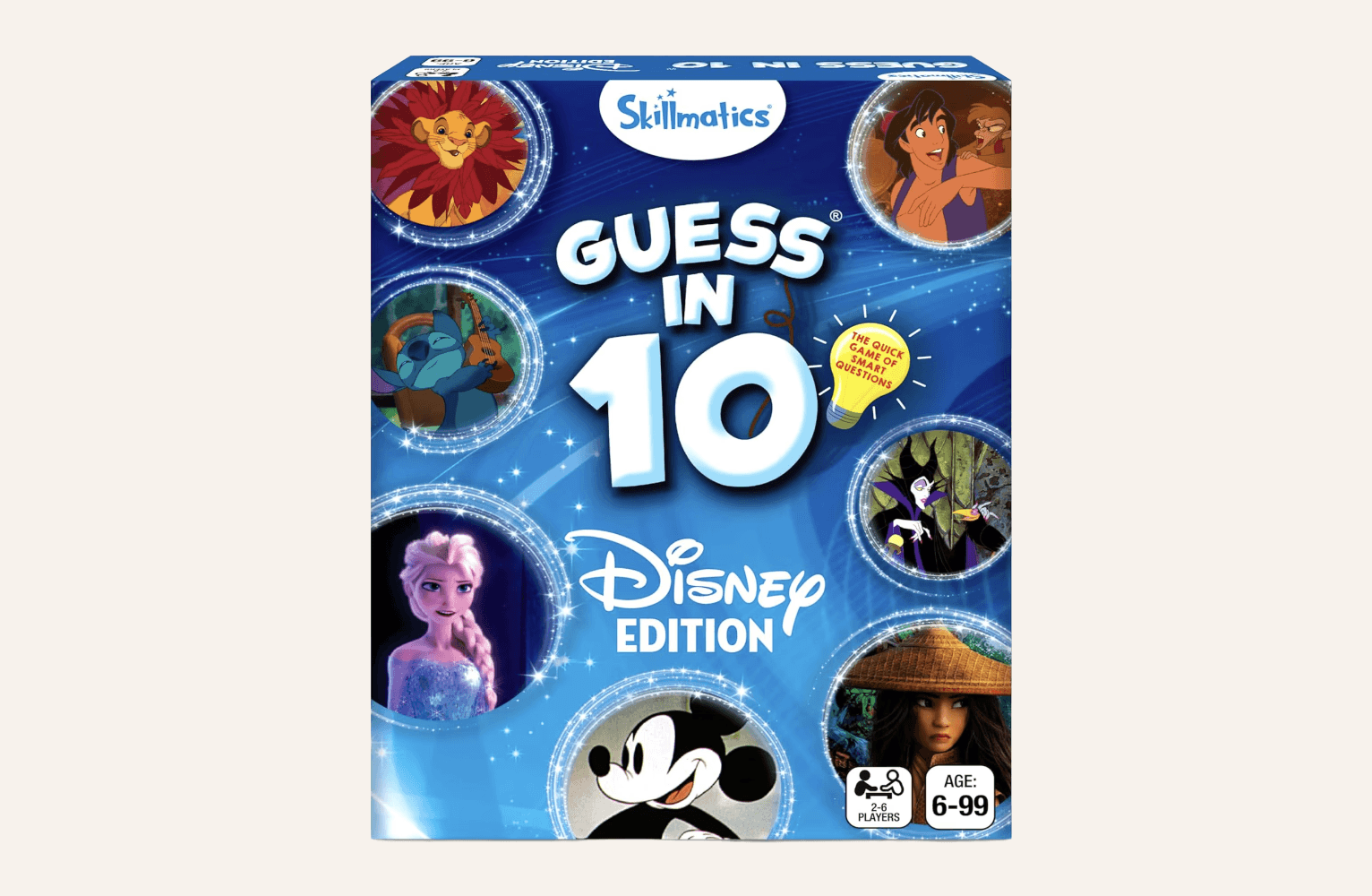
If your child loves guessing games but doesn’t want to wear a headband, Disney Guess in 10 is a great alternative.
Instead of wearing a card, players ask up to 10 questions to figure out the Disney character on the card. It feels very similar to Hedbanz, but a little more relaxed and flexible.
Why We Like It
No headbands needed
Easy for younger kids to jump into
Encourages thinking and asking good questions
It’s a great option if your kids enjoy guessing games but want something a little simpler or less silly than wearing the headbands.
🛒 Find Disney Guess in 10 on Amazon
Disney Parks UNO
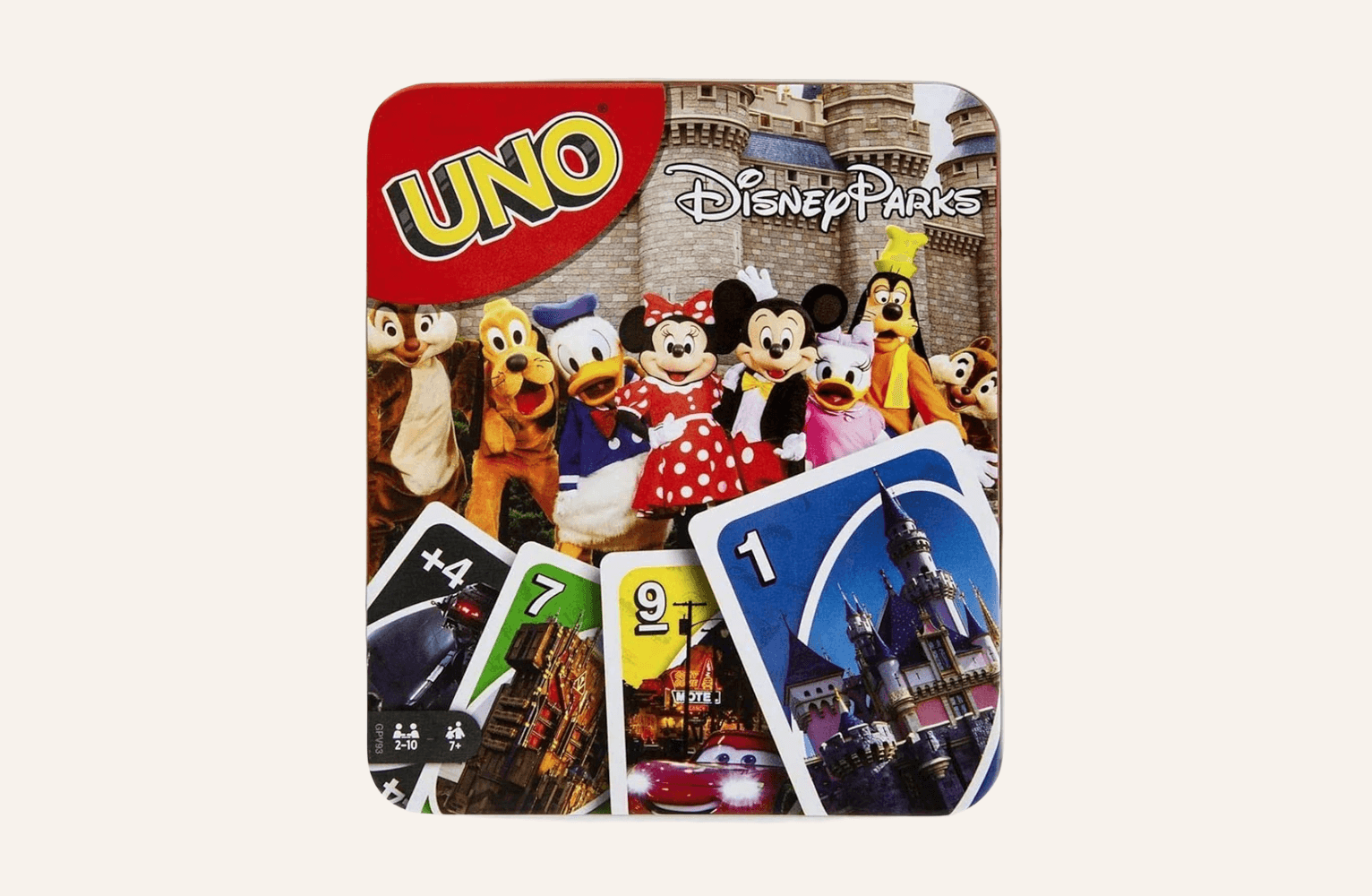
Disney Parks UNO is a favorite in our house and we play it almost daily.
If you already know how to play UNO, you can jump right in. The fun twist is the special Mickey Wild card, which lets you switch hands with another player. That something our kids always get excited about! They actually call this game "Mickey Uno" because of that special card.
Why We Love It
Familiar and easy to play
Fun Disney-themed cards featuring rides and characters
The Mickey Wild card adds an extra layer of excitement
Each card has a special Disney ride, park, or character on it, which makes it even more fun for Disney fans.
It’s a simple, fun game that never gets old and is always a hit with the whole family.
🛒 Find Disney Uno on Amazon
Disney Matching Game
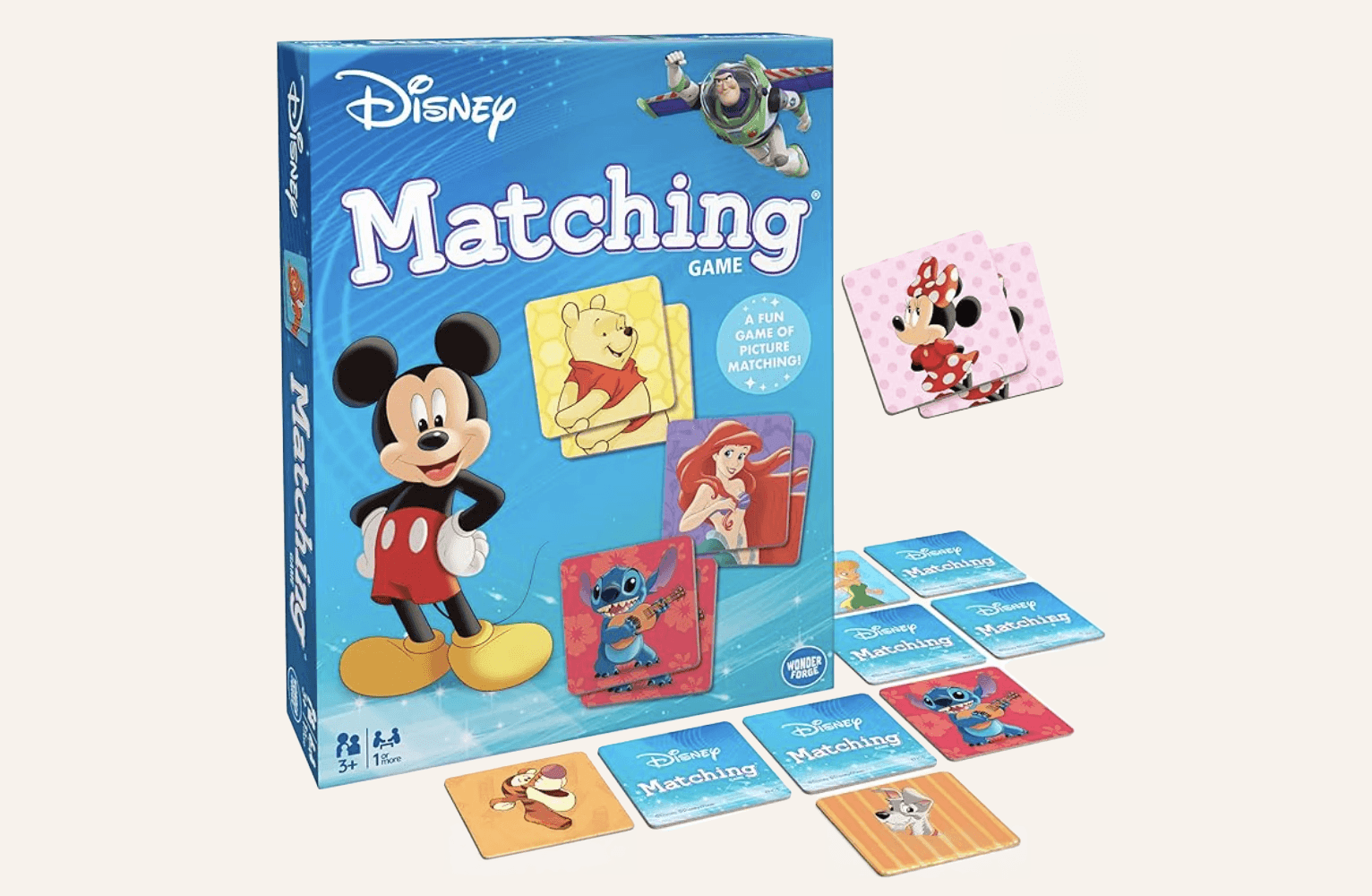
The Disney Matching Game is a simple, classic that’s perfect for younger kids.
Players take turns flipping over cards to find matching pairs, featuring fun Disney characters like Mickey, Ariel, and Stitch.
Why We Love It
Easy for little kids to learn
Great for memory and focus
Quick and fun to play
This is one of the first games our kids could play on their own, and it’s still a fun, low-key option for family game time.
🛒 Find Disney Matching on Amazon
Disney Spot It
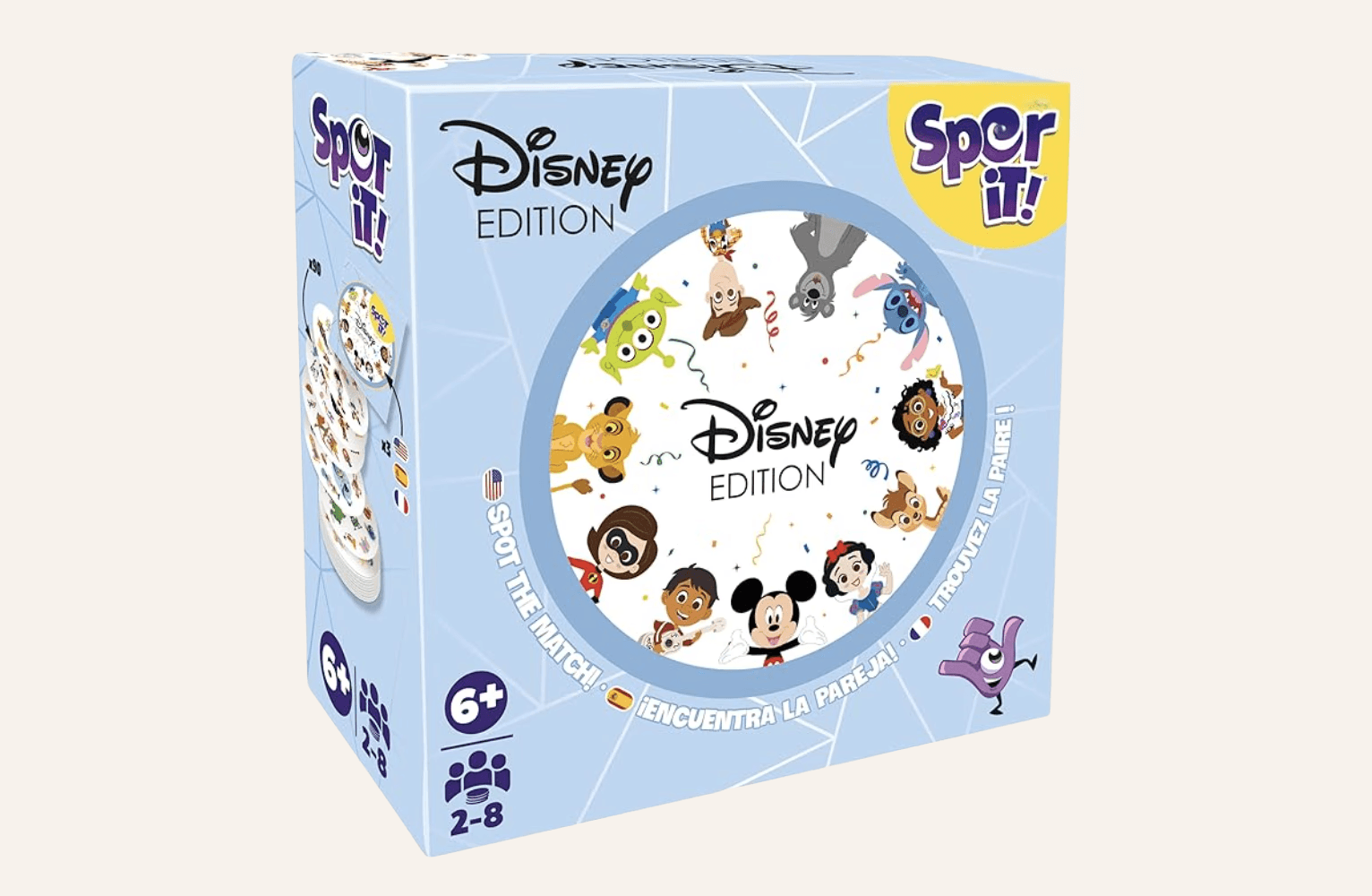
Disney Spot It! is one of those games that gets everyone focused and excited right away.
The goal is simple: find the one matching symbol between two cards as fast as you can. There’s always a match but it’s just a race to spot it first!
Why We Love It
Quick and easy to learn
Keeps kids engaged and focused
Great for all ages
Easy to throw into a bag or purse and play anywhere
It’s fast-paced, a little competitive, and perfect for short bursts of fun during family game night.
🛒 Find Disney Spot It online
Disney Mickey and Friends Monopoly
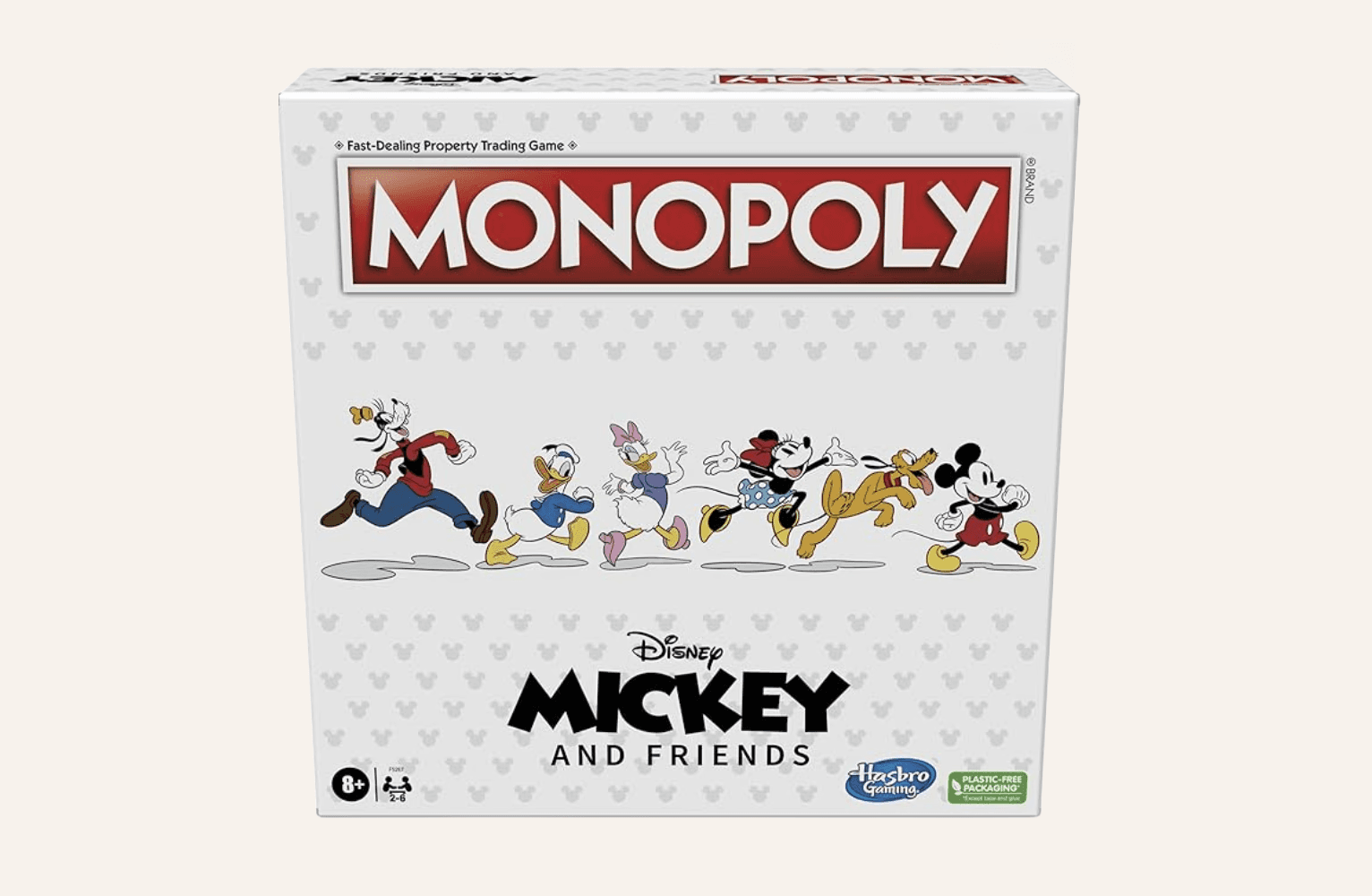
If your family enjoys longer game nights, Disney Monopoly is a fun way to bring a classic game into your Disney collection.
Just like traditional Monopoly, players move around the board buying and trading—but this version features Disney characters, locations, and fun themed details throughout.
Why We Love It
Familiar gameplay that older kids can learn quickly
Fun Disney-themed board and pieces
Great for family game nights when you have more time
This is a great option for families with slightly older kids who are ready for a longer, more strategic game. It’s a fun way to mix a well-known classic with Disney characters your kids already love.
🛒 Find Disney Monopoly on Amazon
Whether you have a house full of Disney fans or just one child who loves all things Disney, these games are a fun way to bring a little extra magic to family game night. We have enjoyed finding games that everyone can play together, and the familiar characters always seem to make them even more exciting. Hopefully this list helps you discover a new favorite game to add to your collection!
Related Articles
10 Princess Themed Games Girls Love
Best Color Matching Games for Toddlers
Best Logic & Strategy Games for Kids
Cooperative Games for Kids
Classic Games for the Kids
Fun Card Games for Kids
Memory & Recognition Games for Kids
How to Play Rainbow Pirates
Games
10 Princess Themed Games Girls Will Absolutely Love
If your daughter love princesses like mine does, princess-themed board games can make family game night feel a little more magical.
Here are some fun princess board games that girls will love playing again and again.
UNO Disney Princess
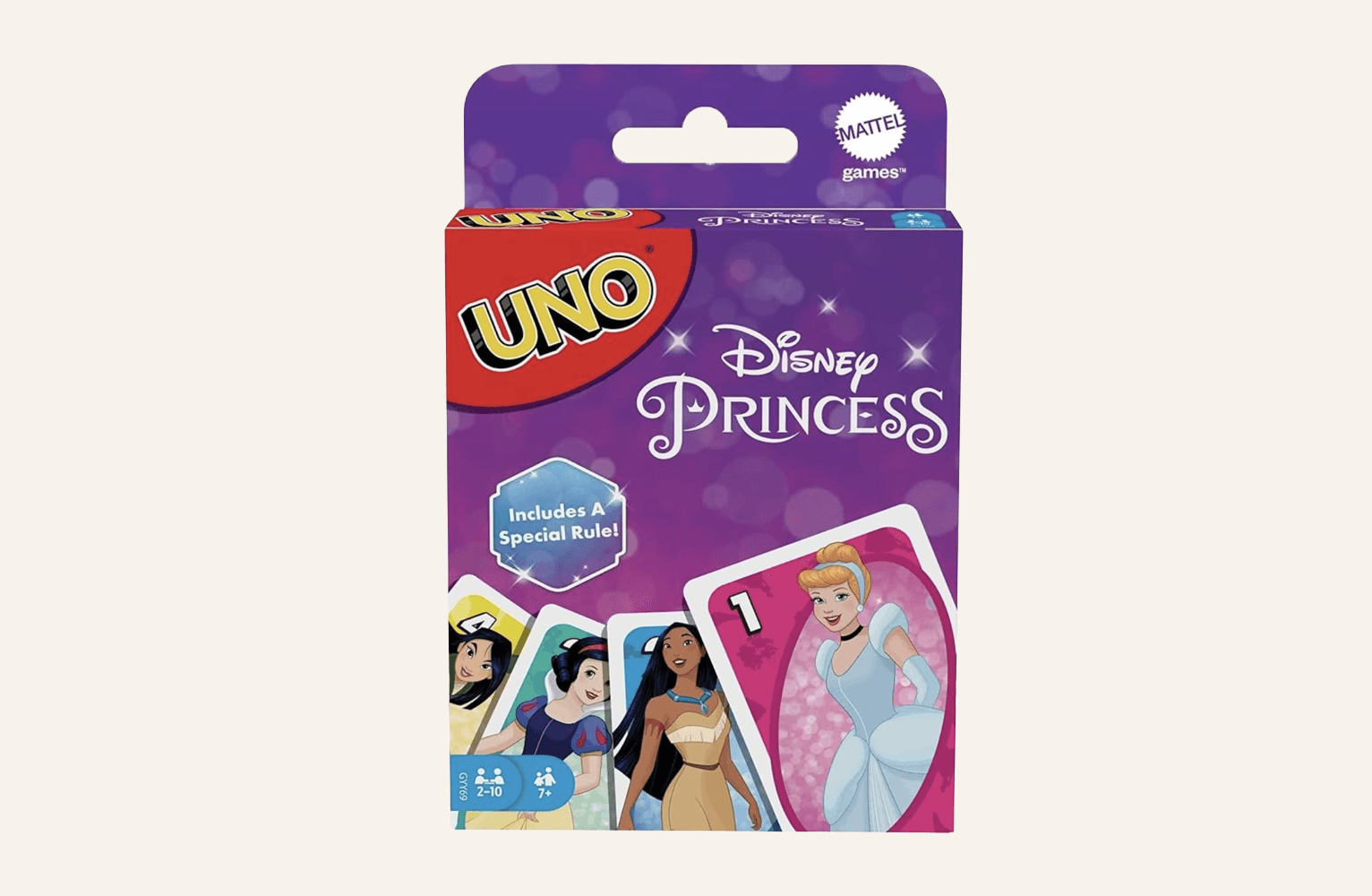
If your kids already love playing UNO, the Disney Princess version is an easy favorite. The game plays just like classic UNO with the same goal of getting rid of all your cards first.
What makes this version special is the “Power of Friendship” wild card.
When a player plays this card, they secretly place one card from their hand face down. The other players each choose one card and place it face down as well, trying to match the color of the secret card.
On the count of three, everyone flips their cards over. Any player who matched the color of the secret card gets to discard their card.
It is a fun little twist that adds some suspense and excitement to the game, especially for kids who already love UNO.
🛒 Find Uno Disney Princess on Amazon
Pretty Pretty Princess (Princess Edition)
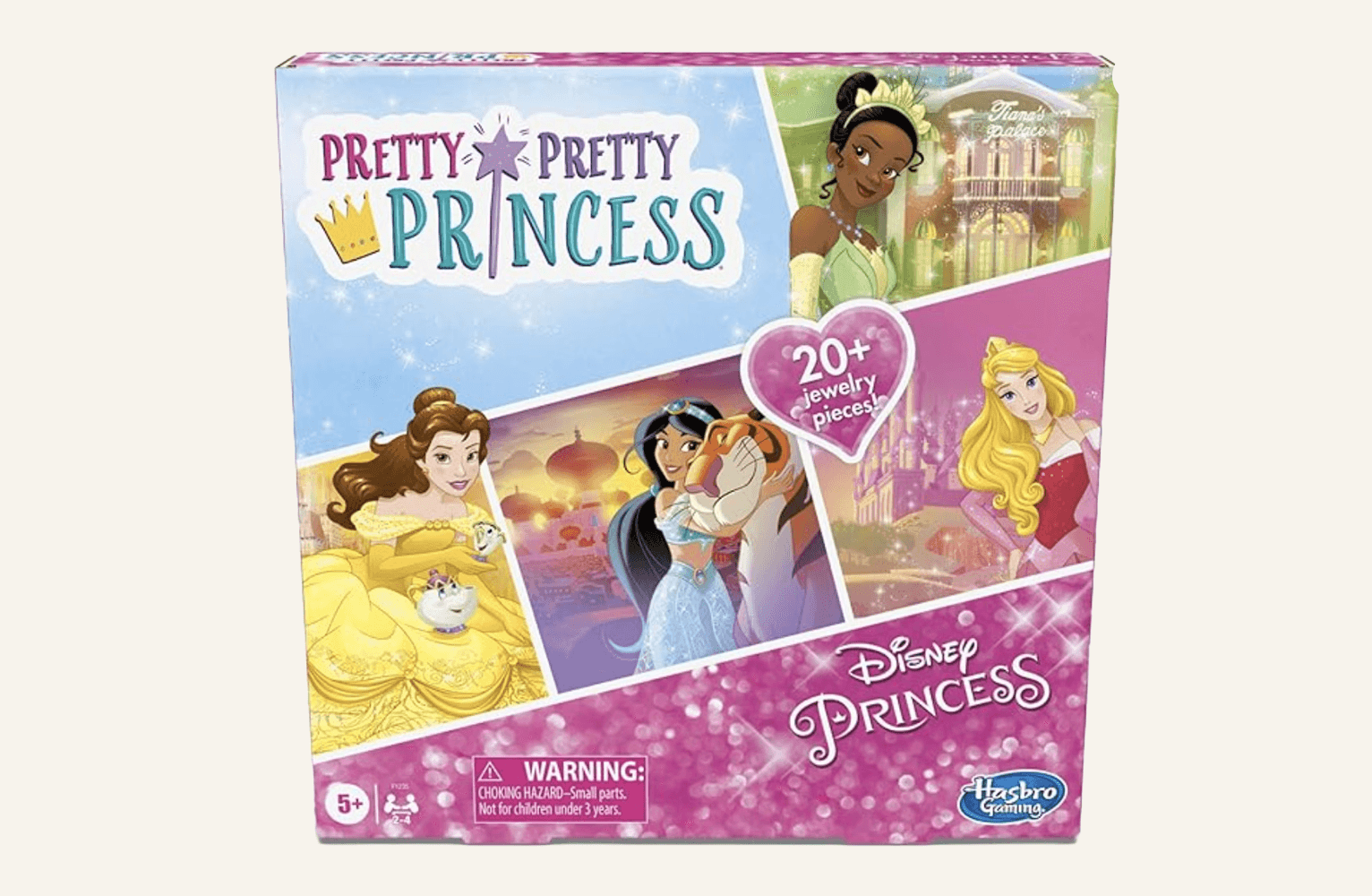
This classic game has been a favorite for years. Players move around the board collecting jewelry pieces like necklaces, bracelets, and rings. The goal is to collect the full set and wear the crown.
In the Disney Princess edition, players choose to play as one of their favorite princesses like Belle, Tiana, Jasmine, or Aurora. Each princess is represented by a different color of jewelry, so kids get to wear pieces that match their character, like yellow for Belle or blue for Jasmine.
Kids love getting to dress up with the jewelry while they play, which makes the game feel extra magical and interactive.
🛒 Find Pretty Pretty Princess (Princess Edition) on Amazon
Princess Guess Who
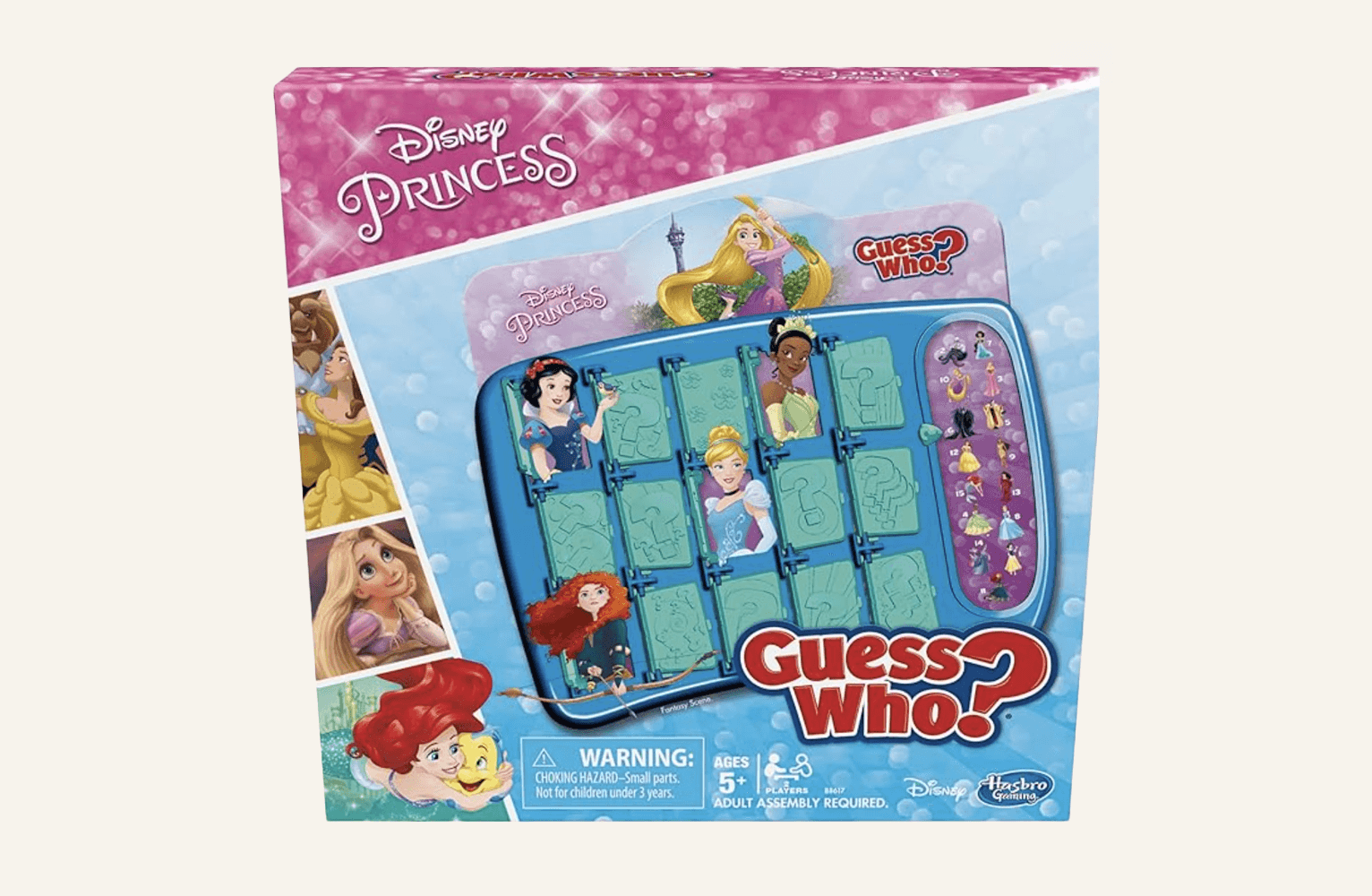
This princess-themed version of the classic Guess Who game adds a magical twist by featuring Disney Princesses on one side of the board and their friends on the other.
Players take turns asking yes-or-no questions to figure out which character their opponent has chosen. The game includes two different character boards, giving kids multiple sets of princesses and sidekick characters to guess from.
It is a fun way for kids to practice observation and reasoning skills while playing with familiar Disney characters.
🛒 Find Princess Guess Who on Amazon
Yahtzee Jr. Disney Princess Edition
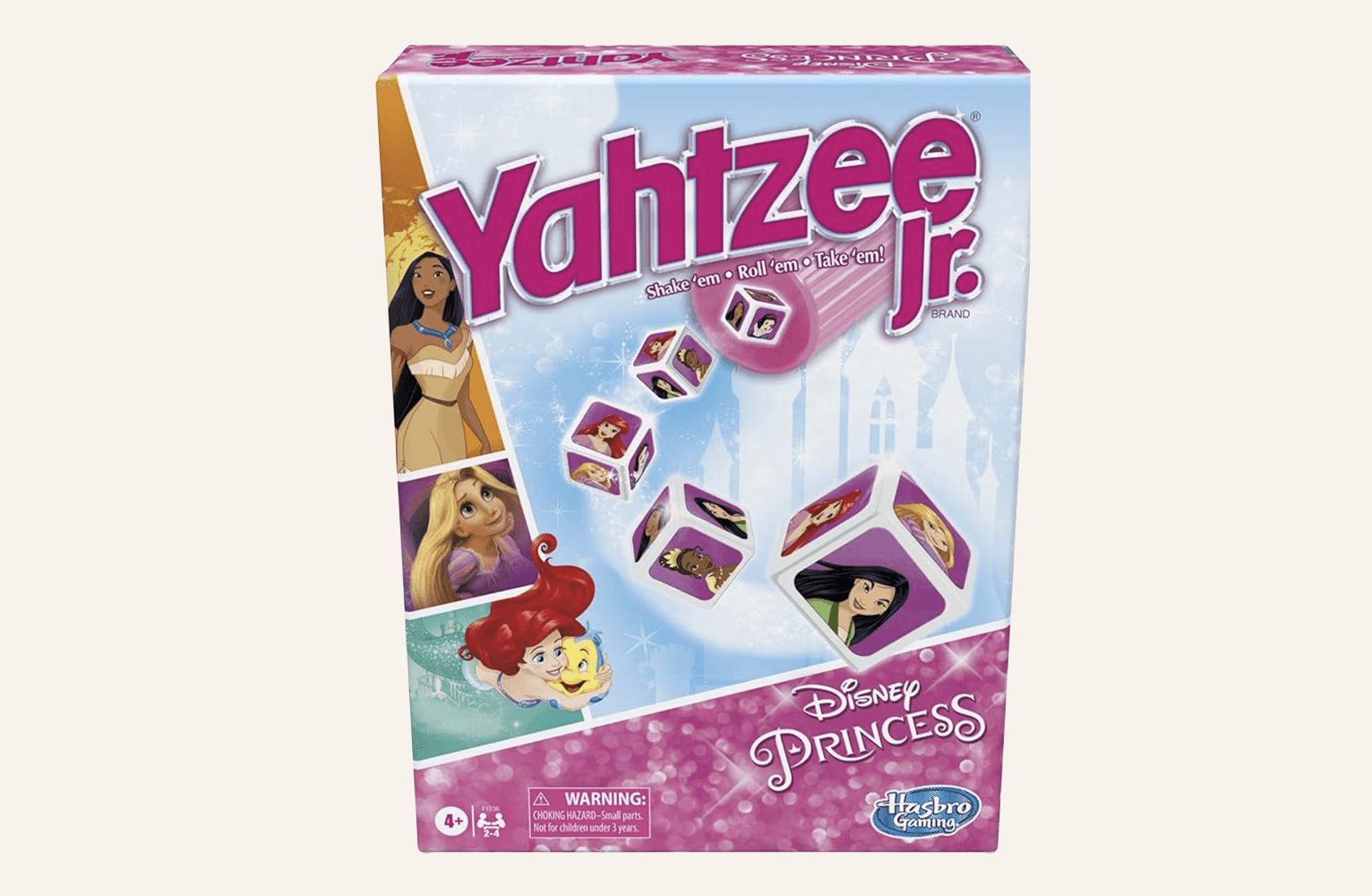
This kid-friendly version of Yahtzee replaces the traditional numbers on the dice with Disney Princess characters. Players roll the dice and try to match combinations of princesses to score points on their scorecard.
The dice feature favorite princesses like Tiana, Mulan, Pocahontas, Rapunzel, Ariel, and Snow White, which makes the game extra fun for kids who love Disney characters.
It is a simple way to introduce younger kids to classic dice games while keeping the gameplay colorful and exciting.
🛒 Find Yahtzee Jr. Disney Princess Edition on Amazon
Disney Princess Candy Land
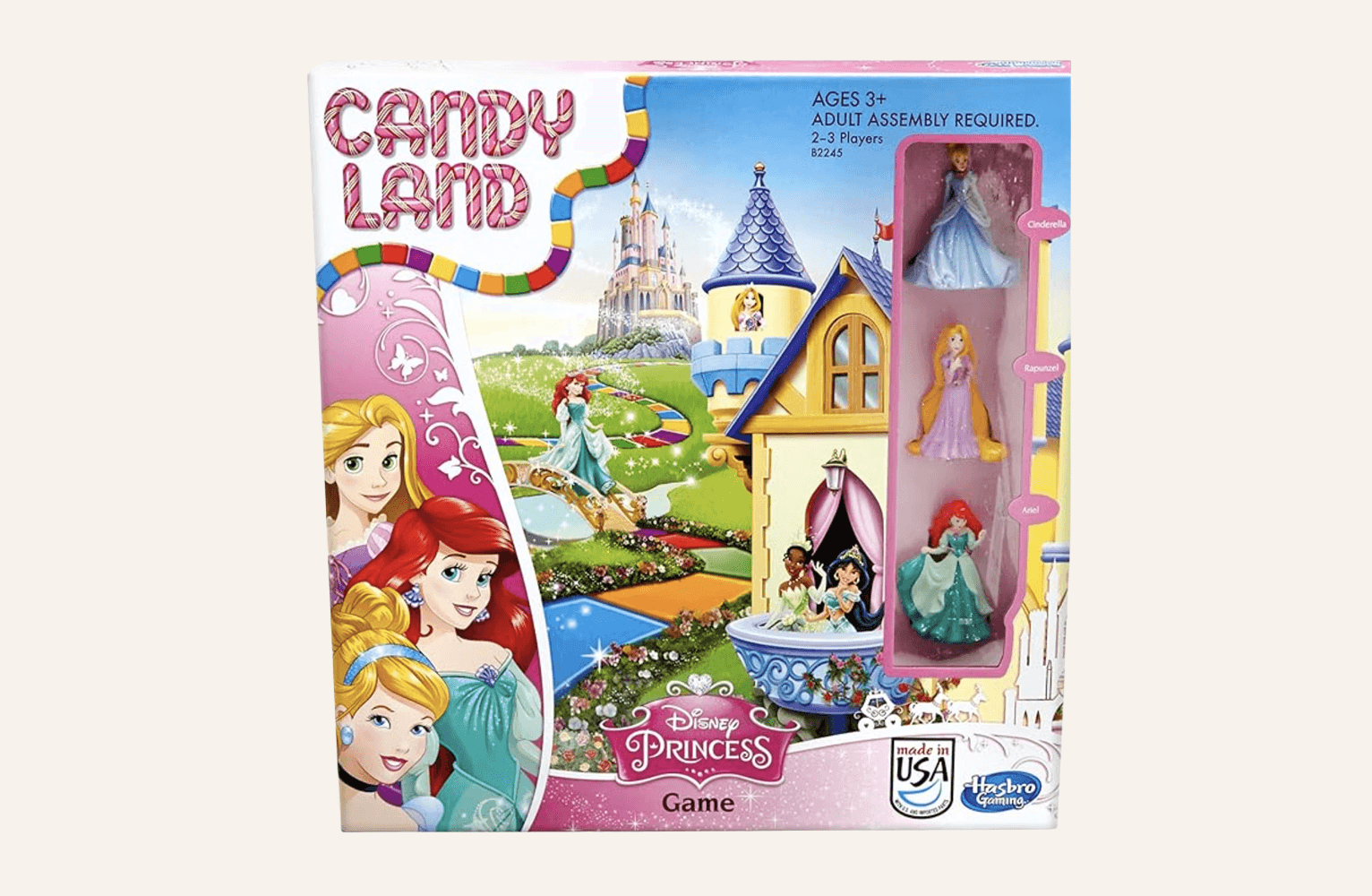
This princess-themed version of Candy Land lets kids play as Cinderella, Rapunzel, or Ariel as they make their way along the colorful path.
As they move through the game, players meet familiar Disney characters and follow the rainbow trail toward the enchanted castle. The first player to reach the castle wins.
It is a simple and fun choice for younger kids, especially those who love princesses and classic board games.
🛒 Find Disney Princess Candy land on Amazon
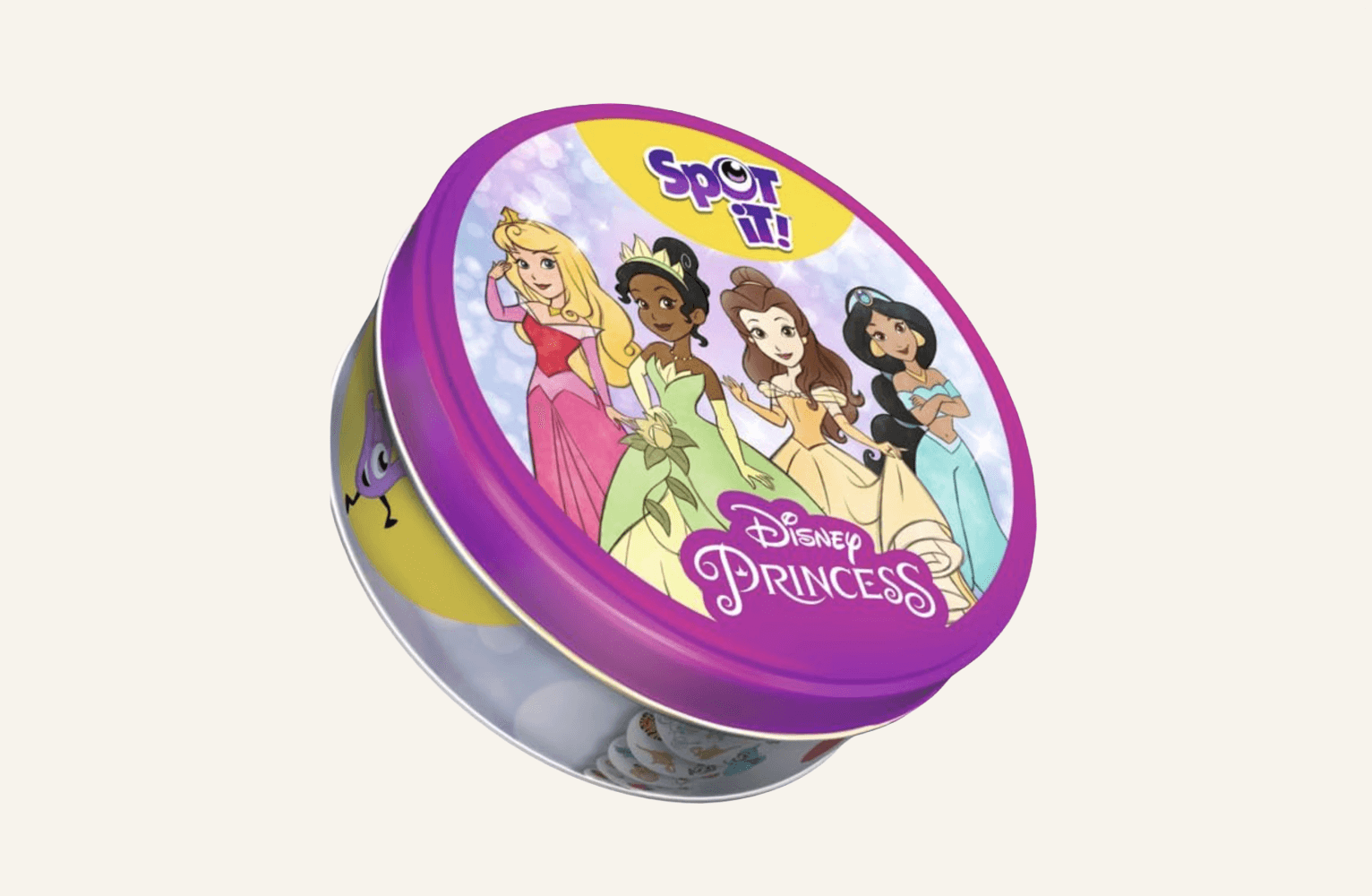
Disney Princess Spot It
Spot It is a fast and exciting matching game where players race to find the one matching symbol between two cards.
The princess edition adds Disney princess characters and symbols that kids will recognize and love.
It is quick, energetic, and great for short play sessions.
🛒 Find Disney Princess Spot It on Amazon
Princess Matching Game
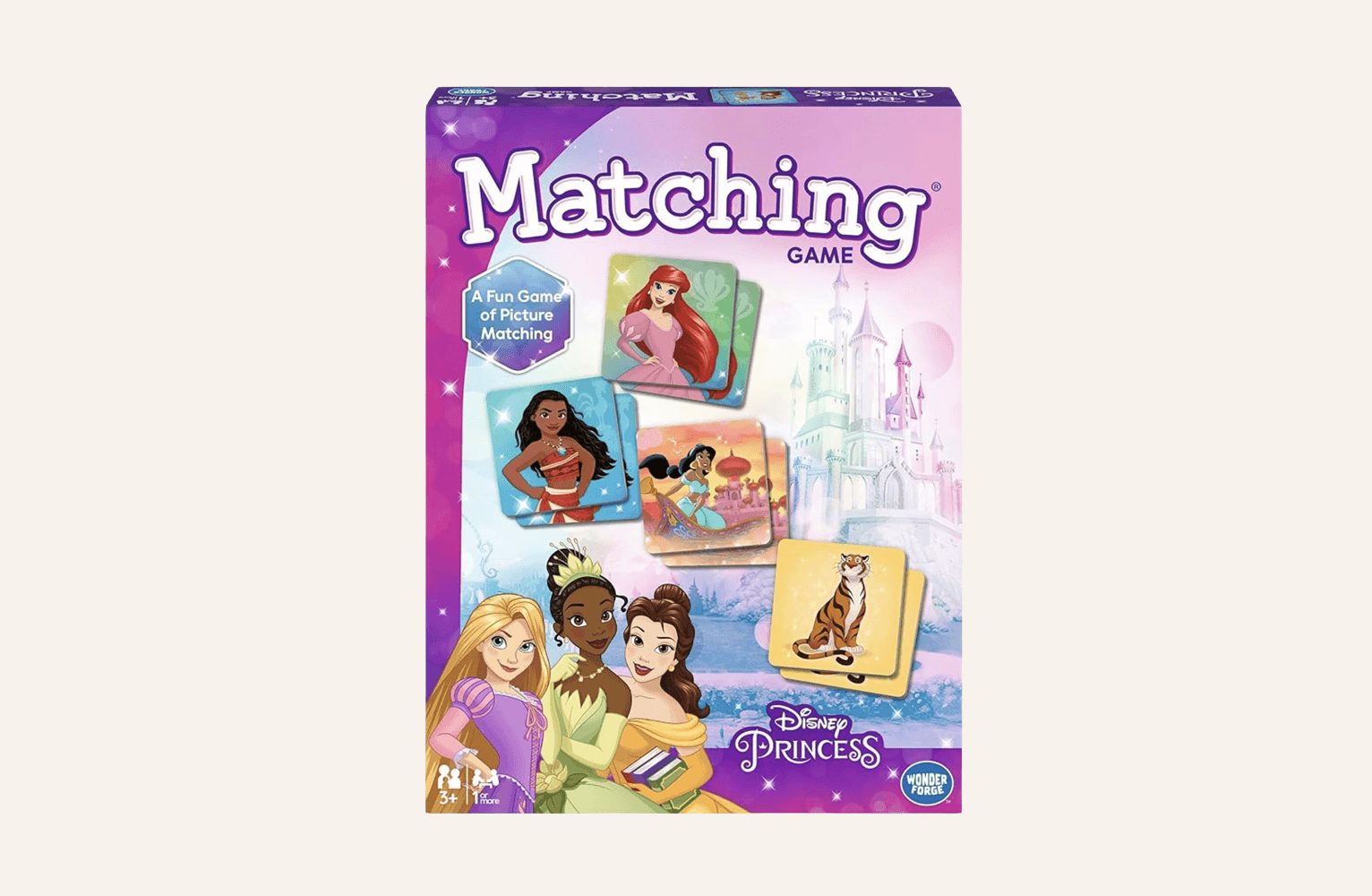
Matching games are always a hit with younger kids. Players flip cards and try to find matching pairs of princess characters.
It helps build memory skills while still feeling like a fun challenge.
🛒 Find Princess Matching Game on Amazon
Princess Chutes and Ladders
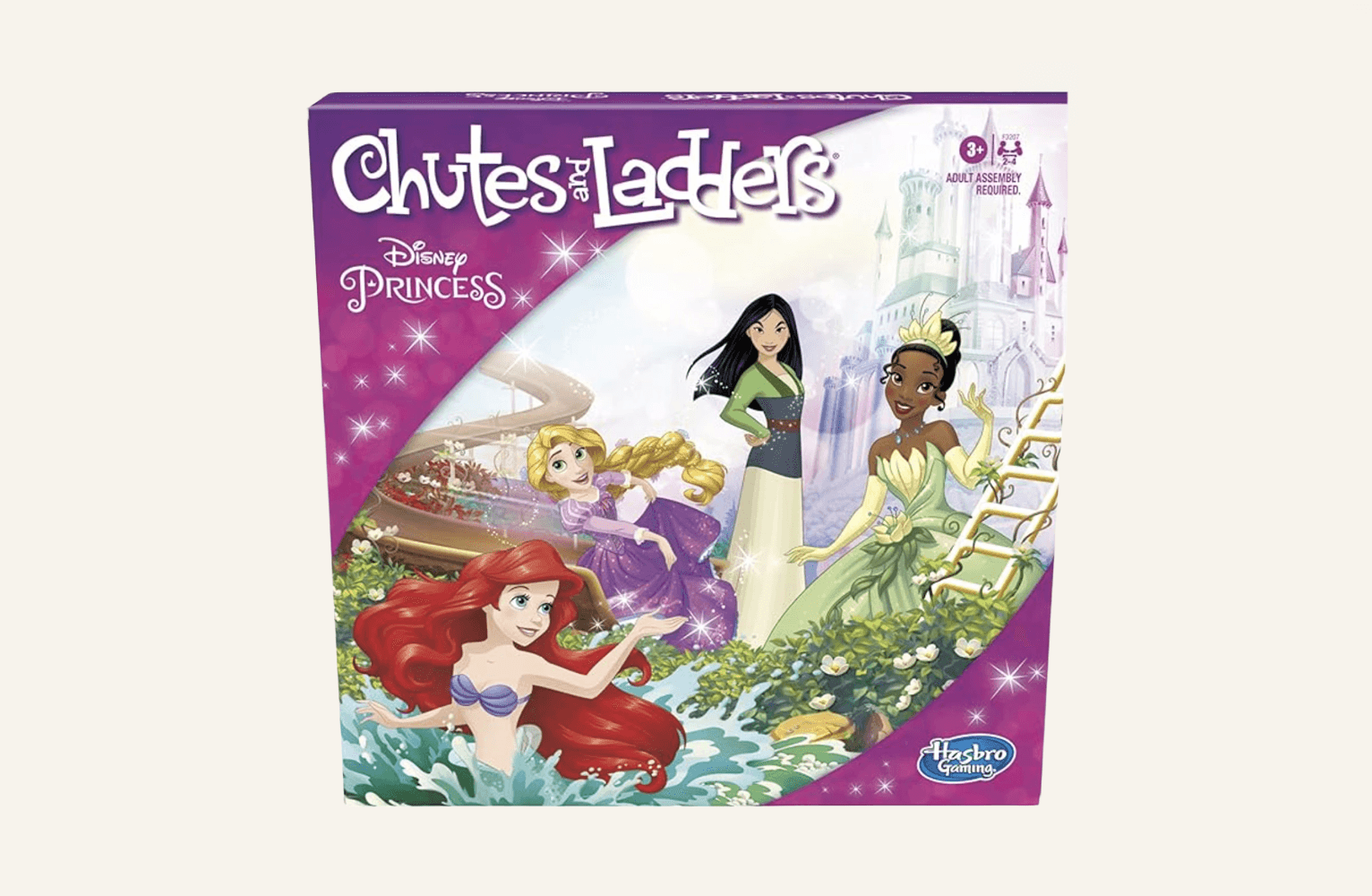
This princess-themed version of the classic Chutes and Ladders game adds a magical twist with favorite Disney characters throughout the board.
The game includes four princess heart pawns that kids can personalize. With 12 different Disney Princess stickers, players can decorate their pawn with their favorite character before starting the game, which makes it even more fun and interactive.
🛒 Find Princess Chutes and Ladders on Amazon
Disney Princess Treats & Sweets Party Game
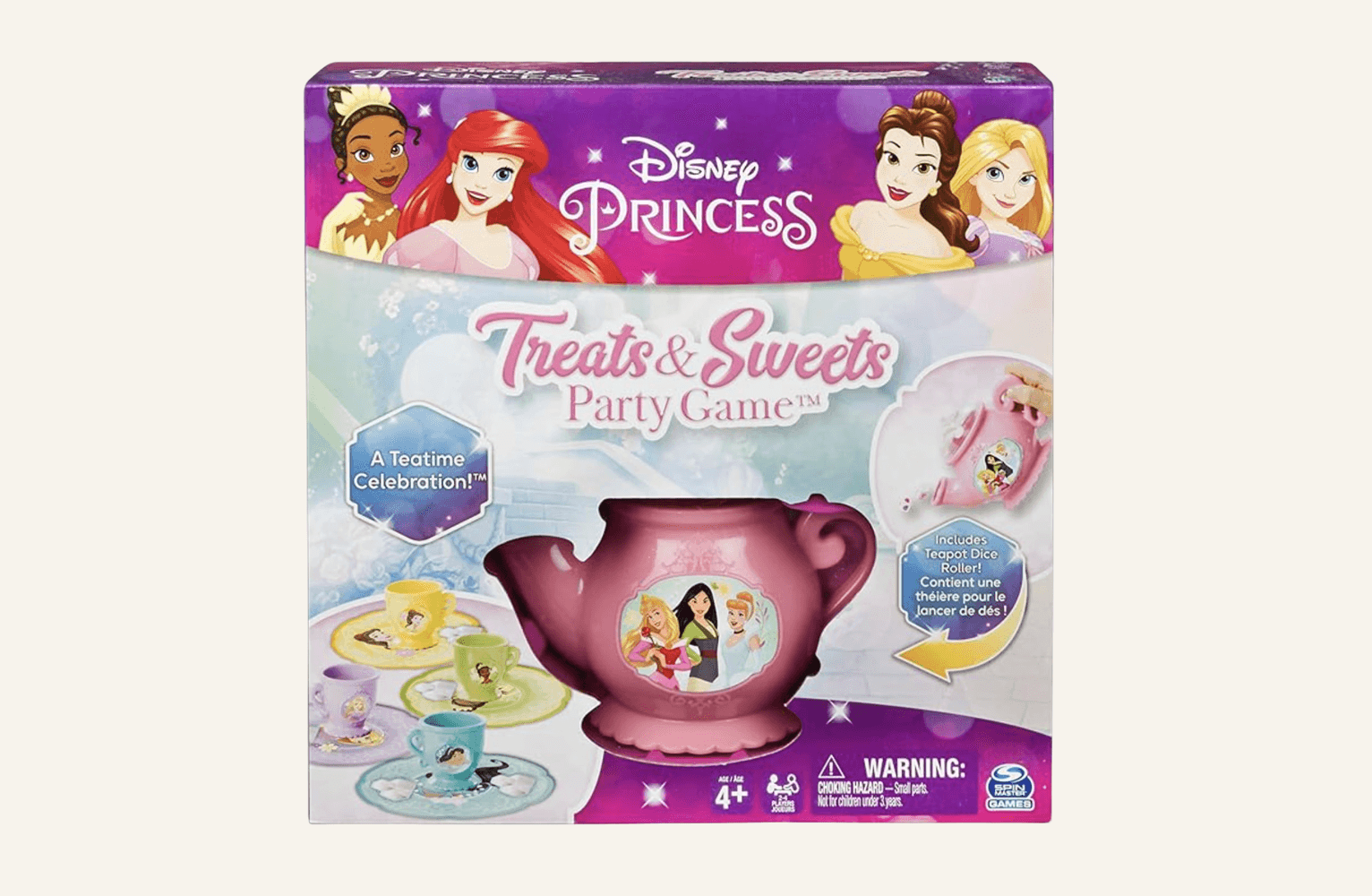
This adorable princess-themed game feels like a little royal tea party with your favorite Disney characters. Players take turns pouring the dice from a small teapot to see how they move around the board and which treat cards they can flip over.
As the game goes on, players collect matching sweets and add cupcakes to their plate. The goal is to be the first player to complete their cupcake set.
With bright cupcake pieces and a fun tea party theme, this is a great game for younger kids who enjoy princesses, pretend play, and simple matching games.
🛒 Find Disney Princess Treats & Sweets Party on Amazon
Disney Princess Pop Up Game
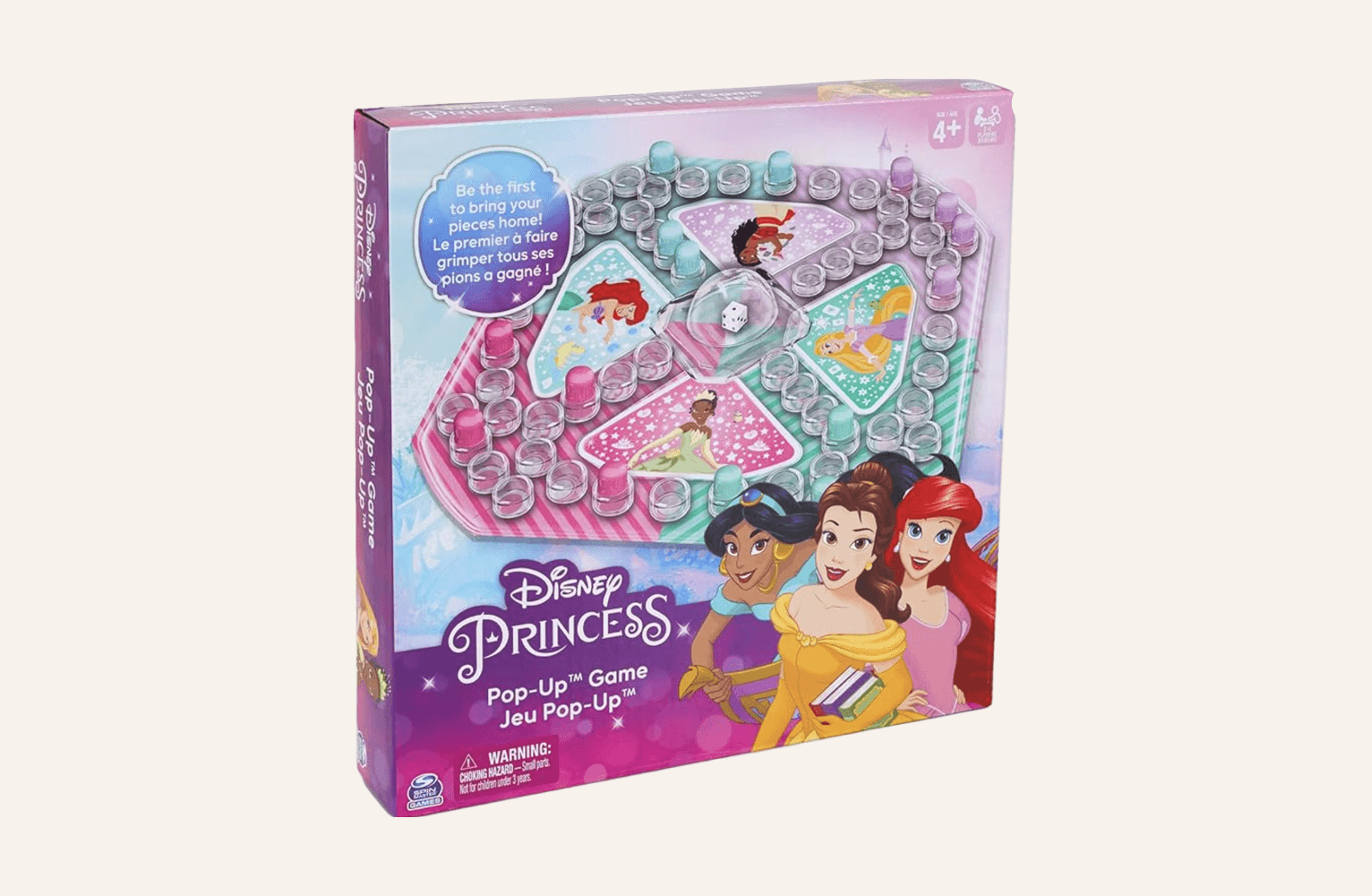
This princess-themed version of the classic Trouble game keeps the same fun gameplay that many families already know. Players press the pop-up dice bubble in the center of the board to roll the dice and move their pieces around the board.
The goal is to move all of your princess pieces around the board and safely back home before the other players do. Along the way, you can bump opponents back to the start if you land on their space.
If your family already enjoys Trouble, this Disney Princess version adds a magical twist with colorful princess pieces and familiar characters kids will love.
🛒 Find Disney Princess Pop Up Game on Amazon
If you have a princess fan at home, any of these games would be a fun one to add to your collection. I love finding games that are simple enough for younger kids but still fun for the whole family to play together. Hopefully this list helps you find a new favorite for your next game night!
Related Articles
Best Color Matching Games for Toddlers
Best Logic & Strategy Games for Kids
Cooperative Games for Kids
Classic Games for the Kids
Fun Card Games for Kids
Memory & Recognition Games for Kids
How to Play Rainbow Pirates
Games
Memory & Recognition Games for Kids
Memory and recognition games are a fun and engaging way to help kids develop important thinking skills. These games often involve matching pictures, remembering where items are placed, or recognizing patterns and colors. They support focus, concentration, and visual memory in a playful and low-pressure setting.
In this section of the blog, you’ll find a variety of memory and recognition games that have been great for our family. Whether your child is just starting to explore games or already enjoys a challenge, these activities are perfect for building brain power while having fun.
Guess Who
Guess Who is a classic two-player guessing game where players race to figure out their opponent’s mystery character. Each player starts with a board full of cartoon-style faces and takes turns asking yes-or-no questions like “Does your person wear glasses?” or “Is your person wearing a hat?” to eliminate possibilities and narrow down who their opponent has chosen. The first player to correctly guess the mystery character wins the round.
It’s a fun mix of observation and memory that’s perfect for young kids and families. With simple rules and quick rounds, Guess Who is great for developing reasoning skills while keeping the competition friendly and engaging.
There are numerous versions of Guess Who. You can choose the option that is best for your kiddo!
🛒 Find Guess Who on Amazon
Other Guess Who versions:
Princess Guess Who
Animal Guess Who
Harry Potter Guess Who
Paw Patrol Guess Who
Super Mario Guess Who
Tactile Turtles
Tactile Turtles is a sensory-based matching game designed for young children, typically ages 2 and up. The game includes a group of colorful turtle figures, each with a unique textured shell such as bumpy, smooth, or ridged.
Included are 10 double sided activity cards where children are encouraged to explore the textures, colors, shapes and sizes. Some versions of the game cards include math lessons such as counting, patterns, addition/subtraction and more/less activities.
Our 3 year old loves to play this game the most. He likes matching the colors, shapes and sizes onto the cards, but mostly, he loves laying out all the turtles into a grid and playing a big matching game with the shapes on the turtles' bellies.
As a parent, I love that this game is hands-on and supports tactile discrimination, fine motor skills, simple math concepts and early cognitive development in a fun and engaging way. I also enjoy that there are so many different "games" within this one box, it makes it a fun, engaging and different experience each time we play.
🛒 Find Tactile Turtles on Amazon
Sequence for Kids

Sequence for Kids is a simplified version of the classic Sequence game, designed especially for children ages 3 to 6. It combines matching, strategy, and a little luck to keep kids engaged while learning basic gameplay skills.
Players take turns playing animal cards from their hands and placing a chip on the matching animal space on the game board. The goal is to be the first to get four chips in a row, either across, up and down, or diagonally.
Special cards add fun twists, like the unicorn card that lets you place a chip anywhere or the dragon card that lets you remove an opponent’s chip.
Sequence for Kids helps children develop critical thinking, pattern recognition, and turn-taking, all in a fun and easy-to-learn format perfect for younger players.
🛒 Find Sequence for Kids on Amazon
🛒 Find Paw Patrol Sequence on Amazon
Turtle Shells: A First Memory Game
This is a beginner-friendly memory and matching game designed for toddlers and preschoolers, typically ages 2 and up. It features 3 colorful turtle figures with 3 removable shells and 27 turtle picture cards. There are two different games you can play with the materials provided.
Game 1: Basic Turtle Shells
In this game, on their turn, players will flip over a turtle card. If the picture on the card matches one of the 3 plastic turtles (the turtle color and the shell color), the player keeps the card and switches at least 2 of the turtle shells. If it does not match on of the turtles, the player puts it back face down in the same spot they got it from. Then the next player goes. The game is over once one player has collected between 4-6 cards (depending on how many people are playing).
Game 2: Advanced Turtle Shells
This game is played the same as above, except you start by rolling the 2 colored dice. If the two colors match one of the plastic turtles (the turtle and shell color), then you get to turn over a card. If the card then matches a turtle, the player gets to keep the card and switch at least 2 turtle shells.
Turtle Shells helps young children build memory, concentration, fine motor skills, and early matching abilities in a fun and gentle way making it a great introduction to board games and turn-taking.
Zingo
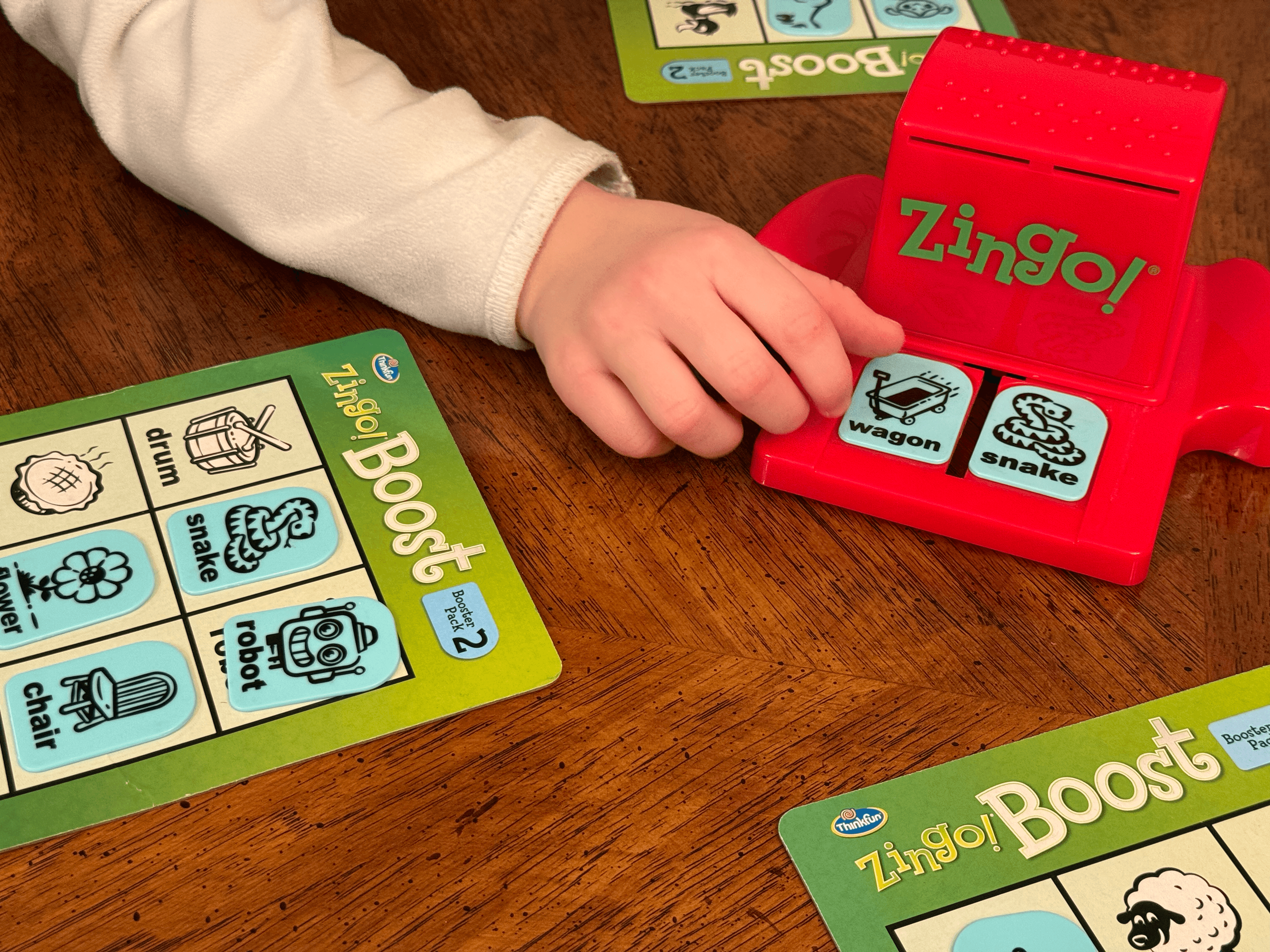
Zingo is a fast-paced, beginner-friendly bingo-style game that helps young kids build early reading, matching, and vocabulary skills. Instead of calling out numbers, players race to match picture-and-word tiles to their corresponding spaces on a Zingo card. The signature red tile dispenser adds a fun hands-on element as it “zings” out two tiles at a time. The first player to fill their board shouts “Zingo!” and wins.
Perfect for preschoolers and early elementary-aged kids, Zingo encourages quick thinking, visual recognition, and friendly competition.
There are numerous Zingo Expansion Pack that add more variety and challenge with double-sided cards and new tile sets. It’s a great way to keep the game fresh as your child’s skills grow.
🛒 Find Zingo on Amazon
Other Zingo expansions:
Zingo Expansion #1
Zingo Expansion #2
Zingo Sight Word Expansion #1
Zingo Sight Word Expansion #2
Zingo Word Builder
Zingo 1-2-3
Games
Fun Card Games for Kids
Card games are a fun and simple way to bring the whole family together. Whether you’re at home, on vacation, or waiting at a restaurant, a deck of cards can turn any moment into playtime. They’re easy to pack, quick to learn, and great for building skills like matching, memory, counting, and turn-taking.
This post contains affiliate links. As an Amazon Associate, we earn from qualifying purchases at no extra cost to you.
What You’ll Find in This List
Card games we actually play as a family
Games that work for toddlers through elementary kids
Easy ways to modify games so everyone can join
Don’t Worry About the Age on the Box
I don't use the age recommendation on the box to determine if my child is able to play the game. If it is a game that looks fun and engaging, I will adjust and modify how to play so my child, no matter what age, can join in on the fun. The more we play, the easier it gets for them and eventually we get to play the original way the game was intended to be played. So don't focus on the age, adjust the game so all can play!
Rainbow Pirates: A Rummy-Style Family Card Game
Ages: 7+ (4+ with help)
Play time: 20–30 minutes
Skills: Set building · Friendly competition · Strategy
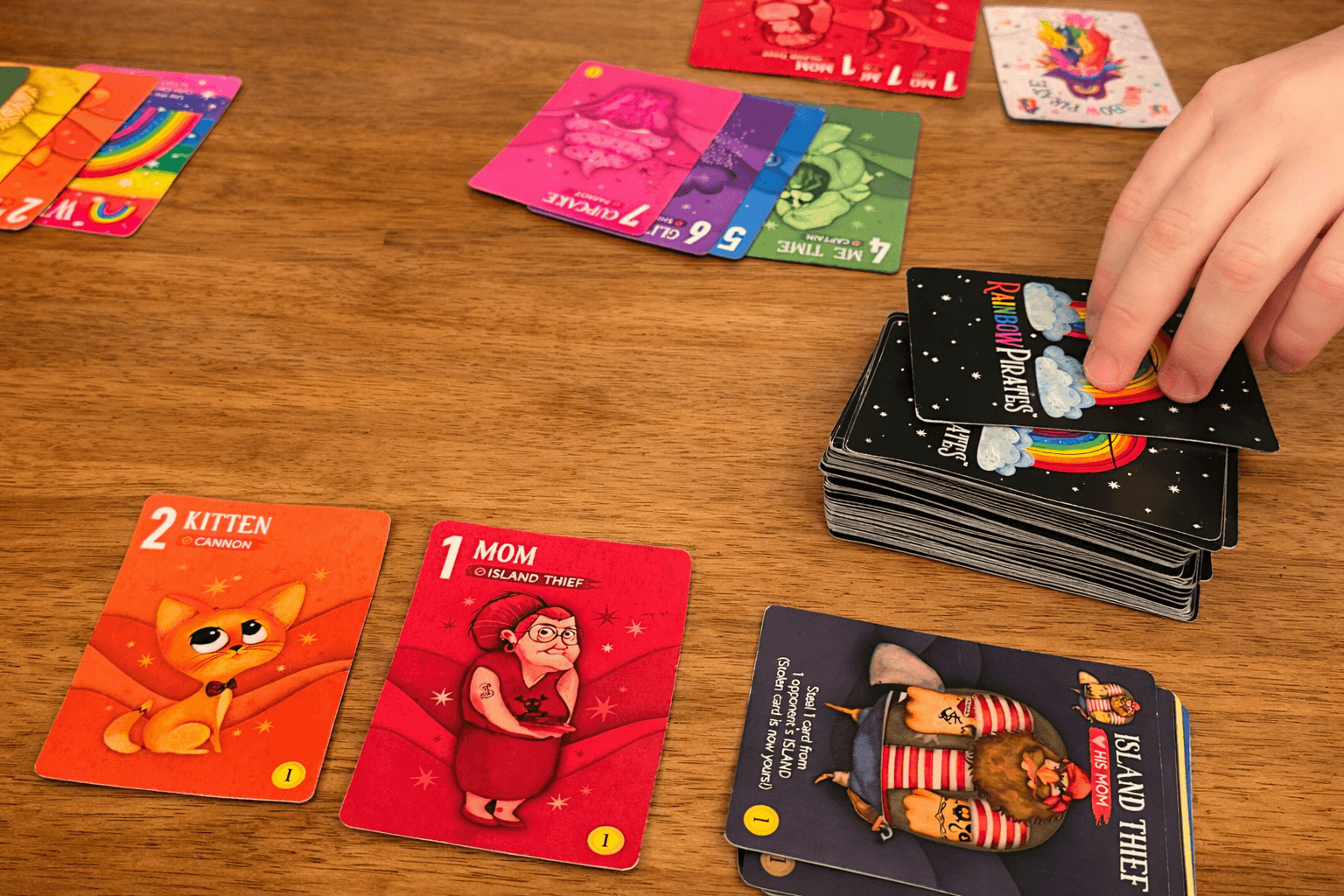
Rainbow Pirates is one of our family's favorite card games because it's easy to learn while still offering plenty of strategy for both kids and adults (In fact, our 5-year-old often beats us!). If you're new to the game, we also have a complete How to Play Rainbow Pirates guide that walks you through the rules before you play.
Players take turns collecting and playing rainbow-colored cards to build color sequences on their board. Longer sequences score more points. But watch out, opponents can play action cards to steal your cards, break up your sets, or block your progress.
The game ends when one player has made two full rainbows of cards. The players total up their points and the player with the most points wins.
With fun and engaging artwork, and a balanced mix of luck and strategy, Rainbow Pirates is THE go-to for our family that is enjoyed by both kids and parents!
🛒 Find Rainbow Pirates on Amazon
Uno: A Classic Family Card Game for All Ages
Ages: 5+ (3+ with help)
Play time: 10–20 minutes
Skills: Color recognition · Number recognition · Learning to win and lose
We have so many different versions of Uno that are played at our house! From Classic Uno, Uno Attack, and even Disney Uno. Uno is a game that our kids began playing at a young age – it's our 3-year-old's favorite game right now! Kids can start by just matching the colors. Once they have that down, they can move on to matching numbers. The strategy part will come later, but that’s part of the fun as they grow with the game.
What makes Uno a favorite for our family is its mix of simplicity and surprise. The rules are easy, match a card by color or number, or draw if you can’t. But the action cards (Skip, Reverse, Draw Two, and Wild) keep everyone on their toes and add just the right amount of strategy. And of course, nothing beats the thrill of being able to shout “Uno!” when you’re down to your last card.
That’s why Uno works for every age. It’s simple enough for little ones to join in, but it still challenges older kids (and parents!) to think ahead. Along the way, kids are building color and number recognition, practicing turn-taking, and learning to win (and lose) with a smile. It’s a family favorite and one of our first games to review for a reason!
Another version we’ve had fun with is Uno Spin! It plays a lot like classic Uno, but certain cards make you spin the wheel when they’re played. And you never know if that spin is going to help you or hurt you!
You might get lucky and be able to discard all the cards of one color from your hand, or you might have to keep drawing until you find a certain color. Other spins can even change the game for everyone, like making each player take two turns instead of one. The spinner adds just enough unpredictability to make every game feel a little different, while still keeping the simple Uno rules that kids already know.
🛒 Buy Uno on Amazon
🛒 Buy Uno Spin on Amazon
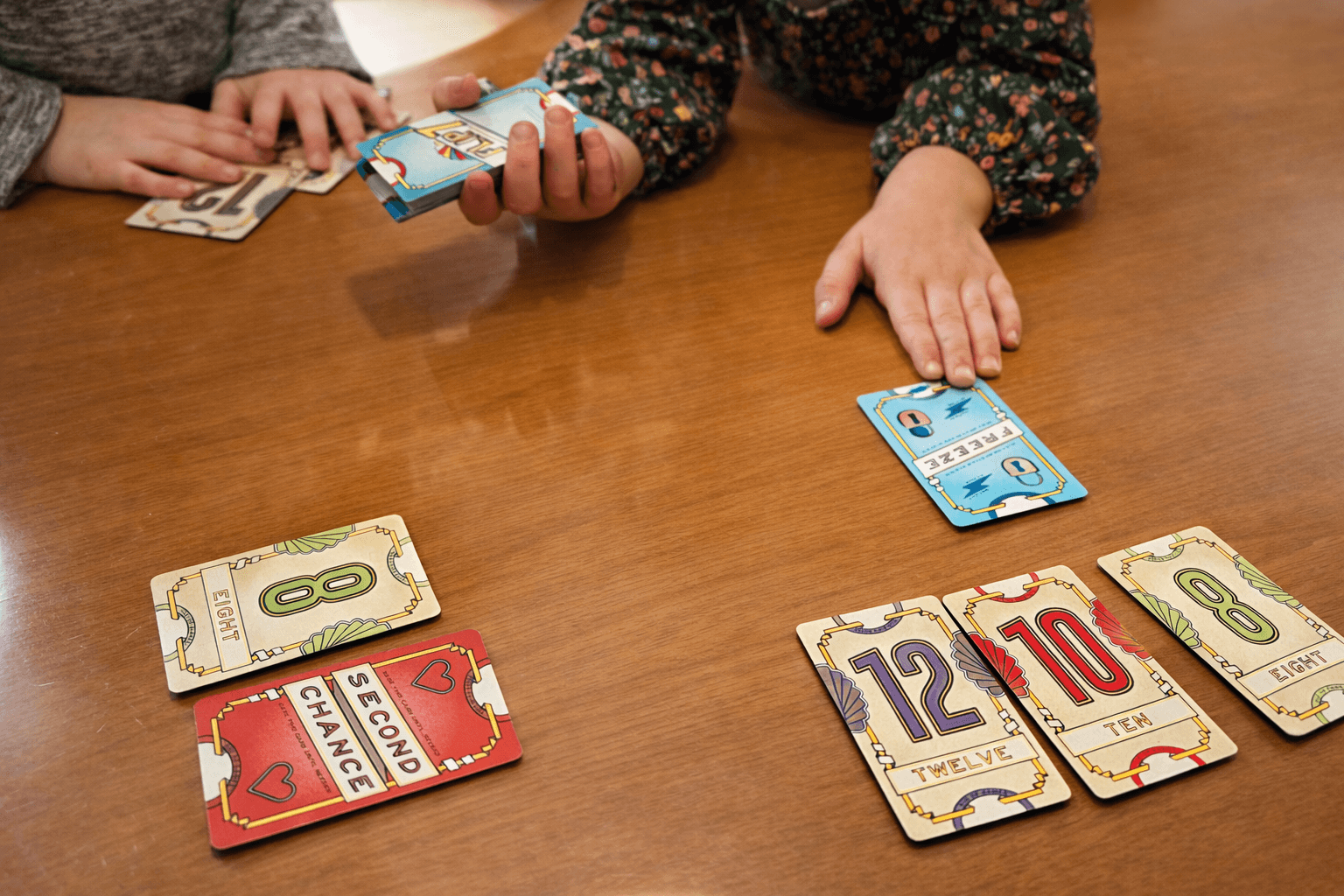
Flip 7: A Press-Your-Luck Card Game Kids Can Grow Into
Ages: 6+ (3+ with help)
Play time: 15–20 minutes
Skills: Simple math · Decision-making · Risk assessment
We love playing this game as a family. It is easy enough for our 3 year old to play, yet still engages our 7 year old. We also play this game with all adults and it is just as fun! This game works for all ages, which makes it a must have in your household!
Flip 7 is a push-your-luck card game where players race to be the first to reach 200 points. On your turn, you can “hit” to draw another card or “stay” to keep your points for the round but if you draw a duplicate number card, you bust and score nothing. Collecting seven unique numbers ends the round instantly and earns a 15-point bonus. Action cards like Freeze, Flip Three, and Second Chance can shake things up, while modifier cards add or multiply your score. After each round, players total their number cards, apply multipliers, then add modifiers and any Flip 7 bonus. Rounds continue until someone hits 200 points, and the highest score wins.
When we play with our younger kids, we let them decide if they want to keep going to stop for the round but we do the math part for them. Our older son can do it all on his own. We do still check everyones math at the end of each round. :)
🛒 Buy Flip 7 on Amazon
Bold: A Pattern-Matching Press-Your-Luck Card Game
Ages: 6+ (4+ with help)
Play time: 15–25 minutes
Skills: Pattern recognition · Risk assessment · Attention to detail
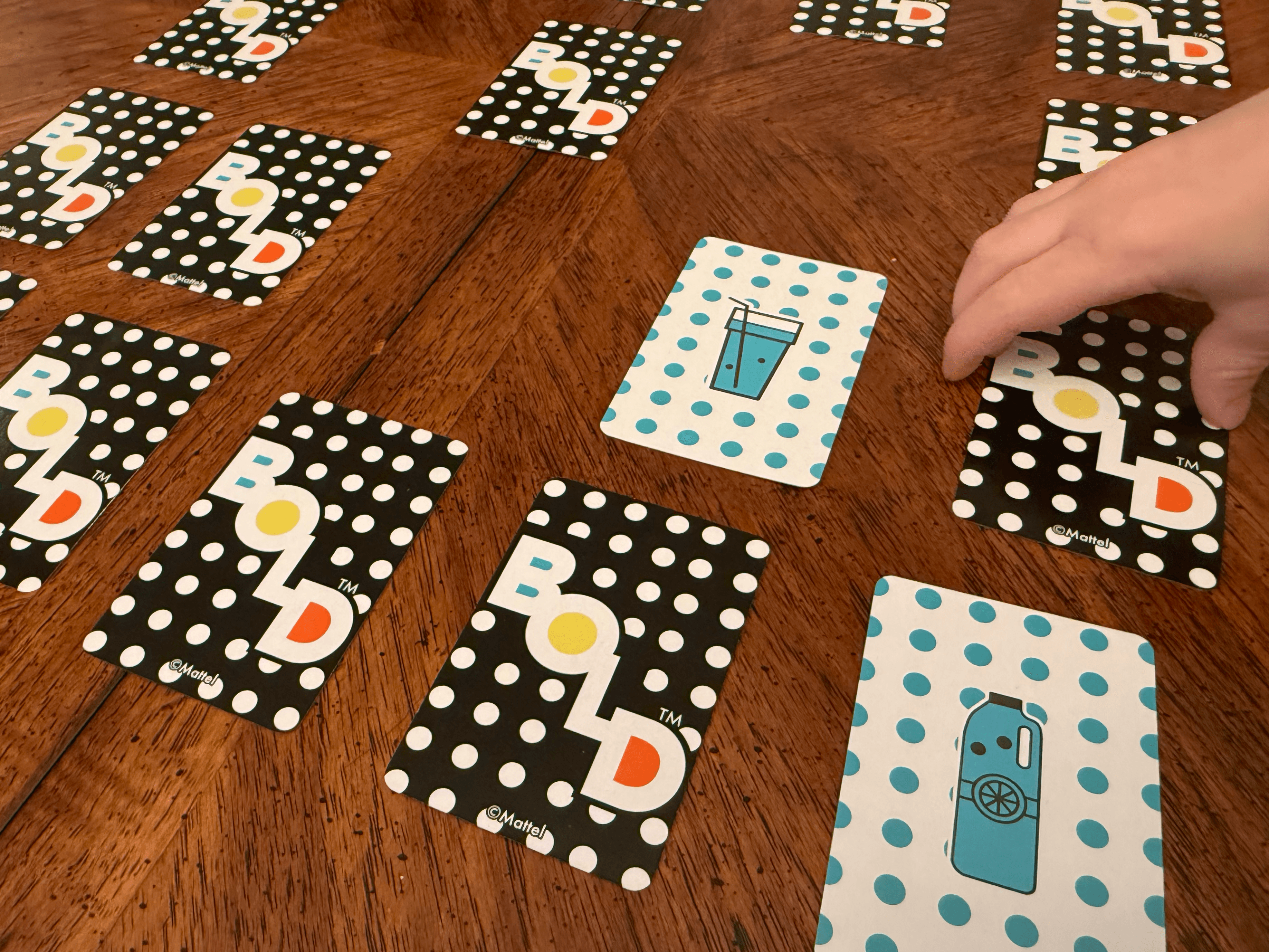
Bold is a matching game mixed with risk and reward. The object of the game is to get the most points by matching the most cards. There are 4 ways you can match a card: container shape, size, color and pattern.
Players start by laying out 20 cards in a 5x4 grid. One player selects 2 cards from the grid and flips them over. If any of the 4 elements match, that player can choose to keep the points or choose to flip another card, being bold, hoping for another matching element that matches the other two cards. They can continue to flip and match elements until they want to stop and collect points, or the cards no longer match. The more matches you get, the more points you earn. You can choose to stop your turn at any time and collect the points.
Players continue to refill the 5x4 grid with 20 cards until you run out. Then the game is over and whoever has the most points wins.
🛒 Find Bold on Amazon
Go Fish: The Best Intro Card Game for Young Kids
Ages: 3+
Play time: 10–15 minutes
Skills: Memory · Turn-taking
Go Fish is a classic card game that’s easy to learn and fun for kids of all ages. The goal is to collect the most matching sets of two cards by asking other players for specific cards.
On your turn, you ask another player if they have a certain card, like “Do you have any threes?” If they do, they give you their three, and you get another turn. If they don’t, they say “Go fish,” and you draw a card from the pile. When you collect two of the same card, you lay the set down.
The game continues until all the cards have been matched into sets. The player with the most sets at the end wins. Go Fish is a great game for practicing memory, number recognition, and turn-taking in a fun and friendly way.
For the younger players, you can get go fish games with pictures instead of numbers.
🛒 Find Go Fish on Amazon
Snapping Turtles: A Fast-Paced Matching Card Game
Ages: 4+
Play time: 5–10 minutes
Skills: Matching · Reaction time · Self-control
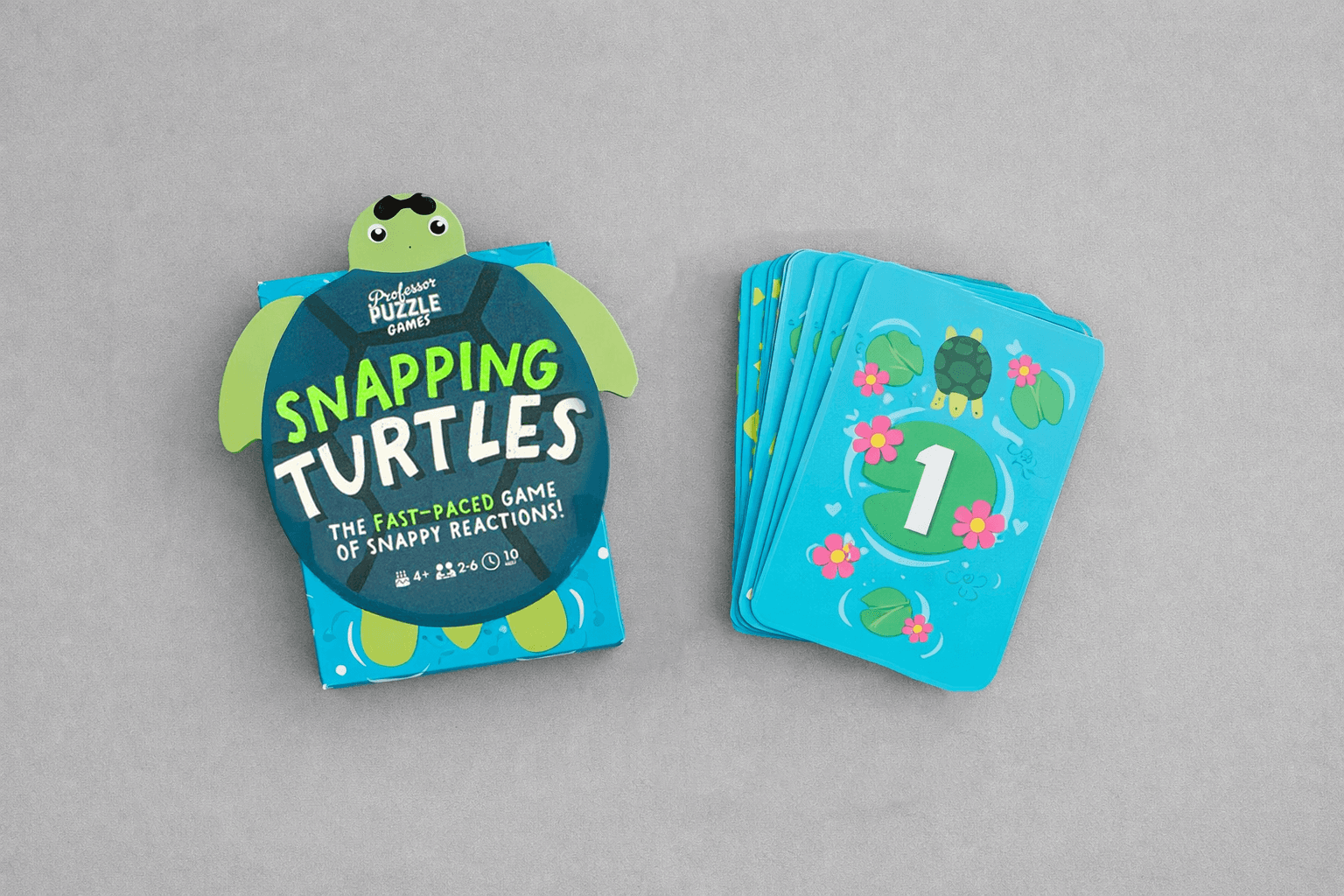
Snapping Turtles is a fast and fun card game for kids that combines matching and quick reflexes. The goal is to collect the most turtle cards by snapping your hand on the pile when you spot a match.
Players take turns flipping over colorful turtle cards. When two matching numbers appear back to back, everyone races to be the first to slap the pile. Some special cards can surprise you so players need to stay sharp and focused.
This game is easy to learn and full of energy. It helps kids practice matching, paying attention, and reacting quickly. Snapping Turtles is a great pick for family game night or a quick burst of fun with friends.
Jell-O Jiggler Slap: A Silly Color-Matching Card Game
Ages: 3+
Play time: 5–10 minutes
Skills: Color recognition · Reaction time · Self-control
Jell-O Jiggler Slap is a colorful and silly card game full of fun and fast reactions. Players take turns flipping over Jell-O-shaped cards, looking for matching colors. As soon as a match appears, everyone races to be the first to slap the stack. The catch is, the calling cards state a specific hand players have to slap the cards with. Players must slap the correct match with the correct hand to keep the card. If a player smacks the wrong match or one they already have, they must put back that card or the match they have previously collected.
This game is easy to learn and packed with energy. It helps kids build quick thinking, focus, and reaction time. Jell-O Jiggler Slap is a great pick for parties, playdates, or family game nights when you want something fast and fun.
As a parent, I love the practice my little kids get with color recognition. I also like the practice they get with learning their right vs. left hand. If I am calling the cards, I wait until they hold up the correct hand before calling the color. When I play with my 3 and 4 year olds, we don't play for speed but focus on accuracy of colors and correct hand, but when I play with my 7 year old, we play for speed!
Tips
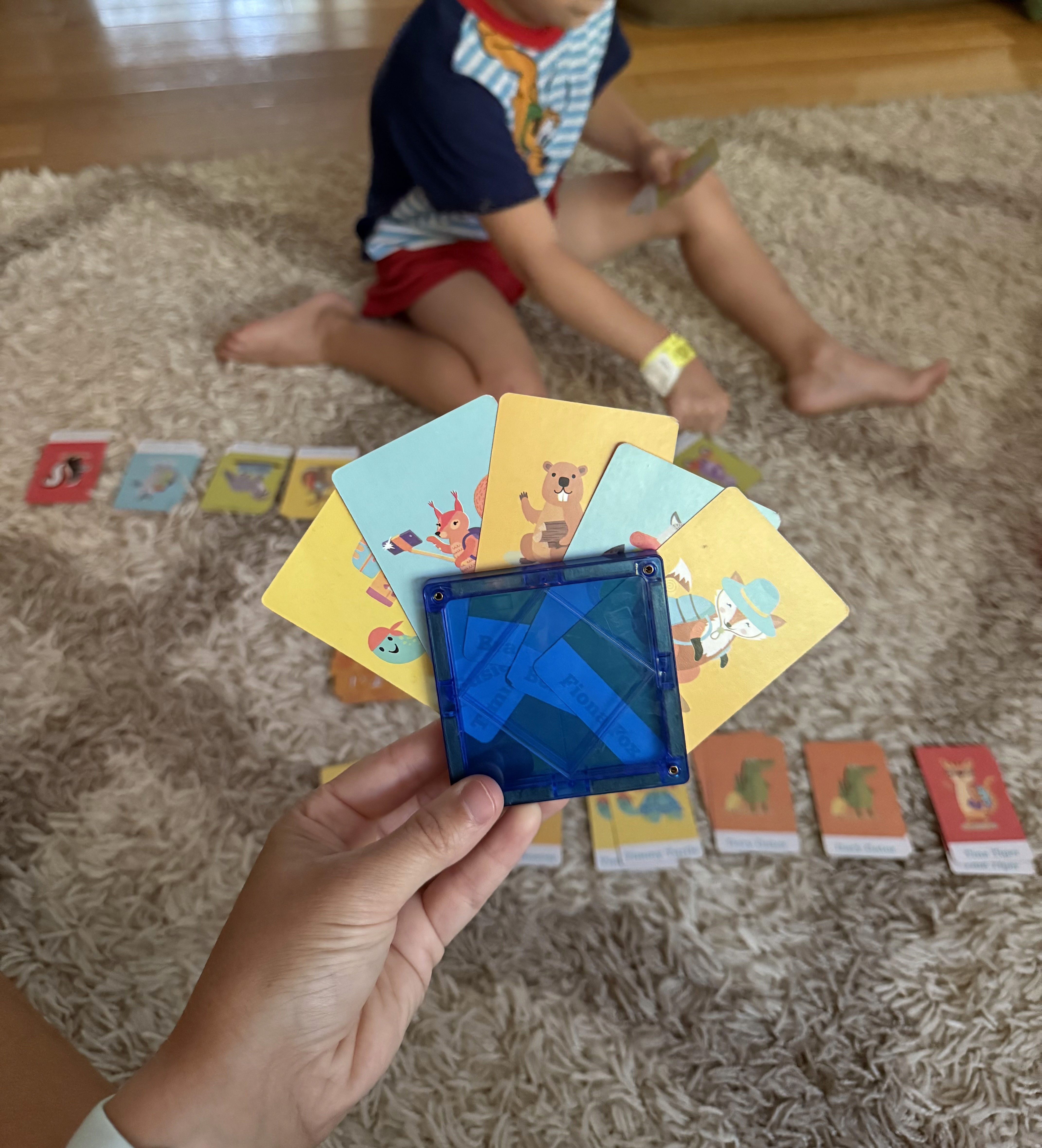
If you’ve ever played a card game with young kids, you know how tricky it can be for little hands to manage a full hand of cards. Cards get bent, dropped, or accidentally revealed, which can make the game frustrating instead of fun. That’s where card holders come in!
Card holders are a simple but incredibly helpful tool that lets kids focus on the game instead of struggling to hold their cards. They make gameplay smoother, encourage independence, and help kids of all ages (especially toddlers and preschoolers) enjoy family card games with confidence.
I have multiple options that works well for a variety of games. You can find them below:
Card Holder Paddle
Card Holder 4-Pack
If you already have Magnetic Tiles at home, you can place your cards between two of those and they work great for a card holder too!
Summary
Card games don’t have to be competitive or complicated to be fun. With a little flexibility and the right games, they can become some of your family’s favorite moments together—whether you’re at home, traveling, or waiting for food at a restaurant.
Related Articles
How to Play Rainbow Pirates
Best Color Matching Games for Toddlers
Best Logic & Strategy Games for Kids
Cooperative Games for Kids
Classic Games for the Kids
Games
Best Color and Matching Games for Kids That Make Learning Fun
Color and matching games are the perfect way to help young children learn through play. These games help build early skills like color recognition, sorting, and memory while keeping kids engaged with bright, hands-on visuals. They’re great for toddlers, preschoolers, and early learners at home or in the classroom that keep kids excited and focused.
How to Adapt Games for Younger Kids
I want to preface by saying, in my opinion, the age on the box is just a number. We often start playing games well before the suggested age range by modifying the rules to make them accessible for any age. Once they grasp the basic concept of the game, you can continue to add steps to the directions each time until you are playing it how the game is intended to be played. Playing as a team or simplifying directions lets even 1-year-olds join in on the fun while still developing early cognitive and social skills.
This post contains affiliate links. As an Amazon Associate, we earn from qualifying purchases at no extra cost to you.
Our Favorite Color and Matching Games for Kids
Pengaloo: A Fun Memory and Matching Game for Toddlers
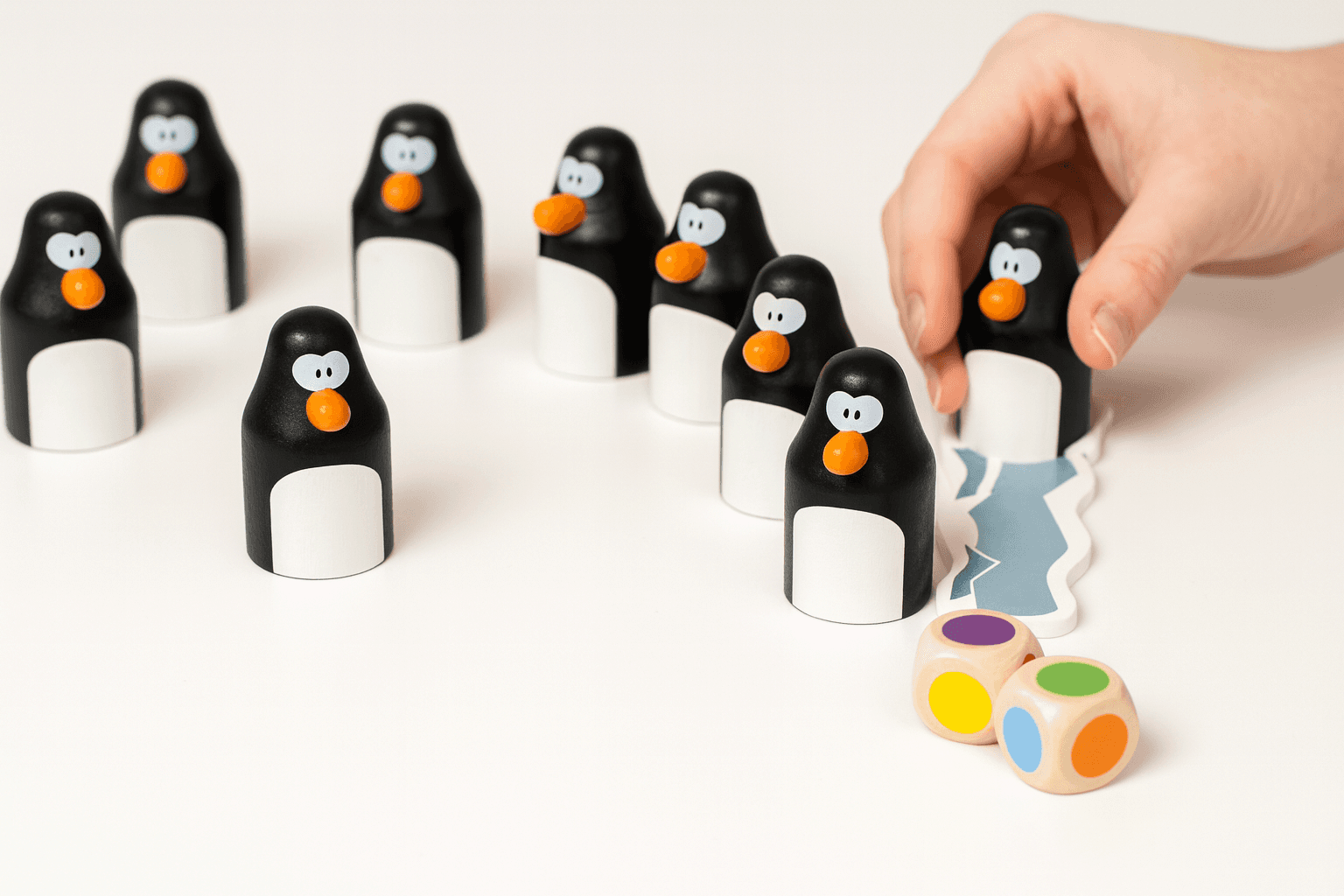
Pengaloo is an adorable color matching and memory game that introduces kids to basic gameplay mechanics while teaching color recognition and focus. Typically for ages 4 and up, we introduced this to our kids around age 2. In this game, players take turns rolling dice to reveal colors, then they try to find eggs hidden under wooden penguins that match those colors. Using memory and a bit of luck, players lift the penguins to see if they can find a hidden egg that matches the rolled dice. If they guess correctly, they get to keep the penguin and egg on their iceberg.
The goal is to be the first to collect six penguins with eggs. Pengaloo encourages color recognition, memory skills, and turn-taking, all wrapped in a arctic-themed design that kids love. It’s a great introduction to board games for younger players and makes learning fun through play.
This game can be played with 2-4 players and is simple enough for all ages to understand and fun for everyone!
🛒 Find Pengaloo on Amazon
Sneaky Snacky Squirrel: A Preschool Favorite for Color Recognition
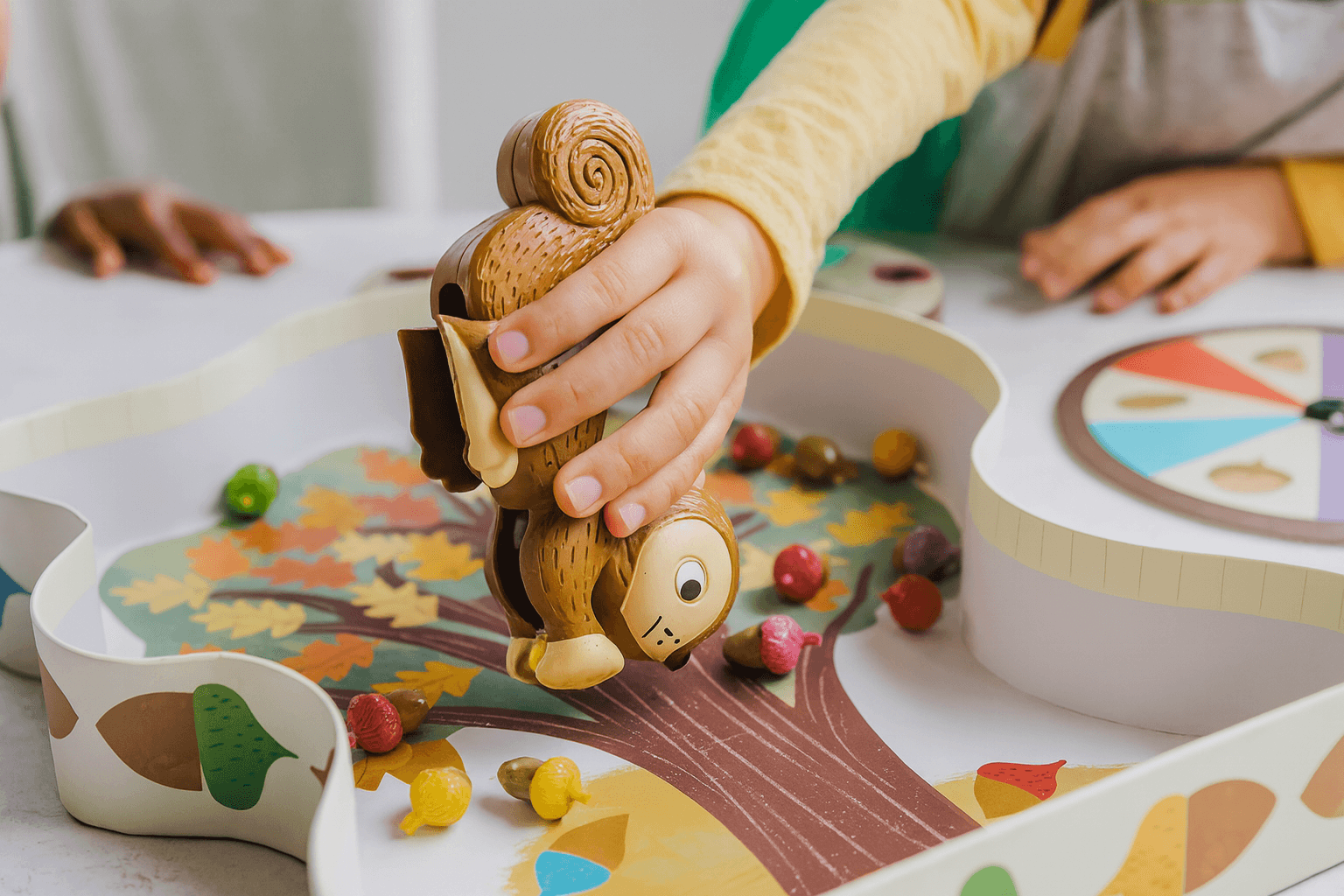
The Sneaky Snacky Squirrel Game is one of the best color recognition games for preschoolers. It strengthens fine motor skills, strategic thinking, and focus while keeping gameplay light and fun. Designed for ages 3 and up, the goal is to be the first to fill your tree with five different colored acorns.
Players take turns spinning a spinner to determine their move. They pick up a specific color acorn, steal one from another player, lose a turn, or even have a windy day blow all your acorns away! Using the adorable squirrel-shaped “Squirrel Squeezer,” kids pick up and place acorns in their tree stump game board.
Fast, simple, and full of surprises, Sneaky Snacky Squirrel is a perfect first game for young children and a fun way to practice early skills while playing together.
This game is a favorite in our house! Once one game finishes, my kids are always asking to play again. It is fun because you never know what you are going to spin and who is going to win. This is a great game for color recognition for my younger kids, but my 7 year old still loves to play and use a little strategy on who to steal acorns from when he spins the sneaky snacky squirrel. We love playing this game as a family.
🛒 Find Sneaky Snacky Squirrel on Amazon
Colorama: A Shape and Color Sorting Game for Preschoolers
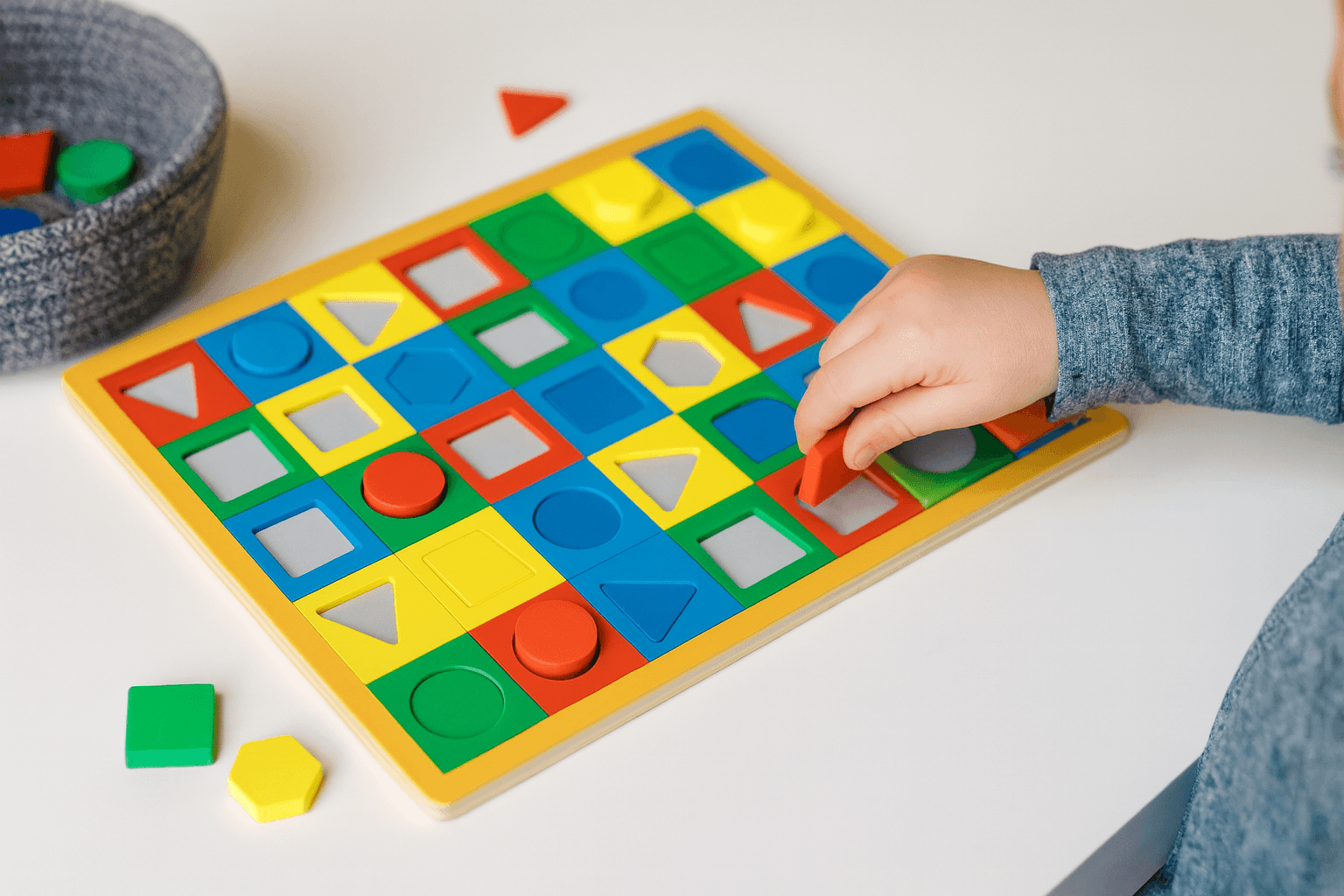
Colorama blends color and shape matching into an interactive board game that teaches young children sorting, pattern recognition, and logic – typically for ages 3 and up.
The game board is a grid filled with different shapes in various colors. On each turn, players roll one or two dice. One die shows colors and the other shows shapes. The player then finds a matching piece to place on the board. If both dice are used, the piece must match both the color and the shape shown.
There is no winner or loser in the basic version, making Colorama a stress-free, learning-focused game that’s ideal for preschoolers. It encourages observation, fine motor skills, and early logic in a fun and colorful way.
You can teach your children this game as a progression. For the youngest players, you can tell them to find all of the blue shapes, or all the red shapes. Then you can begin to work on finding all the circles, or triangles, etc. Lastly, you can use the two dice to find the correct color and shape. There are the basic shapes in this game of circles, triangles and squares, but they also have trapezoids and hexagons which are great shapes to introduce once kids have mastered the basic shapes.
🛒 Find Colorama on Amazon
Candy Land: A Classic Game for Color Learning
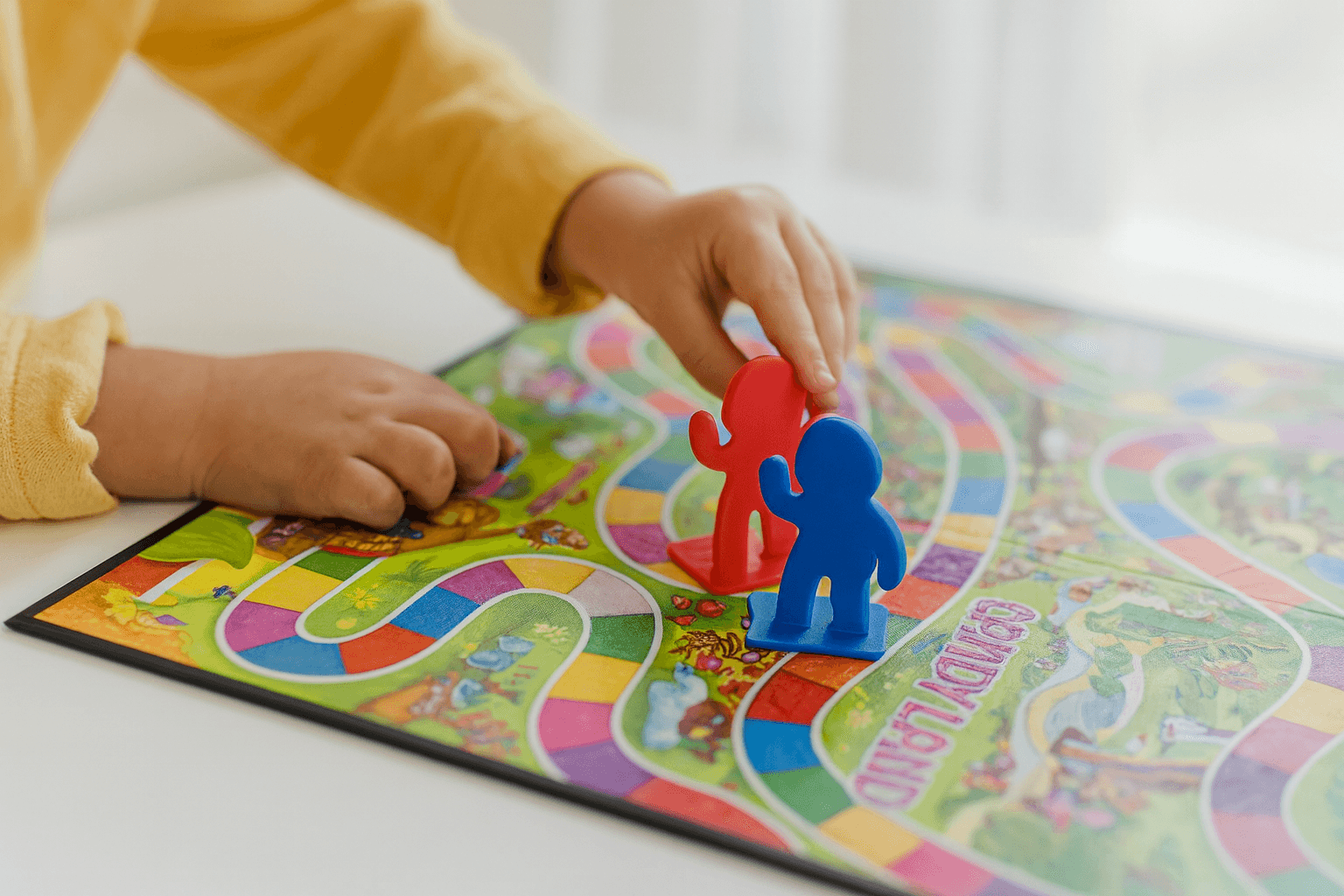
Candy Land remains one of the most beloved color games for toddlers and preschoolers for ages 3 and up. We started playing this game with our kids as soon as they knew their basic colors! With no reading required, it’s an easy way to learn color matching and turn-taking while sparking imagination.
Players take turns drawing colorful cards that show a single color or a special character. They move their game piece to the next space on the board that matches the color or character shown. The board is a winding path through a sweet-themed world filled with locations like Gumdrop Mountain and Licorice Lagoon.
The first player to reach King Kandy’s Castle at the end of the rainbow path wins. Candy Land helps kids learn colors, practice taking turns, and enjoy imaginative play in a bright and playful setting.
This is one of our favorite games to play as a family. The outcome is different every time we play which keeps it fun and engaging. Sometimes, we even add in real candy to the game (like Skittles or M and Ms) and scatter them across the board. If they are the first to pass a spot with candy on it, they can take it. We don't do this often, but it is something extra special to add in every now and then. :) Another way we keep the game fun and exciting if we've played it many times is we play the game in reverse. We start at the end and try to get back to the start, so now the special cards that typically send you back close to the start, are the cards you want to get to the new finish line! The kids like it and it mixes the game up to make it a fun and different way to play.
🛒 Find Candy Land on Amazon
(For Bluey lovers, there's a version for you too!)
This is a giant version of the game where the board is 64" x 64" and you become the mover on the board. This would be great for younger children & to help with movement activities.
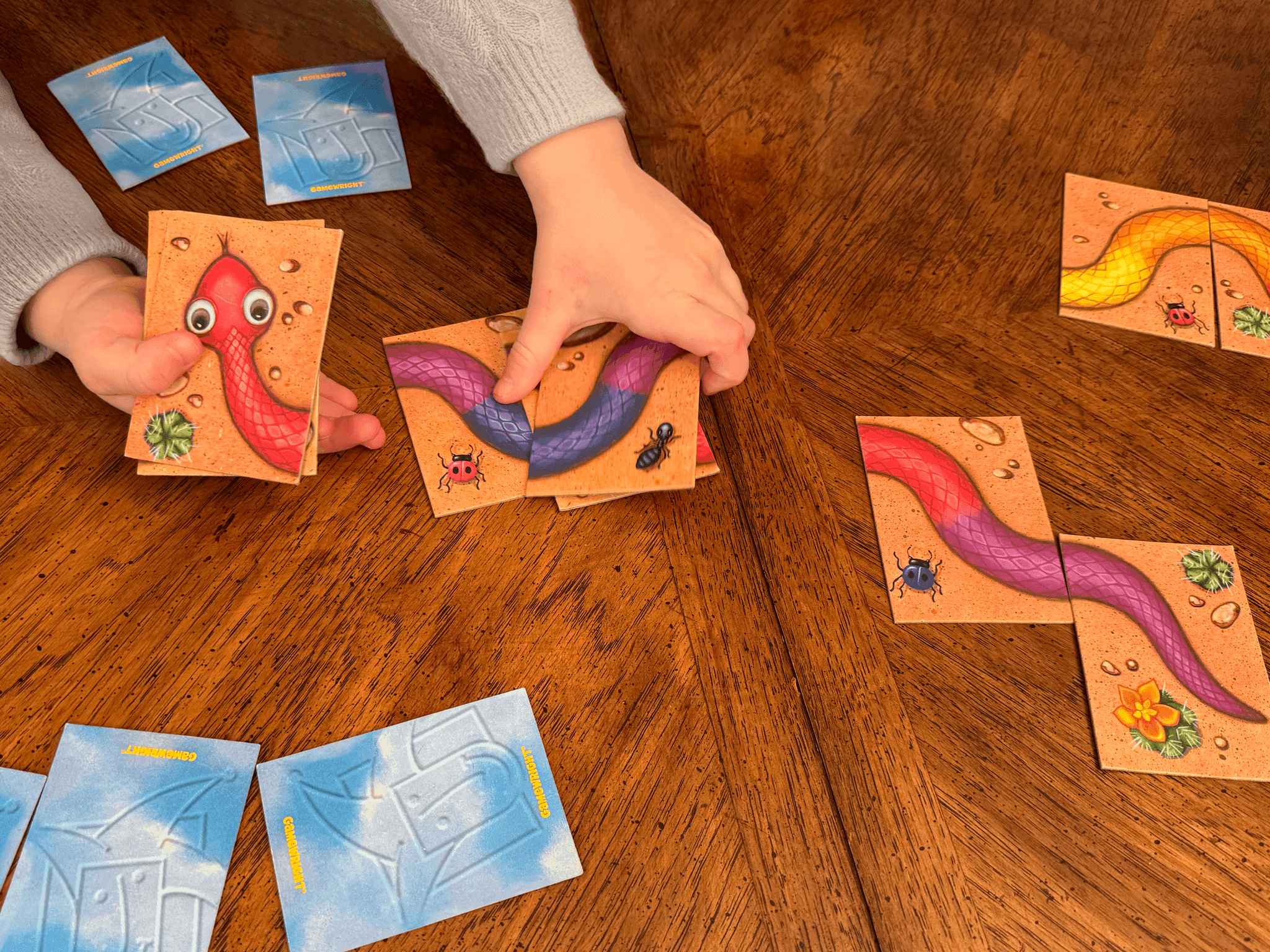
Hisss: Easy Snake-Building Fun for Families

If your family enjoys games that are simple to learn, colorful, and great for kids, then Hisss might just become a favorite around your house. This light-hearted card game is perfect for Preschoolers and early elementary ages but fun for the whole family too.
Hisss is a matching card game where players take turns drawing cards to build colorful snakes from head to tail by matching colors. It’s designed for 2 to 5 players, plays in about 15 minutes, and is recommended for ages 4 and up.
Hisss manages to be both simple and strategic. It is easy to learn, set up and play so kids and families can enjoy it right away. You can play multiple games in one sitting since the game moves quickly. You can play on teams or as individuals, but either way, it keeps everyone involved and engaged on each turn. It’s perfect for game nights, travel, or rainy afternoon fun.
Themed Matching Games for Every Interest
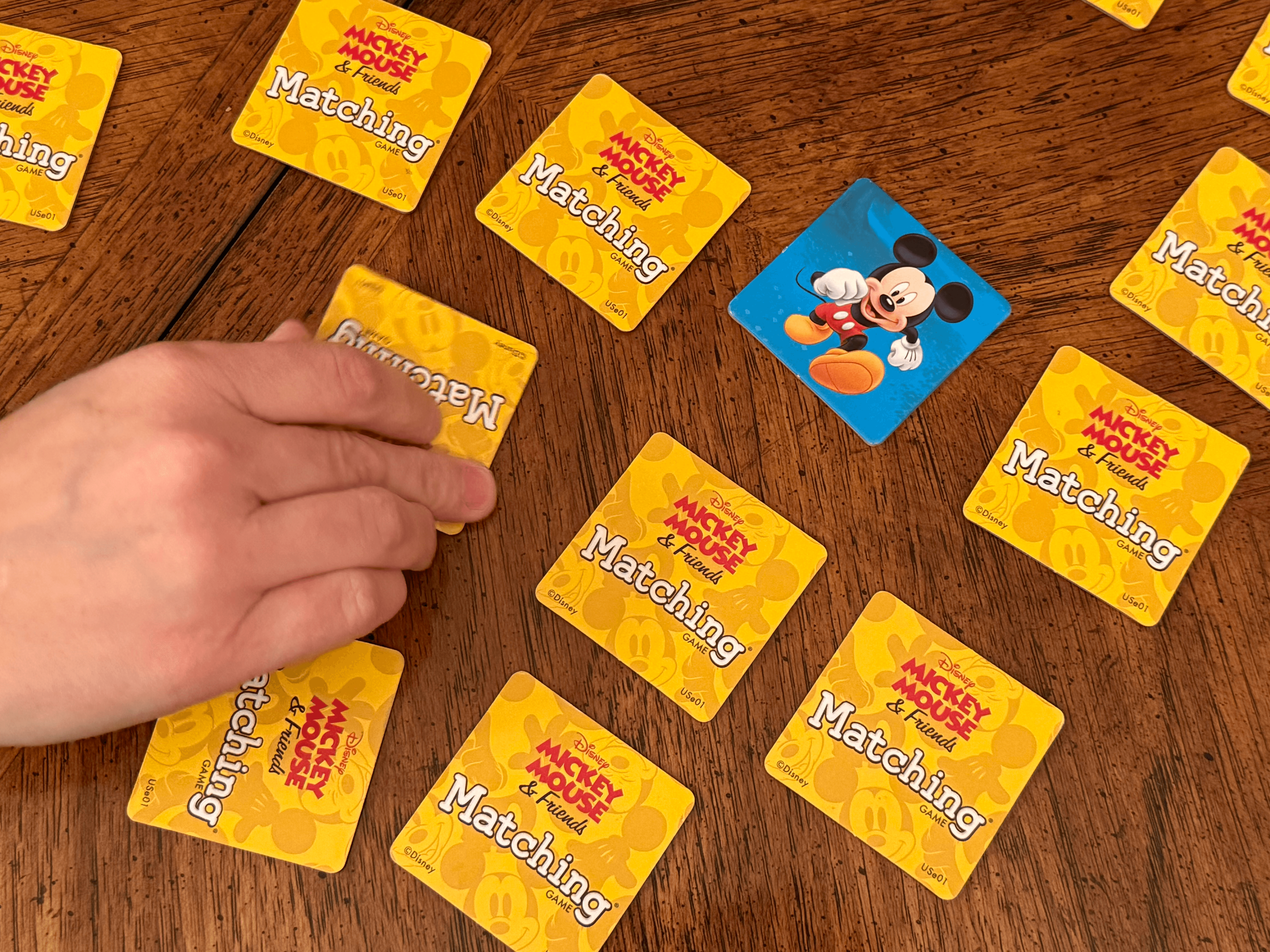
Our 3 year old LOVES matching games… and he is good at them too! Matching games are incredible for boosting memory, focus, and cognitive skills in young children. Choose a theme that excites your child, whether it’s Disney, Bluey, or dinosaurs! We play them often & can keep adding more cards to make the games bigger and longer.
These matching card games for kids are perfect for quiet time, family play, or classroom centers because they support key areas of early development in a fun and engaging way.
The Benefits of Matching Games for Kids
Boost memory and concentration: Kids must remember where cards or pieces are located, helping to strengthen short-term memory and focus.
Improve visual recognition: Matching images, shapes, or colors sharpens visual discrimination skills, which are important for reading and problem-solving.
Build cognitive and problem-solving skills: Children learn to use logic and strategy as they try to remember and match pairs.
Encourage turn-taking and social skills: When played with others, matching games teach patience, sharing, and good sportsmanship.
Support vocabulary and language development: Talking about what they see (e.g., “I found a cat!”) helps children practice naming, describing, and communicating.
There are so many different matching games out there. I would recommend finding a themed one that interests your child. Here are some suggestions below:
Mickey Matching
Princess Matching
Mermaid Matching
Disney Matching
Bluey Matching
Dinosaur Matching
Baby Animal Matching
Spidey & His Amazing Friends Matching
Paw Patrol Matching
Trucks Matching
DIY Matching Games for a Personal Touch
One of the sweetest, more personal matching games we’ve seen is something a family member made for our kids. She printed photos from throughout the year of trips we took, special events, and everyday moments and turned them into a custom matching game. The kids loved flipping the cards over and reliving all their favorite memories while they played.
Final Thoughts: Why We Love Color and Matching Games for Kids
Whether it’s Pengaloo, Sneaky Snacky Squirrel, or Candy Land, color and matching games are a simple yet powerful way to support early learning. They help kids practice essential developmental skills, all while laughing, bonding, and playing together as a family.
Related Articles
How to Play Rainbow Pirates
Best Logic & Strategy Games for Kids
Cooperative Games for Kids
Classic Games for the Kids
Fun Card Games for Kids
Memory & Recognition Games for Kids
Games
Classic Games for the Youngest Gamers
Starting early with games is a great way to support learning, build social skills, and most importantly, have fun together as a family. The games listed in this section are simple to understand, quick to play, and full of colorful, hands-on fun that is perfect for little learners just beginning their game-playing journey.
Yeti In My Spaghetti
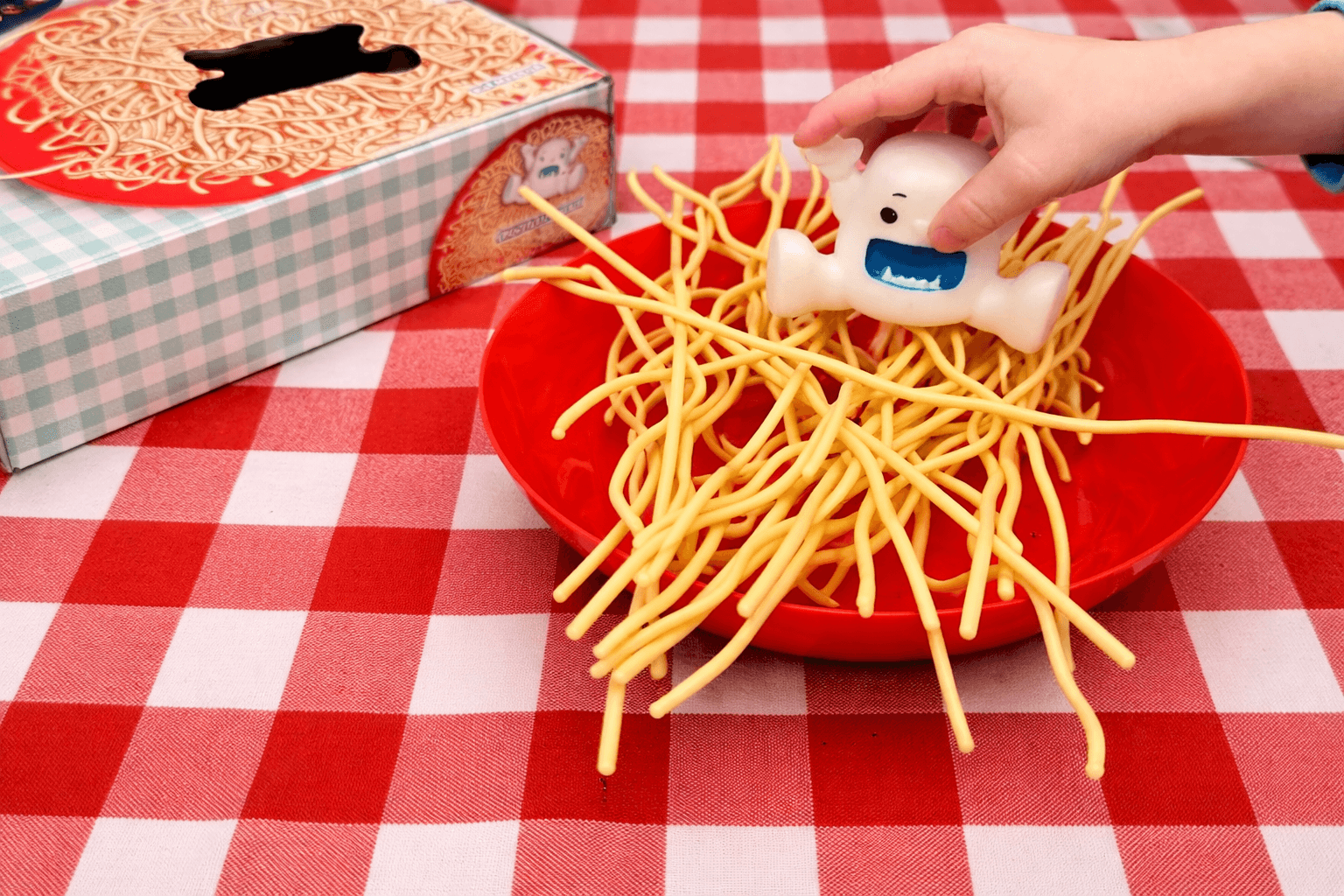
Yeti In My Spaghetti is a silly and quick game that is perfect for young kids. Players take turns removing plastic noodles from a bowl while trying not to let the Yeti fall in. If the Yeti drops into the bowl during your turn, you lose the game. The rules are simple and the gameplay is quick, making it a fun choice for little ones. It helps with fine motor skills and builds excitement with every turn.
🛒 Find Yeti in My Spaghetti on Amazon
Pop Up Pirate
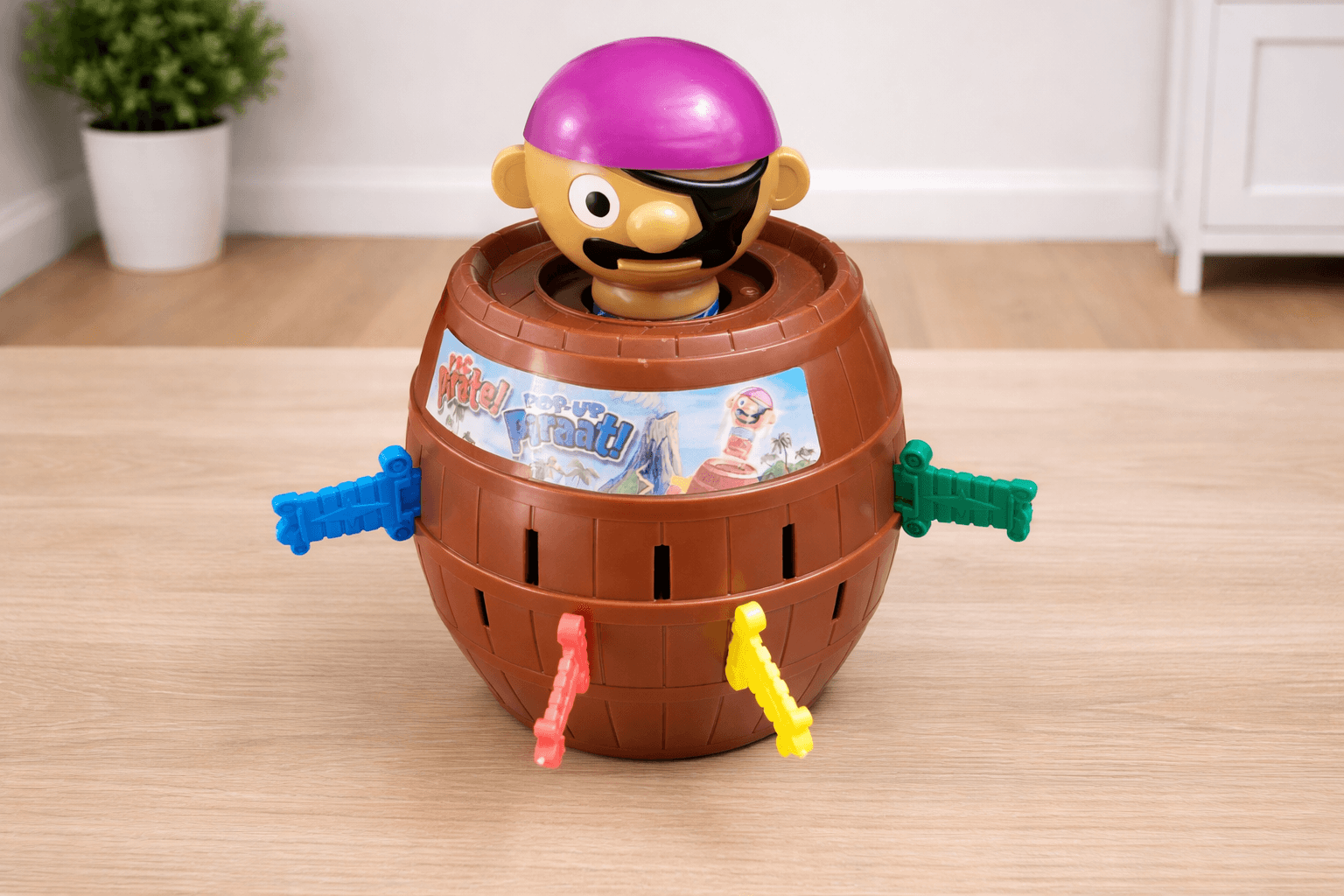
Pop Up Pirate is a fun and suspenseful game that’s easy for kids to learn and play. Players take turns sliding plastic swords into a barrel that holds a pirate figure inside. One of the slots will make the pirate pop out of the barrel when a sword is inserted, but no one knows which one it will be. The goal is to avoid making the pirate pop during your turn. This game is great for building anticipation, taking turns, and encouraging group laughter with each surprise jump.
There are a few different versions of this game, all played the same way. Check out the options below:
🛒 Find Pop Up Pirate on Amazon
🛒 Find Jump Dinosaur on Amazon
🛒 Find Pop Up Bluey on Amazon
Don't Break the Ice
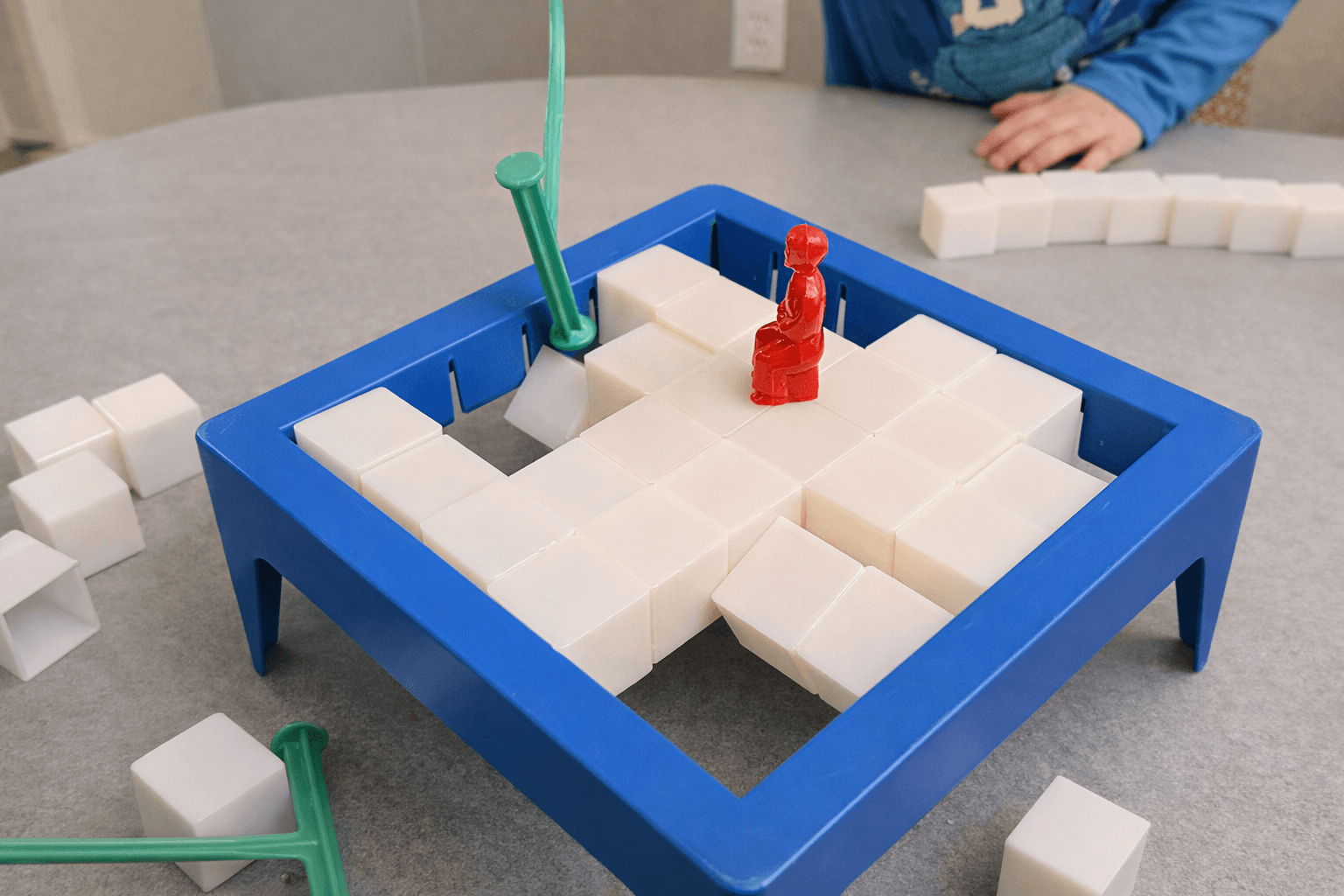
Don’t Break the Ice is a classic game of steady hands and suspense, perfect for younger kids. The game board is made up of small plastic ice blocks held in place within a frame. Players take turns tapping out one block at a time using a tiny hammer, trying to keep the character on top (usually a penguin) from falling through. The player who causes the figure to fall loses the game. It’s a simple and fun way to build fine motor skills and practice turn-taking.
🛒 Find Don't Break the Ice on Amazon
Don’t Break the Ice: Mammoth Edition is a fun twist on the classic game, designed to capture kids’ attention with a playful prehistoric theme. Just like the original, players take turns tapping out blocks of “ice” with a small hammer keeping the friendly mammoth standing on the ice without letting it fall. This game also adds a second way to play by introducing a colored block that is rolled. Players must knock out the color ice cube that matches what they rolled on the block. The game adds a touch of adventure while still helping kids develop hand-eye coordination, patience, and fine motor skills. It’s a great choice for preschoolers and early elementary-age kids who enjoy hands-on, suspenseful fun.
🛒 Find Don't Break the Ice: Mammoth Edition on Amazon
Kerplunk
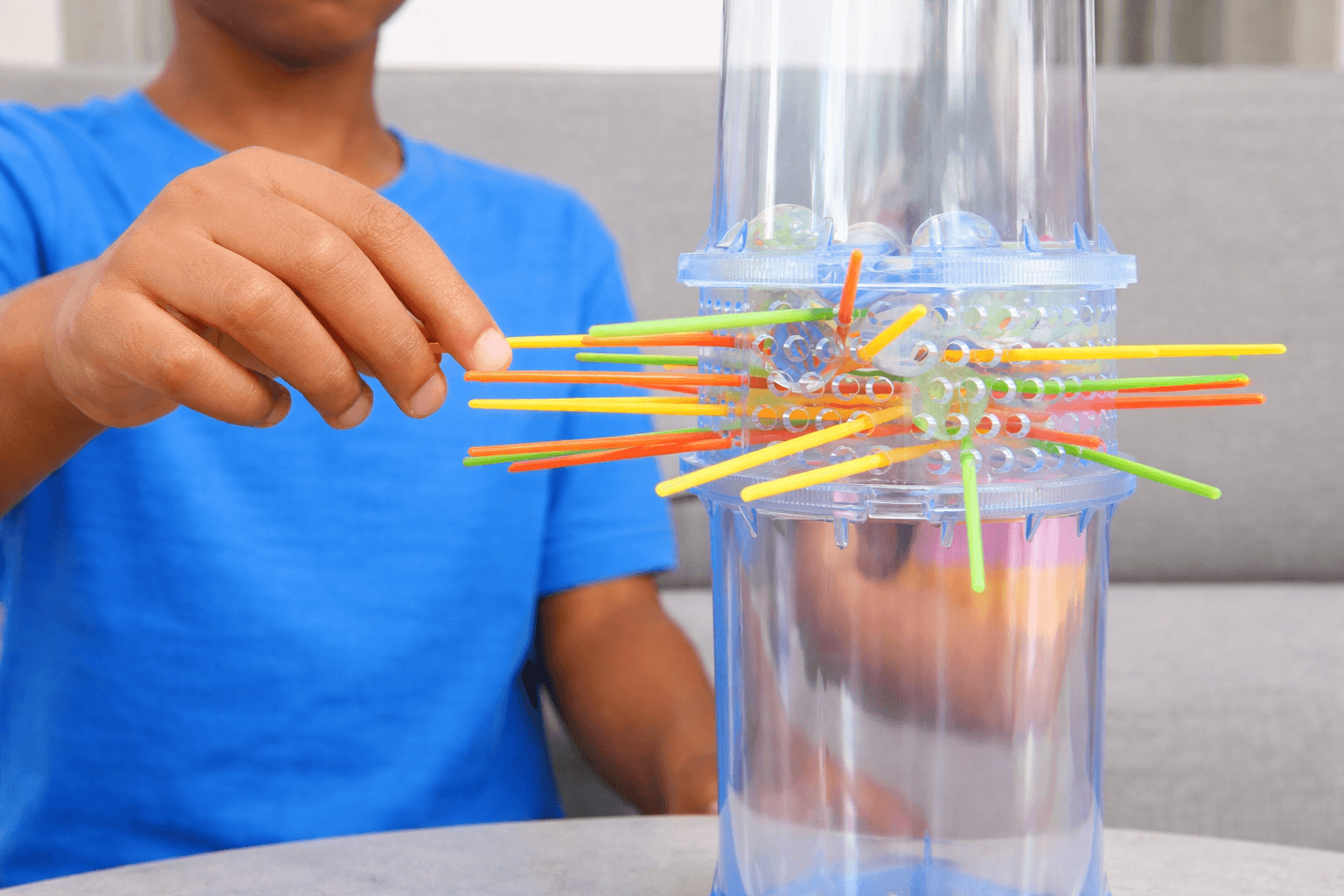
Kerplunk is a classic game of strategy, steady hands, and a little bit of luck. The game features a clear plastic tube filled with sticks arranged in a crisscross pattern, holding up a pile of marbles. Players take turns carefully removing one stick at a time, trying not to let any marbles fall. The player with the fewest marbles at the end of the game wins. Kerplunk is great for building fine motor skills, patience, and decision-making in a fun and suspenseful way that keeps kids and adults engaged.
From our experience, this game takes a while to set up then is played pretty quick. It gets a little tricky at the end of set up to get the sticks through the holes in the tube since it is already so full so typically my kids need my help to complete the setup.
🛒 Find Kerplunk on Amazon
Cootie
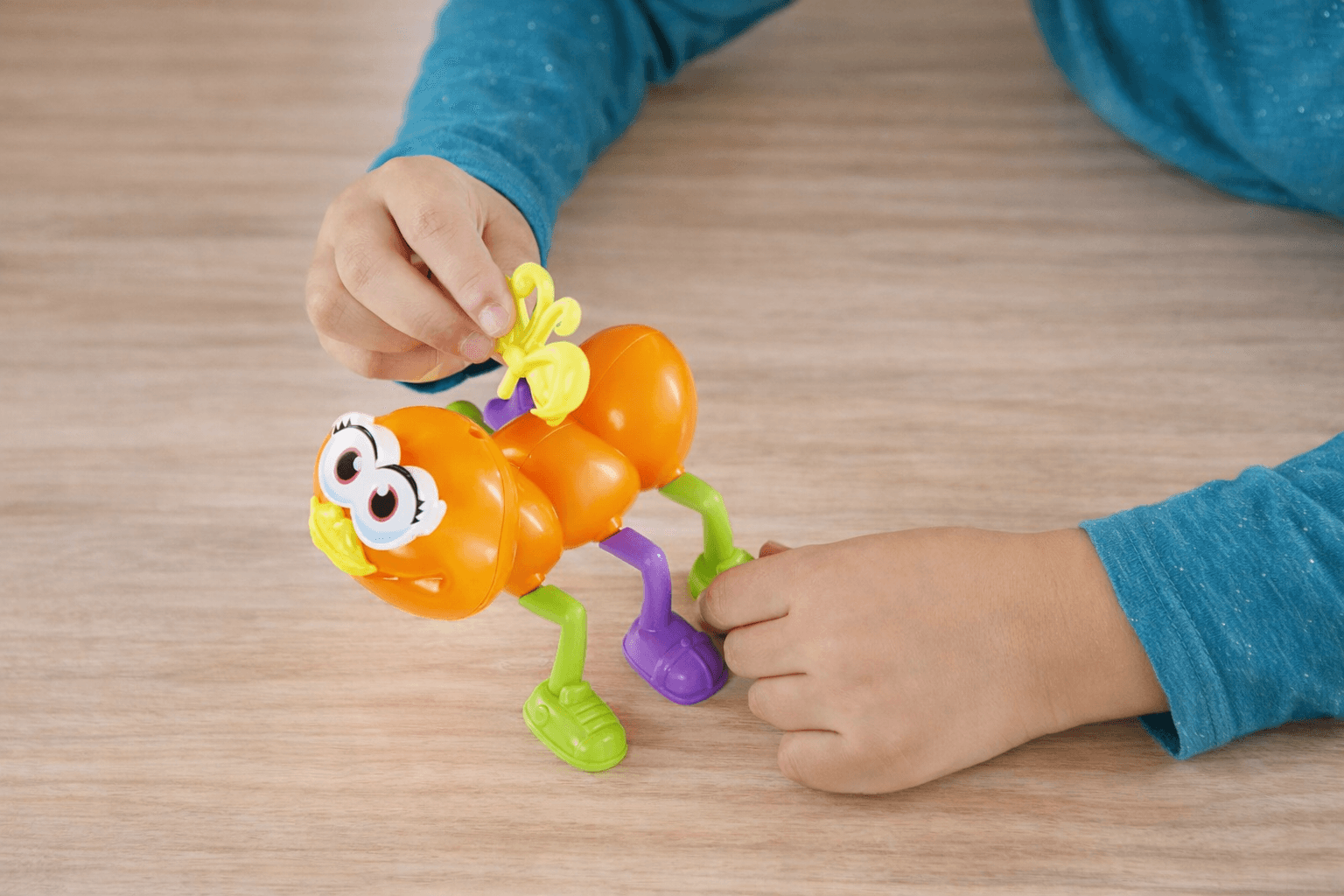
Cootie is a classic build-and-play game designed for young children, especially preschoolers. The goal is to be the first to build a complete Cootie bug by collecting all six body parts: body, head, eyes, antennae, mouth, and legs. Players take turns spinning the spinner to earn each part, adding pieces as they go. The colorful, silly bug pieces make the game fun and engaging while helping kids practice counting, taking turns, and fine motor skills. It’s a great introduction to structured gameplay for little ones.
🛒 Find Cootie on Amazon
Ants In The Pants
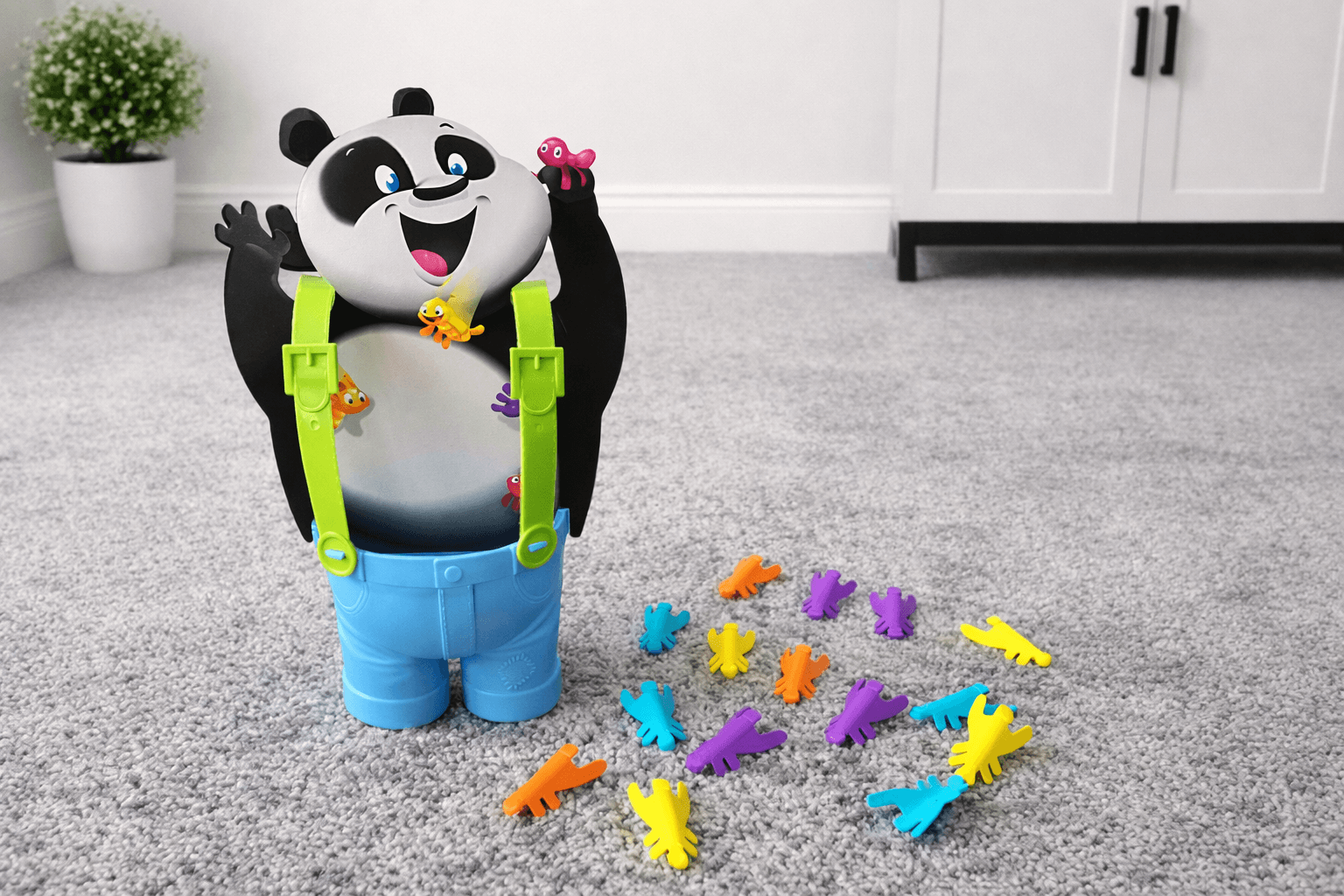
Ants in the Pants is a fast and silly game that’s perfect for preschoolers. Each player gets a set of colorful plastic ants and takes turns trying to flip them into a pair of oversized plastic pants in the center of the play area. The goal is to be the first to get all your ants into the pants. This game is great for hand-eye coordination, simple competition, and lots of giggles. Its easy setup and quick rounds make it a fun choice for younger kids.
🛒 Find Ants in the Pants on Amazon
Don't Spill the Beans
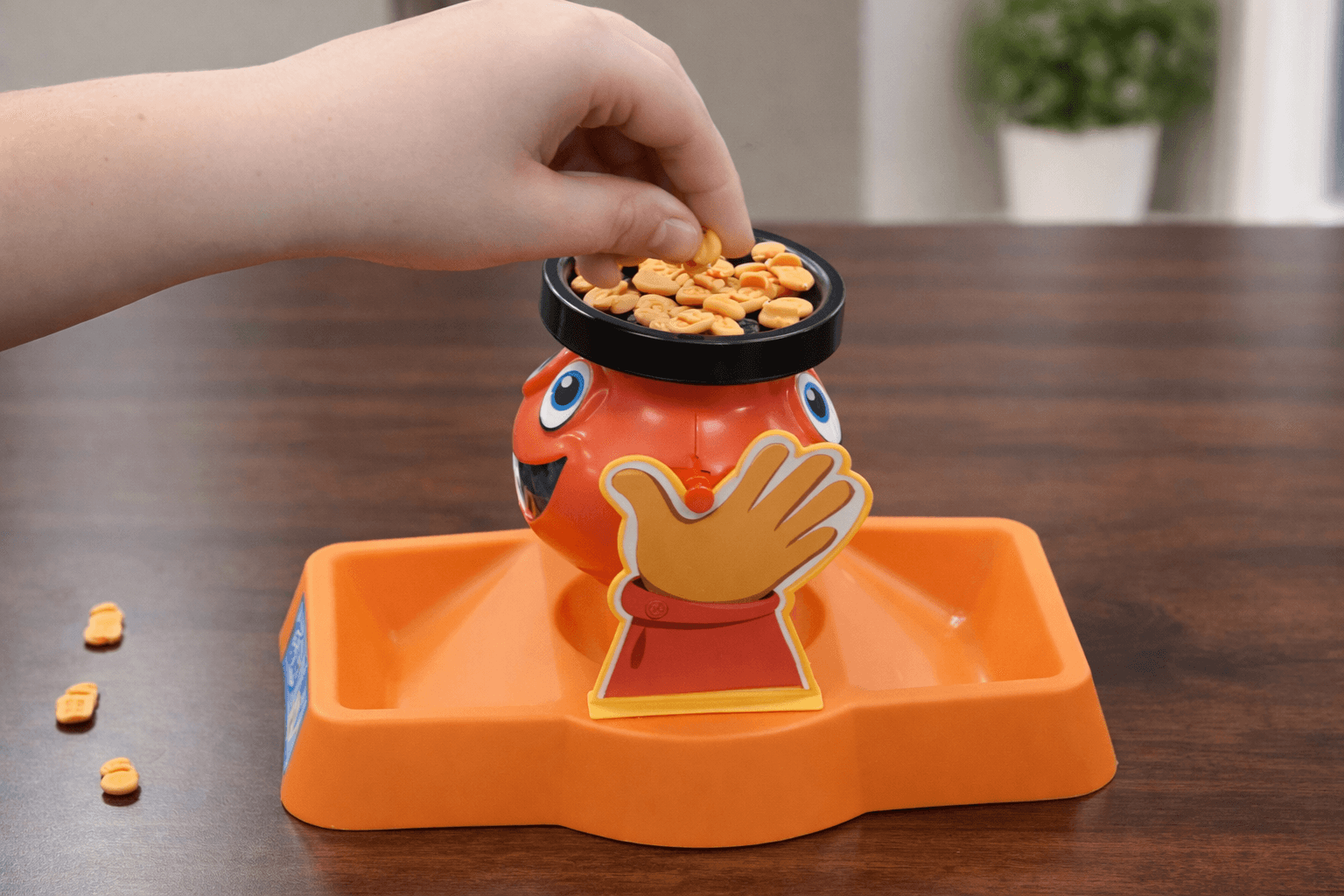
Don’t Spill the Beans is a simple and suspenseful game designed for young children. Players take turns carefully adding plastic beans to a wobbly pot, trying not to be the one who makes it tip over. If the pot spills during your turn, you have to pick up the beans. The first player to get rid of all their beans wins. This game helps kids practice hand-eye coordination, fine motor skills, and patience, all while keeping them laughing and engaged.
🛒 Find Don't Spill the Beans on Amazon
Related Articles
How to Play Rainbow Pirates
Best Color Matching Games for Toddlers
Best Logic & Strategy Games for Kids
Cooperative Games for Kids
Fun Card Games for Kids
Memory & Recognition Games for Kids
Games
Best Logic & Strategy Games for Kids That Build Thinking Skills
Logic games encourage kids to plan ahead, think critically, and use reasoning skills, which are key abilities that help in school and beyond. These games are perfect for ages 3-10 and often involve making decisions, spotting patterns, and thinking through different outcomes. They encourage kids to use their brains in creative and thoughtful ways while still keeping the experience fun and engaging.
Top Family Strategy Games Kids Will Love
In this part of the blog, you’ll find a collection of logic and strategy games that we have enjoyed introducing and playing with our kids. Whether your child enjoys puzzles, building paths, or outsmarting a challenge, these games offer a fun way to build important thinking skills through play.
Kingdomino
A Simple Strategy Game for Families
Recommended Age Range: 8+ (Try as early as 4)
Playtime: 15–20 minutes
Skills Developed: Strategy, spatial reasoning, pattern recognition, decision-making
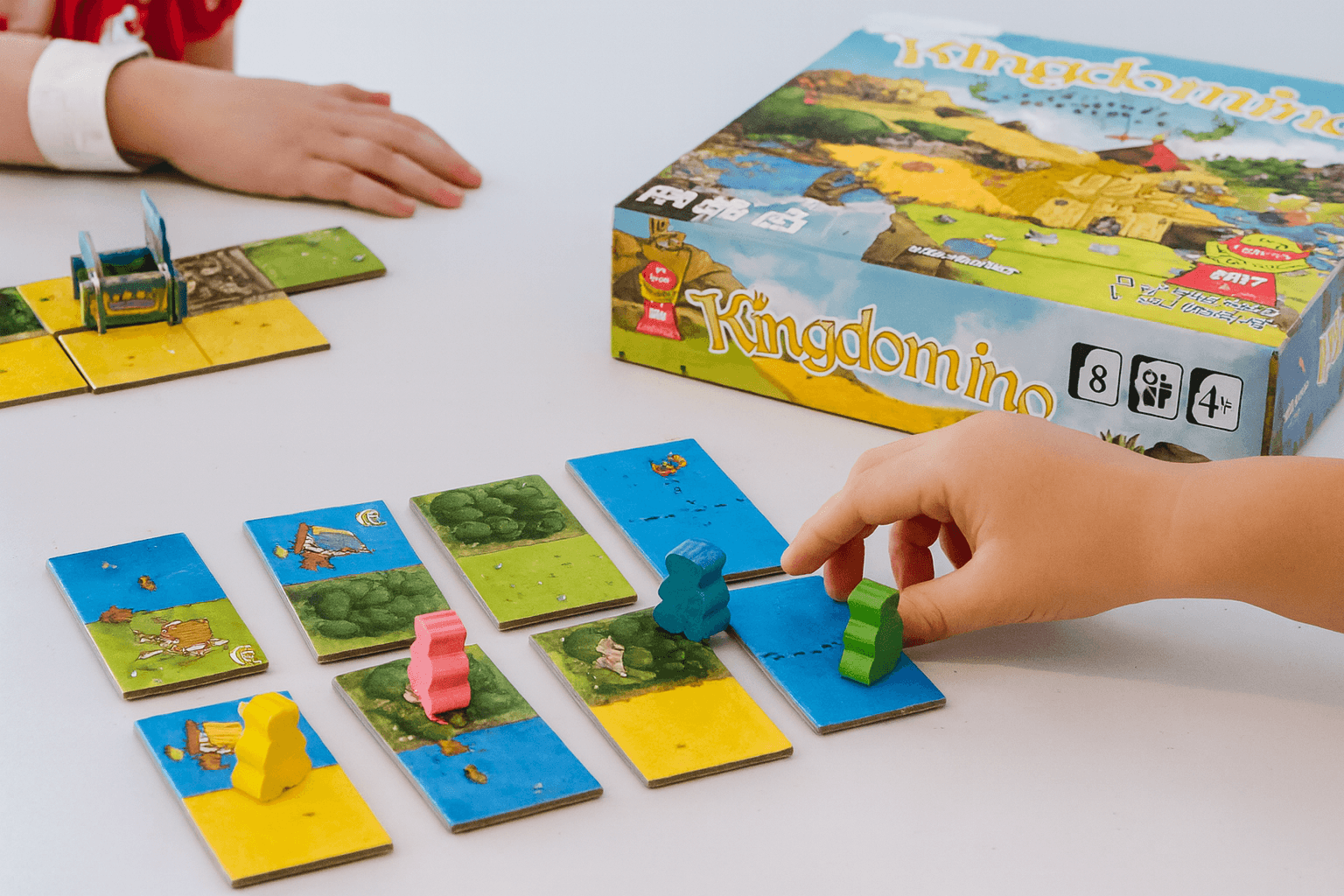
Kingdomino is a fun and strategic tile-laying game for 2 to 4 players that’s easy to learn and great for families. We recently taught our 4 year old daughter how to play, and she did great! Her focus was on the matching, where as our 7 year old was more focused on the strategy. Either way, we all had fun playing together which is why this game is great for families.
Each player takes on the role of a ruler trying to expand their kingdom by connecting matching landscape tiles, like forests, fields, lakes, and mines. Some tiles include crowns, which are key to scoring points.
On each turn, players choose a new domino tile and place it in their kingdom, matching at least one side to a similar terrain. The twist is that the order in which players choose tiles affects who picks first next round, so timing and planning are important.
The game ends when each player has completed a 5-by-5 grid of tiles. Points are scored based on the size of matching areas and the number of crowns they contain. The player with the most points wins the game.
Kingdomino combines simple rules with clever strategy, making it a perfect choice for game night with kids and adults alike.
🛒 Find Kingdomino on Amazon
Ticket to Ride: My First Journey
A Travel-Themed Game for Kids
Recommended Age: 6+ (Try as early as 3)
Playtime: 20–30 minutes
Skills Developed: Planning, color matching, critical thinking, map awareness
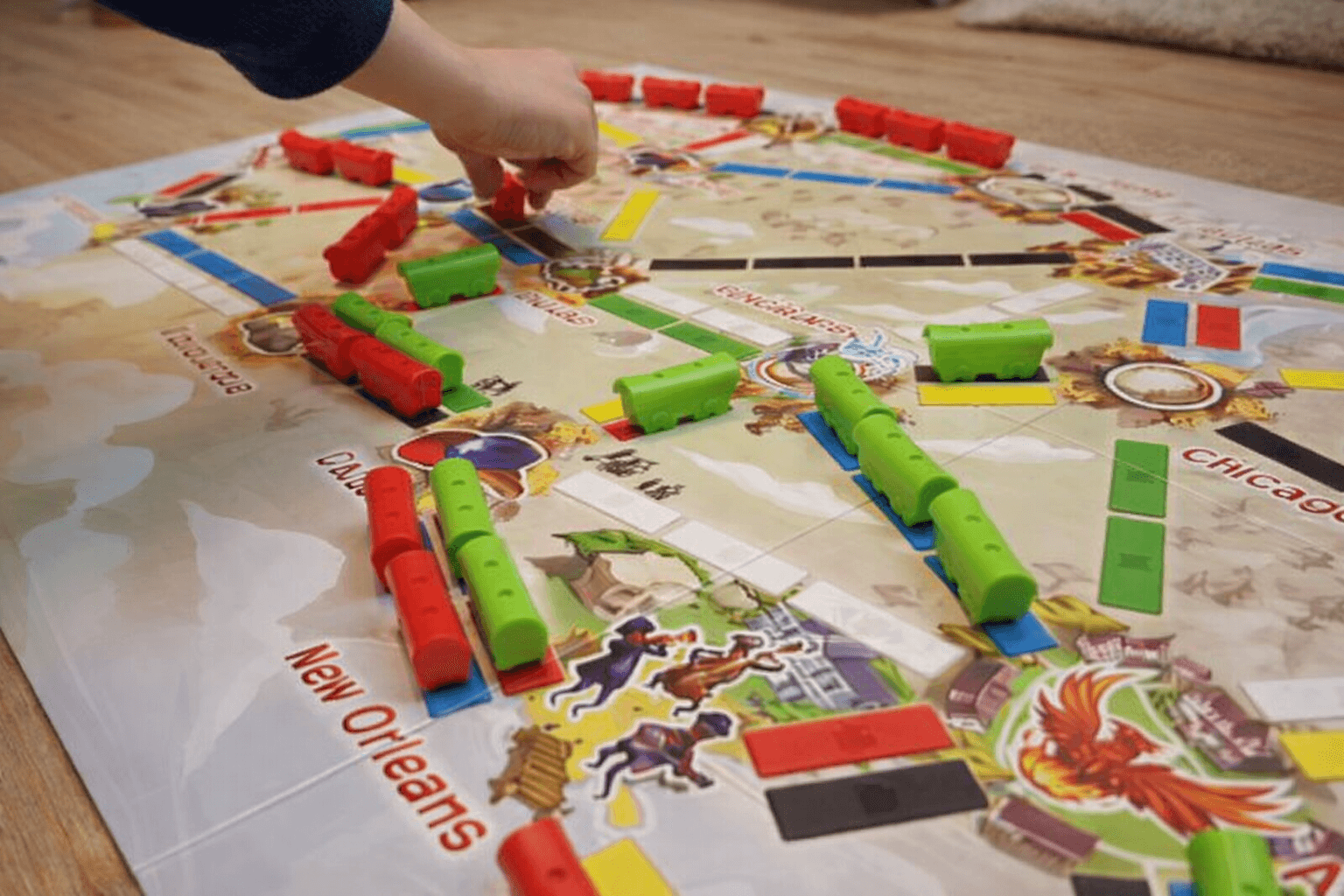
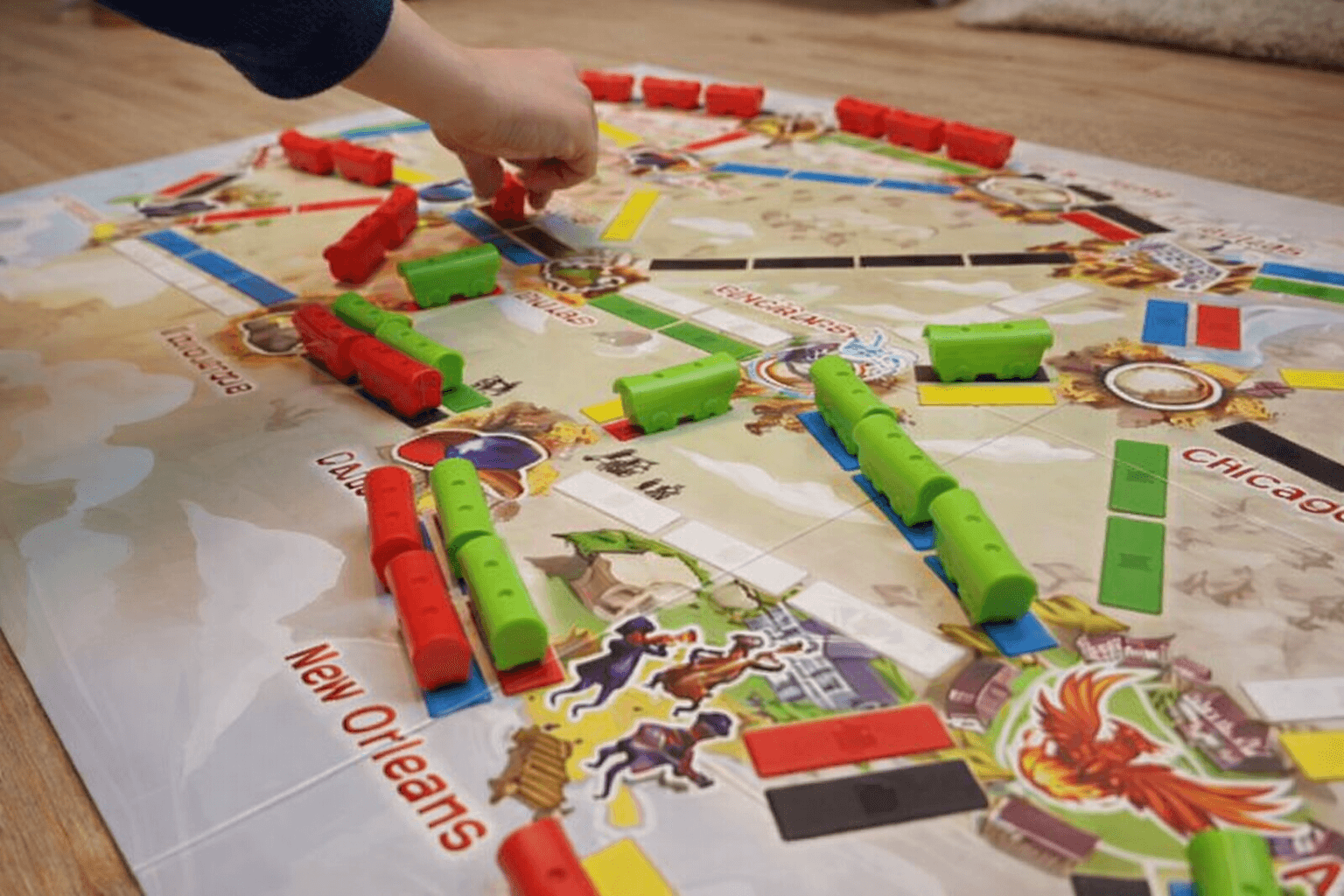
Ticket to Ride: My First Journey is a kid-friendly version of the classic Ticket to Ride board game, designed for younger players ages 6 and up. We started our kids playing this game as young as 2 and 3. In this simplified version, players race to complete train routes across a map of the United States by collecting matching train cards and claiming tracks between cities.
Each player starts with a few destination tickets showing two cities they need to connect. On their turn, players either draw more train cards or use cards of the same color to claim a route on the board. When a route is claimed, players place their plastic trains on the track. Once a player connects the cities on one of their tickets, they earn a ticket card and draw a new one.
The first player to complete six tickets wins the game. With its colorful board, easy rules, and shorter playtime, My First Journey is a great introduction to strategy games and geography for young kids and families.
🛒 Find Ticket to Ride: My First Journey on Amazon
Rainbow Pirates
Colorful Strategy and Family Fun
Recommended Age: 7+ (Try as early as 4)
Playtime: 20–30 minutes
Skills Developed: Strategic thinking, color sequencing, memory, decision-making
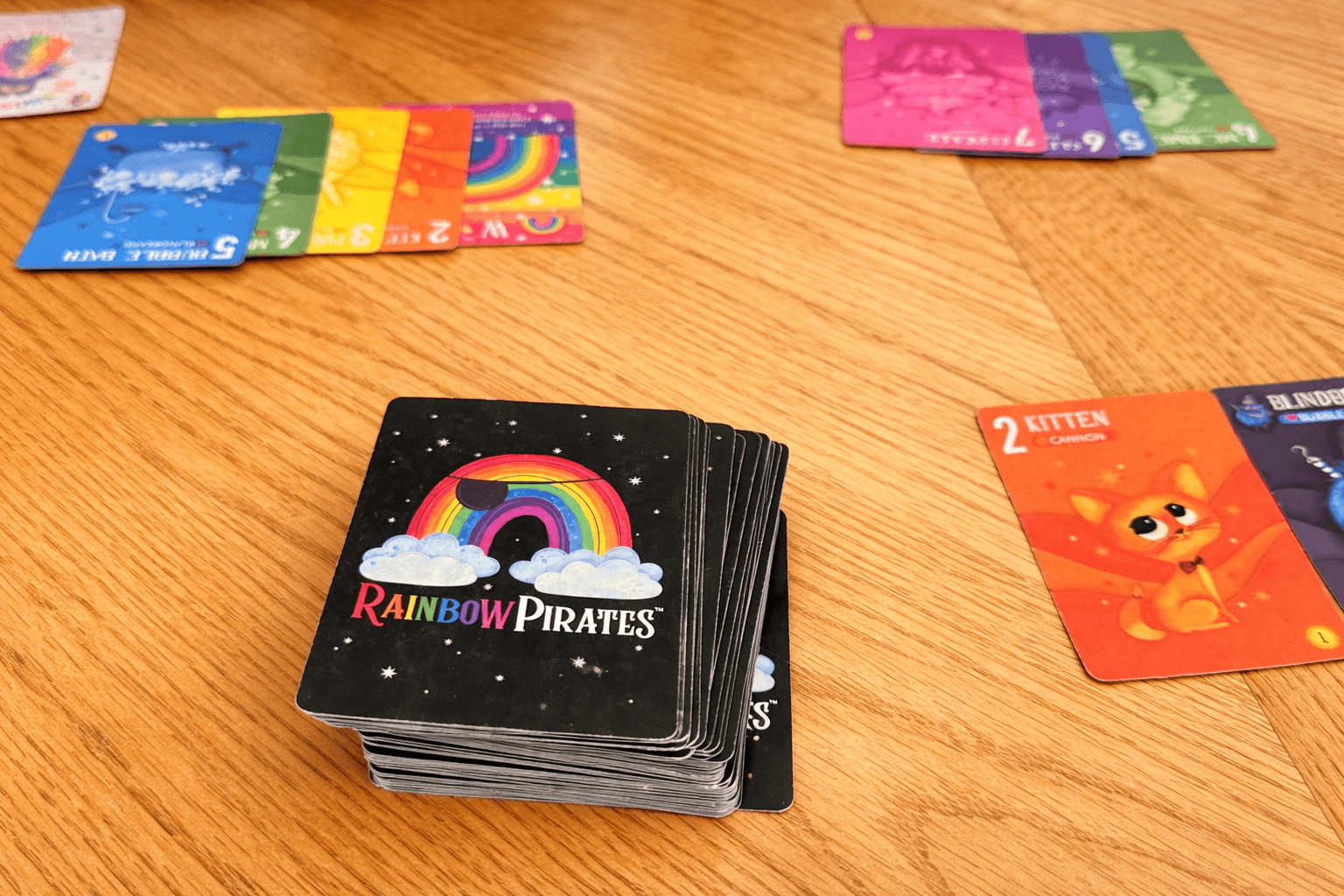
Rainbow Pirates is one of our family's favorite card games because it's easy to learn while still offering plenty of strategy for both kids and adults (In fact, our 5-year-old often beats us!). If you're new to the game, we also have a complete How to Play Rainbow Pirates guide that walks you through the rules before you play.
Players take turns collecting and playing rainbow-colored cards to build color sequences on their board. Longer sequences score more points. But watch out because opponents can play action cards to steal your cards, break up your sets, or block your progress.
The game ends when one player has made two full rainbows of cards and then gets rid of the cards in their hand. The players total up their points and the player with the most points wins.
With vibrant artwork, a mix of luck and planning, and a dash of pirate mischief, Rainbow Pirates is a fun and fast-paced game the whole family can enjoy.
We have played this game soooo many times with my 7 year old. My 3 and 4 year old would start out playing on my team so they could learn the game. My 4 year old daughter can now play this game on her own and actually knows and understands how to play strategically. It is so fun! It just shows that the age on the box doesn't matter. You can start games at an early age and adjust how you play until they learn the basics and then continue to add more details until you are playing the game how it is intended to play.
🛒 Find Rainbow Pirates on Amazon
Blockness
Build, Plan, and Outsmart Opponents
Recommended Age: 8+ (Try as early as 5)
Playtime: 15–25 minutes
Skills Developed: Spatial reasoning, foresight, problem-solving, logical planning
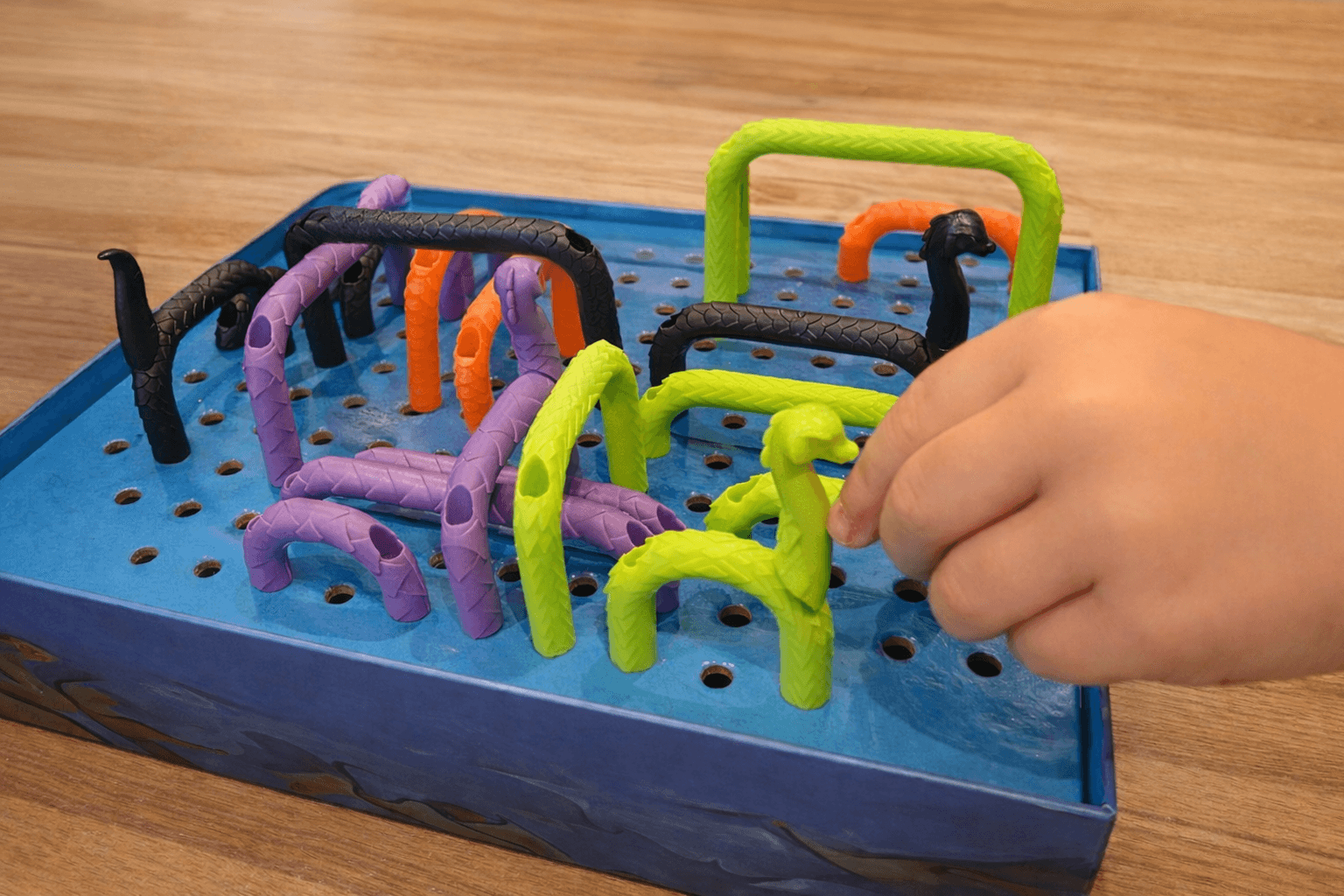
Blockness is a fun and eye-catching strategy game where players compete to build the longest dragon on the board. Designed for ages 8 and up, it’s easy to learn but full of clever choices.
Each player starts with a set of colorful dragon body segments and takes turns adding them to the board, trying to stretch their dragon as far as possible. The catch is that dragons can’t cross over each other, so space gets tight as the board fills up. Players need to think ahead and block their opponents while leaving room for their own dragon to grow.
The game ends when no more pieces can be played, and the player with the most segments on the board wins. With its 3D pieces and quick gameplay, Blockness is a great mix of spatial thinking, strategy, and family fun.
🛒 Find Blockness on Amazon
How to Introduce Strategy Games to Young Kids
When introducing strategy games to young kids, the key is to make the experience fun, inclusive, and low-pressure. Start with cooperative games where the whole family works together toward a shared goal. This helps children learn about teamwork, turn-taking, and decision-making without the stress of competition. For younger siblings, consider letting them “team up” with an adult or older child so they can participate and learn the rules at their own pace. Most importantly, keep the focus on having fun rather than winning. Celebrate small victories, creative moves, or teamwork moments to keep your child excited about playing and learning new games.
Related Articles
How to Play Rainbow Pirates
Best Color Matching Games for Toddlers
Cooperative Games for Kids
Classic Games for the Kids
Fun Card Games for Kids
Memory & Recognition Games for Kids
Games
Cooperative Games for Kids That Families Love
Cooperative games are a great way for kids to learn teamwork, communication, and problem-solving while having fun. Instead of competing against each other, players work together toward a shared goal. Everyone either wins together or loses together, which helps build a sense of unity and support.
In this part of the blog, you’ll find a variety of the cooperative games we like to play as a family. These games encourage kindness, patience, and group thinking. If you are looking for games that focus on connection rather than competition, cooperative games are a perfect fit.
This post contains affiliate links. As an Amazon Associate, we earn from qualifying purchases at no extra cost to you.
Monkey Around: A Cooperative Movement Game for Toddlers
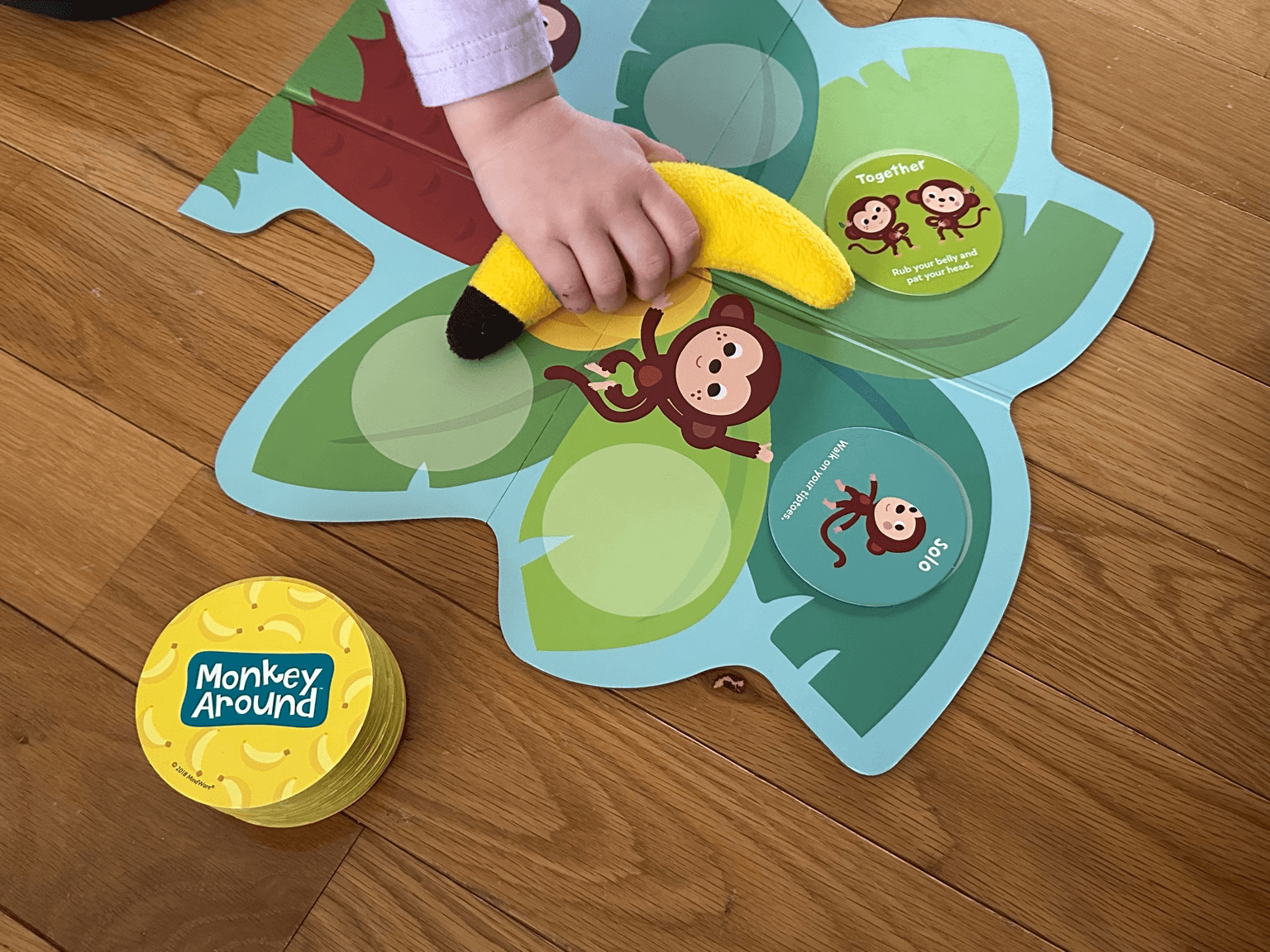
Monkey Around is a delightful movement game designed especially for toddlers and preschoolers. Players draw cards with simple, active tasks like “Hop like a monkey,” “Give someone a high five,” or “Balance the banana beanbag on your head.” The goal is to complete fun, wiggly challenges together and place a banana token on the board for each one finished.
This cooperative game focuses on gross motor skills, coordination, and social interaction. There are no winners or losers. Just lots of silly movement and bonding time. Monkey Around is perfect for young kids who are still learning how to take turns and follow directions. It is a great way for families to play and move together.
🛒 Find Monkey Around on Amazon
Hurry Up Chicken Butt: A Silly Cooperative Game for All Ages
Our kids love this game, and honestly they just need the name of it is hilarious. Hurry Up Chicken Butt is a fast and silly party-style game filled with laughter, movement, and quick reactions. Players roll a dice and race to complete goofy actions like clucking like a chicken, hopping on one foot, sing happy birthday to yourself, or running around trying to find the hidden chicken butt before the time runs out and the chicken clucks. The twist? You never know exactly what you’ll be doing next, which keeps the energy high and everyone on their toes.
It’s a great choice for families or groups with mixed ages. The game encourages physical activity, quick thinking, and lots of giggles. With simple rules and unpredictable fun, Hurry Up Chicken Butt is perfect for playdates, family game nights, or any time you want to get moving and be a little silly.
🛒 Find Hurry Up Chick Butt on Amazon
The Eggcellent Hide & Seek Game: A Cooperative Favorite
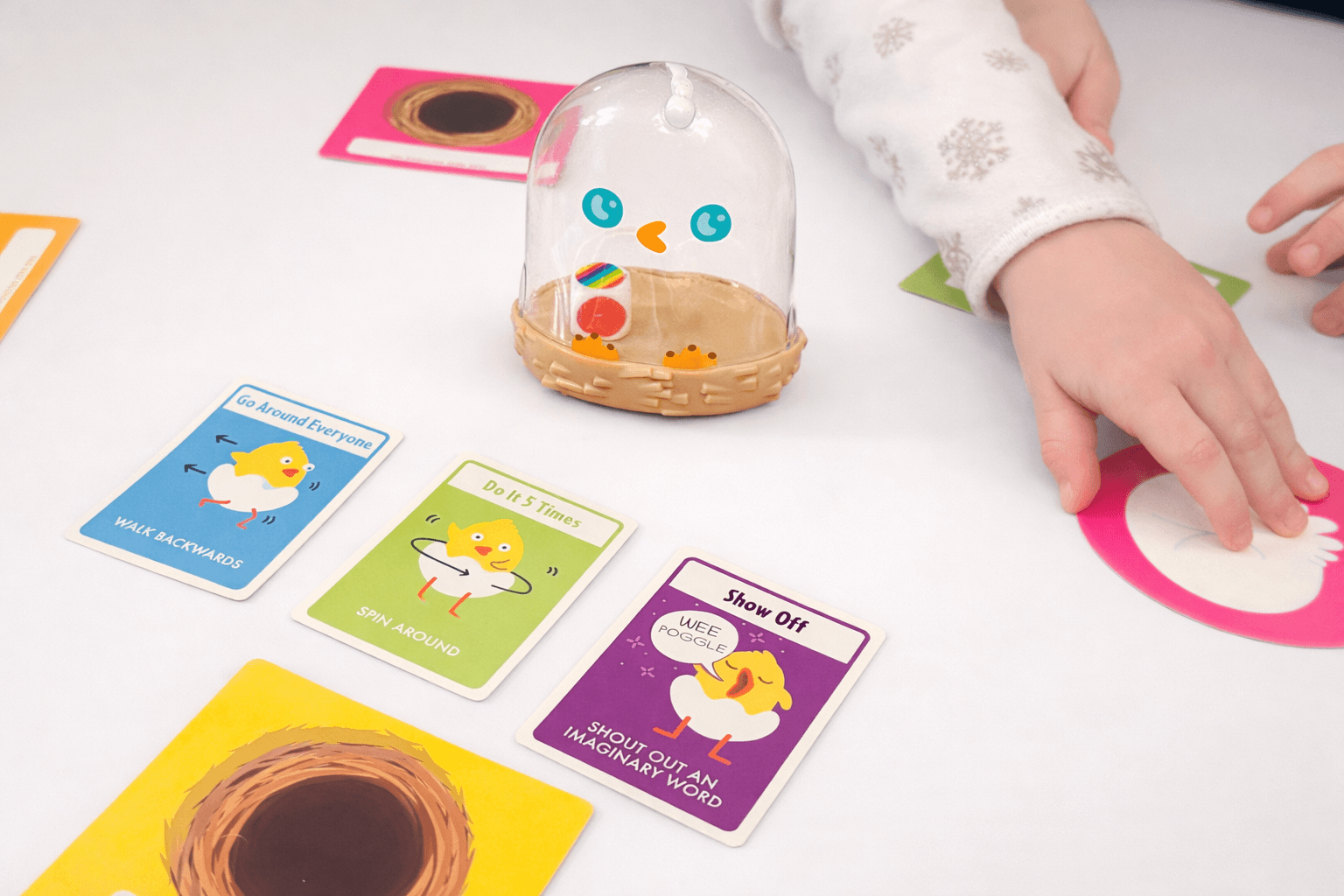
This is a perfect game for when your kids want to play hide and seek because instead of you hiding, you hide an egg! Once you put the egg in the hiding spot, you hit a button on the top. Every so often it will make little noises to give clues on where it is. Once it is found, the kids hit the button again and it sings a little song for them. Then, they can hide it and it starts all over again. It is super simple, but a great game for the whole family to play!
🛒 Find Eggcellent Hide & Seek on Amazon
If you really want to make your kids giggle, there is a "Silly Poopy" version of this game. It is played the same way, it is just a poop emoji shape instead of an egg.
🛒 Find the Silly Poopy game on Amazon
Related Articles
How to Play Rainbow Pirates
Best Color Matching Games for Toddlers
Best Logic & Strategy Games for Kids
Classic Games for the Kids
Fun Card Games for Kids
Memory & Recognition Games for Kids