Color and matching games are the perfect way to help young children learn through play. These games help build early skills like color recognition, sorting, and memory while keeping kids engaged with bright, hands-on visuals. They’re great for toddlers, preschoolers, and early learners at home or in the classroom that keep kids excited and focused.
How to Adapt Games for Younger Kids
I want to preface by saying, in my opinion, the age on the box is just a number. We often start playing games well before the suggested age range by modifying the rules to make them accessible for any age. Once they grasp the basic concept of the game, you can continue to add steps to the directions each time until you are playing it how the game is intended to be played. Playing as a team or simplifying directions lets even 1-year-olds join in on the fun while still developing early cognitive and social skills.
This post contains affiliate links. As an Amazon Associate, we earn from qualifying purchases at no extra cost to you.
Our Favorite Color and Matching Games for Kids
Pengaloo: A Fun Memory and Matching Game for Toddlers
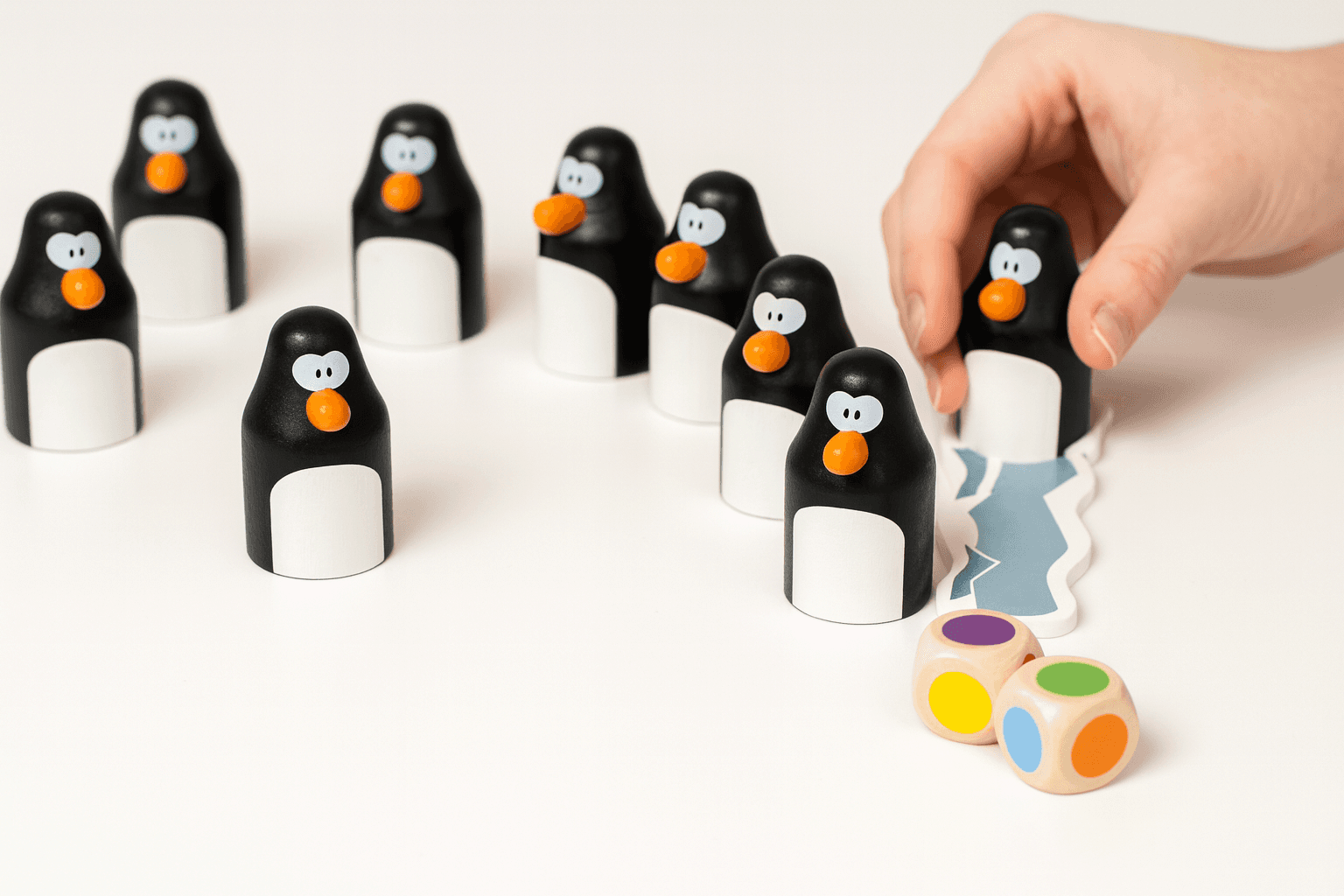
Pengaloo is an adorable color matching and memory game that introduces kids to basic gameplay mechanics while teaching color recognition and focus. Typically for ages 4 and up, we introduced this to our kids around age 2. In this game, players take turns rolling dice to reveal colors, then they try to find eggs hidden under wooden penguins that match those colors. Using memory and a bit of luck, players lift the penguins to see if they can find a hidden egg that matches the rolled dice. If they guess correctly, they get to keep the penguin and egg on their iceberg.
The goal is to be the first to collect six penguins with eggs. Pengaloo encourages color recognition, memory skills, and turn-taking, all wrapped in a arctic-themed design that kids love. It’s a great introduction to board games for younger players and makes learning fun through play.
This game can be played with 2-4 players and is simple enough for all ages to understand and fun for everyone!
Sneaky Snacky Squirrel: A Preschool Favorite for Color Recognition
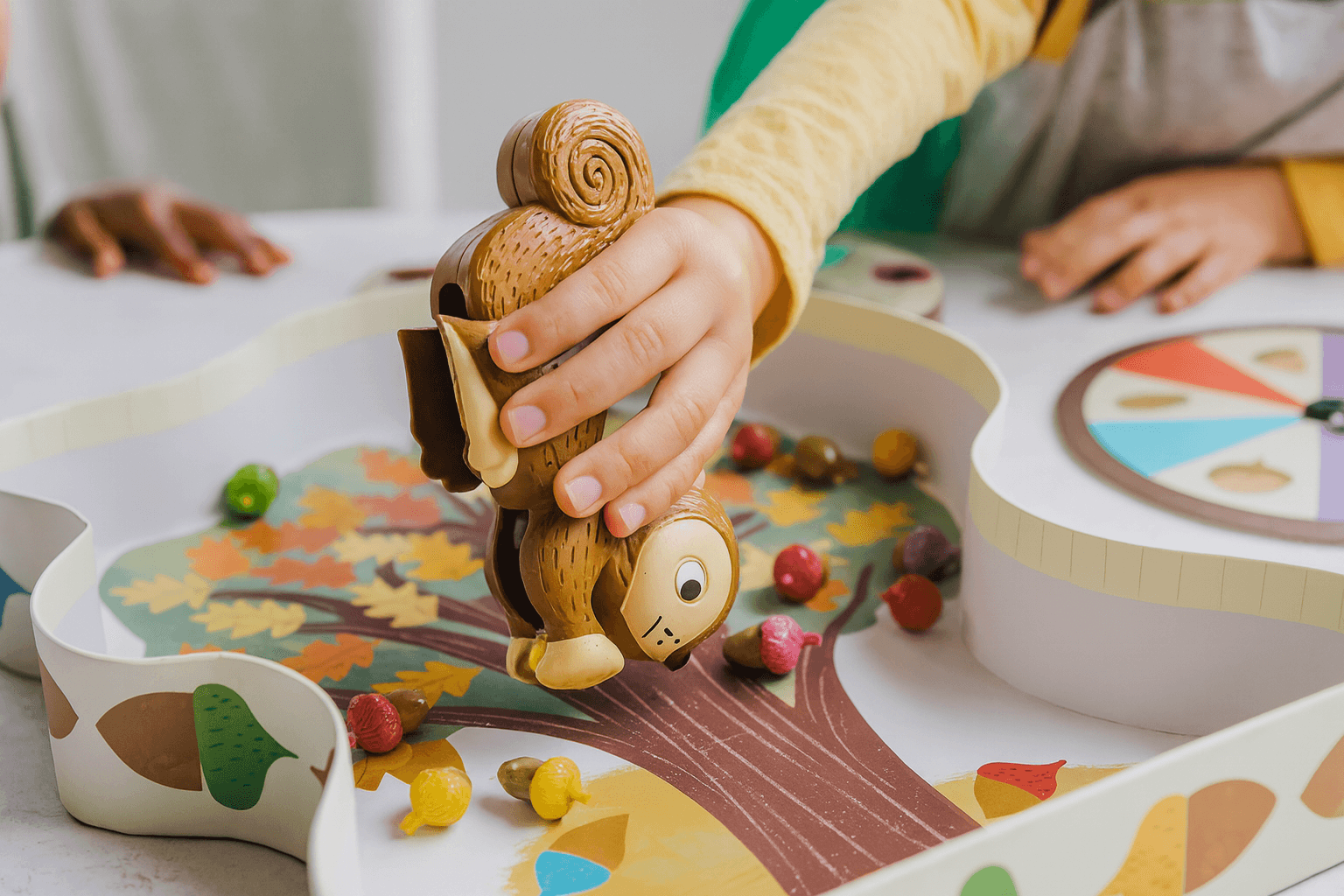
The Sneaky Snacky Squirrel Game is one of the best color recognition games for preschoolers. It strengthens fine motor skills, strategic thinking, and focus while keeping gameplay light and fun. Designed for ages 3 and up, the goal is to be the first to fill your tree with five different colored acorns.
Players take turns spinning a spinner to determine their move. They pick up a specific color acorn, steal one from another player, lose a turn, or even have a windy day blow all your acorns away! Using the adorable squirrel-shaped “Squirrel Squeezer,” kids pick up and place acorns in their tree stump game board.
Fast, simple, and full of surprises, Sneaky Snacky Squirrel is a perfect first game for young children and a fun way to practice early skills while playing together.
This game is a favorite in our house! Once one game finishes, my kids are always asking to play again. It is fun because you never know what you are going to spin and who is going to win. This is a great game for color recognition for my younger kids, but my 7 year old still loves to play and use a little strategy on who to steal acorns from when he spins the sneaky snacky squirrel. We love playing this game as a family.
🛒 Find Sneaky Snacky Squirrel on Amazon
Colorama: A Shape and Color Sorting Game for Preschoolers
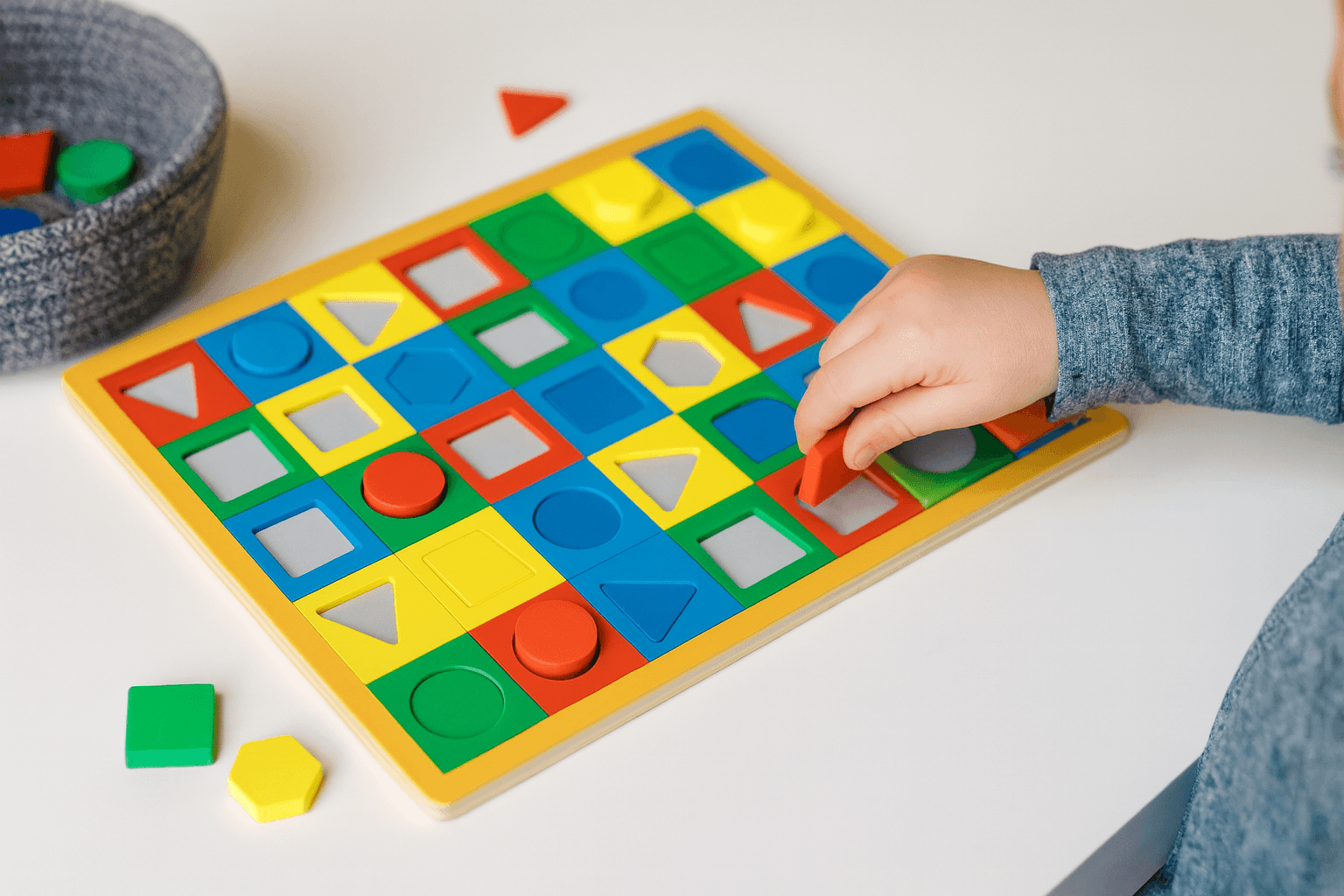
Colorama blends color and shape matching into an interactive board game that teaches young children sorting, pattern recognition, and logic – typically for ages 3 and up.
The game board is a grid filled with different shapes in various colors. On each turn, players roll one or two dice. One die shows colors and the other shows shapes. The player then finds a matching piece to place on the board. If both dice are used, the piece must match both the color and the shape shown.
There is no winner or loser in the basic version, making Colorama a stress-free, learning-focused game that’s ideal for preschoolers. It encourages observation, fine motor skills, and early logic in a fun and colorful way.
You can teach your children this game as a progression. For the youngest players, you can tell them to find all of the blue shapes, or all the red shapes. Then you can begin to work on finding all the circles, or triangles, etc. Lastly, you can use the two dice to find the correct color and shape. There are the basic shapes in this game of circles, triangles and squares, but they also have trapezoids and hexagons which are great shapes to introduce once kids have mastered the basic shapes.
Candy Land: A Classic Game for Color Learning
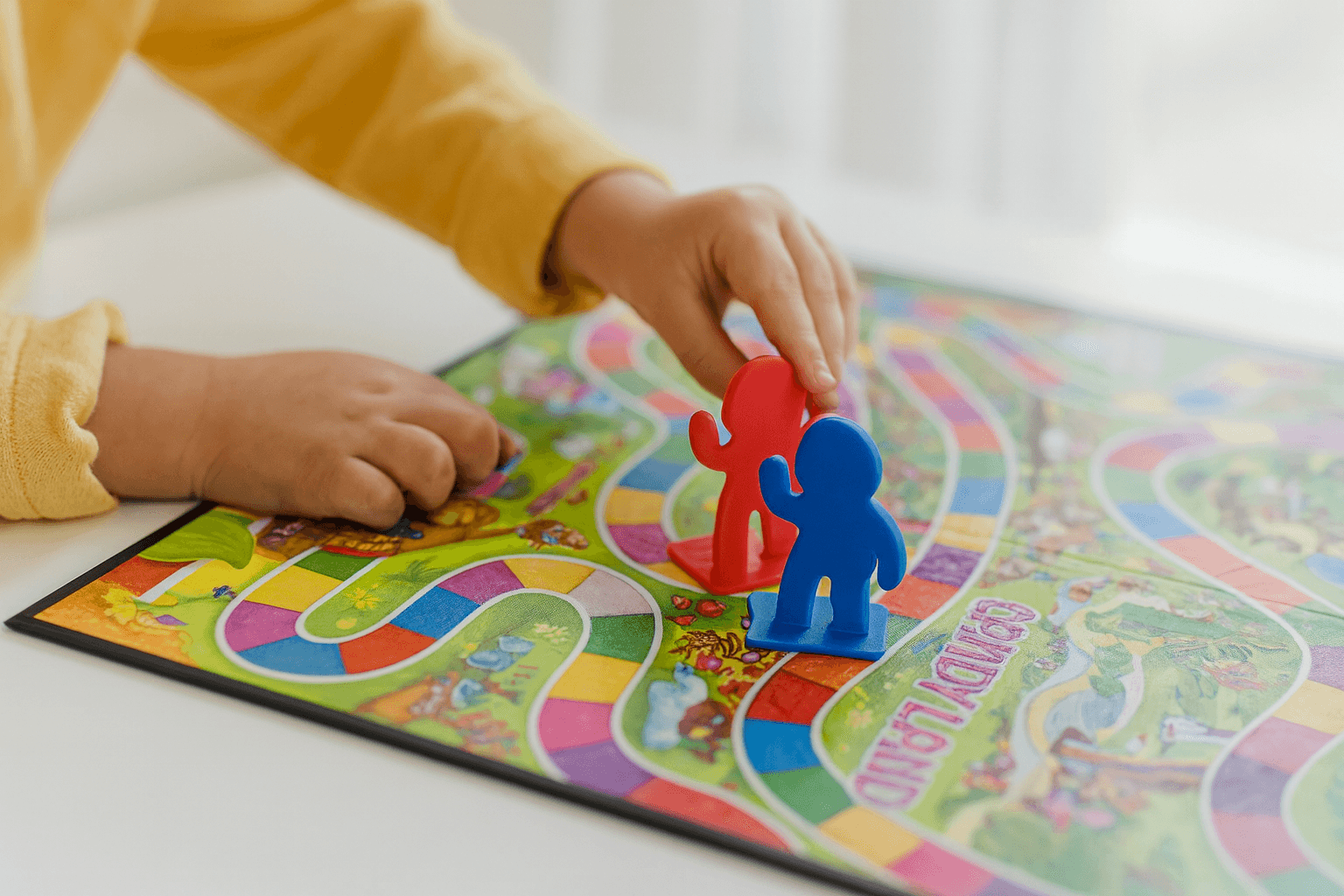
Candy Land remains one of the most beloved color games for toddlers and preschoolers for ages 3 and up. We started playing this game with our kids as soon as they knew their basic colors! With no reading required, it’s an easy way to learn color matching and turn-taking while sparking imagination.
Players take turns drawing colorful cards that show a single color or a special character. They move their game piece to the next space on the board that matches the color or character shown. The board is a winding path through a sweet-themed world filled with locations like Gumdrop Mountain and Licorice Lagoon.
The first player to reach King Kandy’s Castle at the end of the rainbow path wins. Candy Land helps kids learn colors, practice taking turns, and enjoy imaginative play in a bright and playful setting.
This is one of our favorite games to play as a family. The outcome is different every time we play which keeps it fun and engaging. Sometimes, we even add in real candy to the game (like Skittles or M and Ms) and scatter them across the board. If they are the first to pass a spot with candy on it, they can take it. We don't do this often, but it is something extra special to add in every now and then. :) Another way we keep the game fun and exciting if we've played it many times is we play the game in reverse. We start at the end and try to get back to the start, so now the special cards that typically send you back close to the start, are the cards you want to get to the new finish line! The kids like it and it mixes the game up to make it a fun and different way to play.
(For Bluey lovers, there's a version for you too!)
This is a giant version of the game where the board is 64" x 64" and you become the mover on the board. This would be great for younger children & to help with movement activities.
Hisss: Easy Snake-Building Fun for Families

If your family enjoys games that are simple to learn, colorful, and great for kids, then Hisss might just become a favorite around your house. This light-hearted card game is perfect for Preschoolers and early elementary ages but fun for the whole family too.
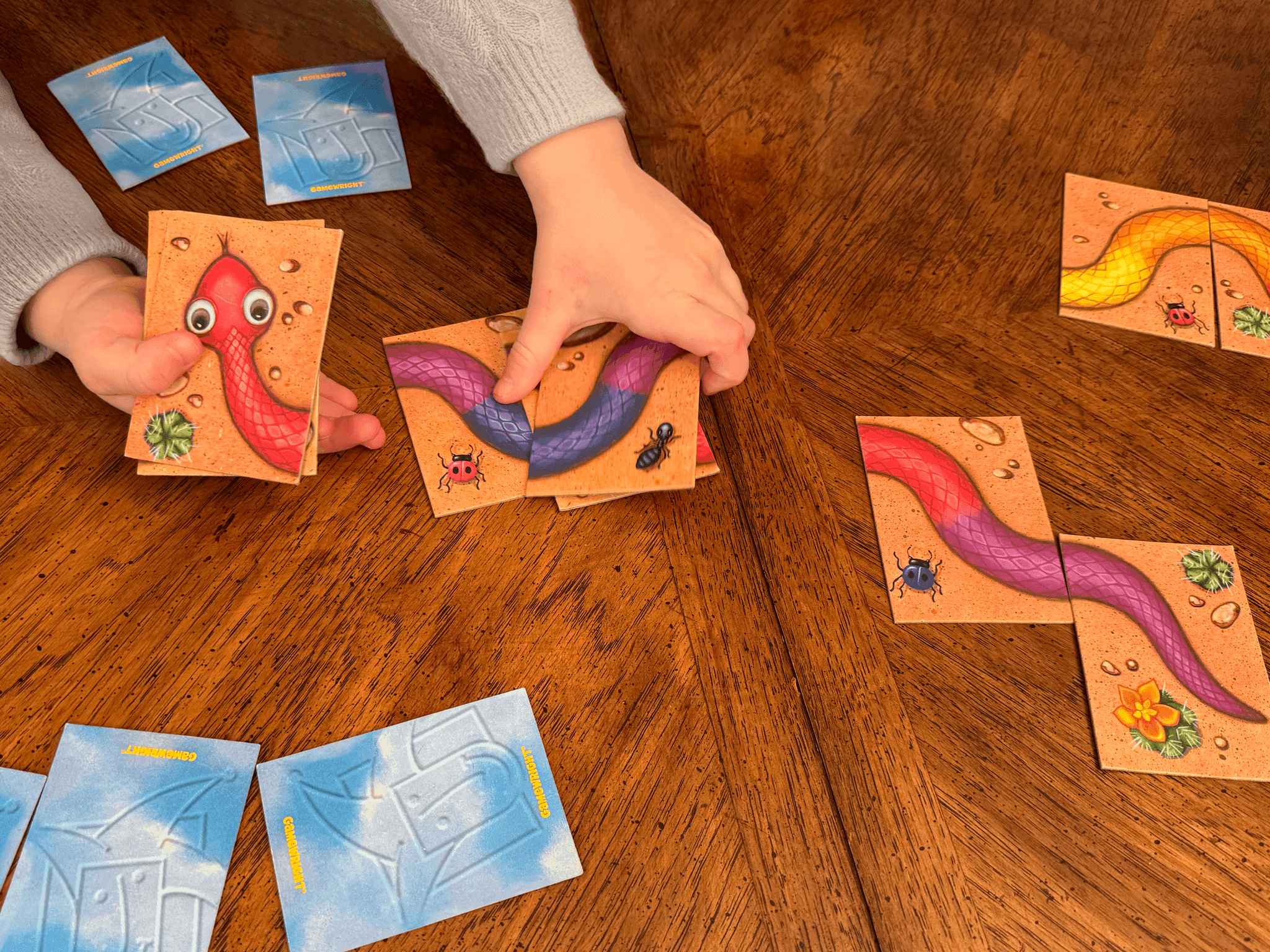
Hisss is a matching card game where players take turns drawing cards to build colorful snakes from head to tail by matching colors. It’s designed for 2 to 5 players, plays in about 15 minutes, and is recommended for ages 4 and up.
Hisss manages to be both simple and strategic. It is easy to learn, set up and play so kids and families can enjoy it right away. You can play multiple games in one sitting since the game moves quickly. You can play on teams or as individuals, but either way, it keeps everyone involved and engaged on each turn. It’s perfect for game nights, travel, or rainy afternoon fun.
Themed Matching Games for Every Interest
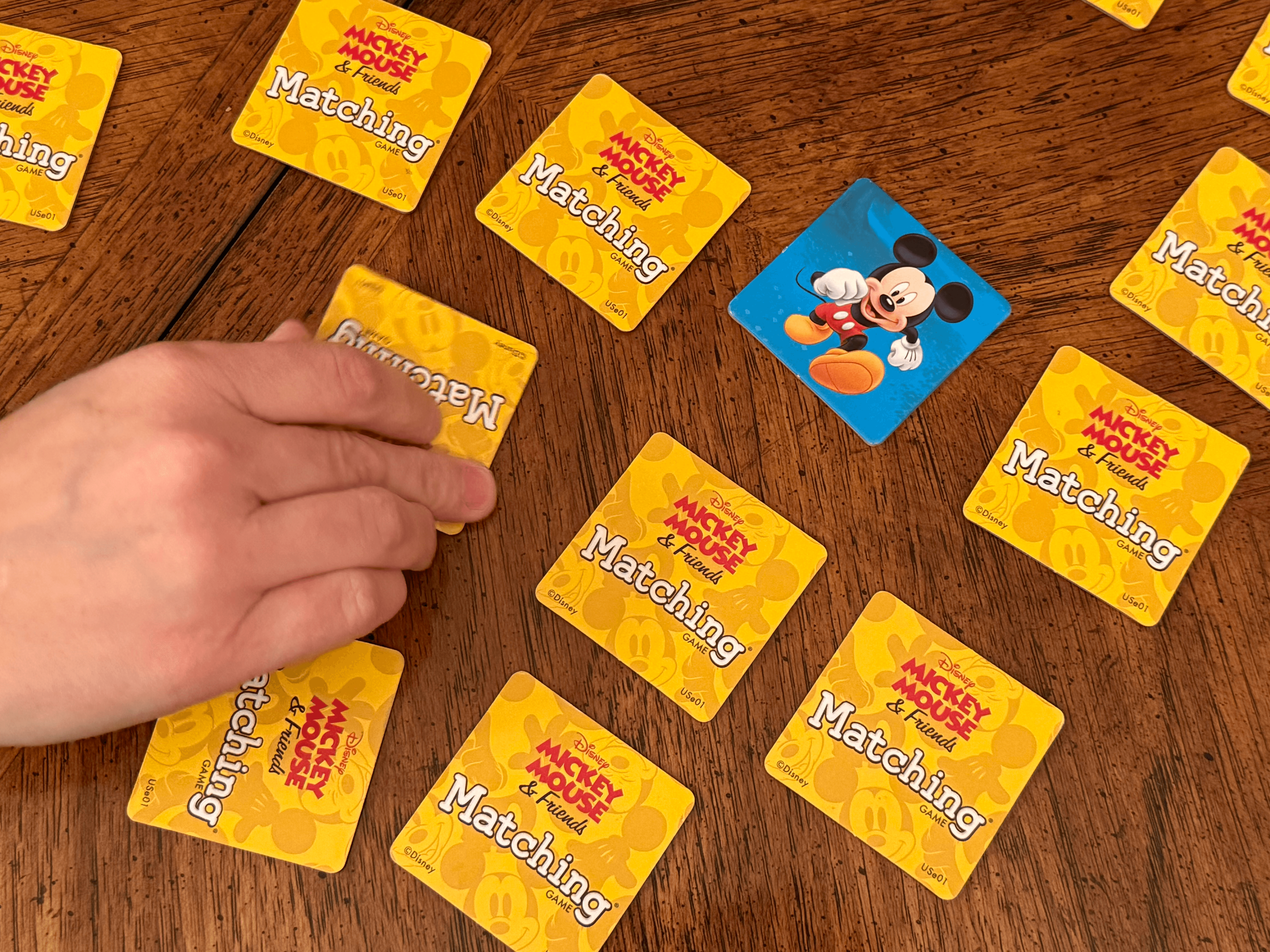
Our 3 year old LOVES matching games… and he is good at them too! Matching games are incredible for boosting memory, focus, and cognitive skills in young children. Choose a theme that excites your child, whether it’s Disney, Bluey, or dinosaurs! We play them often & can keep adding more cards to make the games bigger and longer.
These matching card games for kids are perfect for quiet time, family play, or classroom centers because they support key areas of early development in a fun and engaging way.
The Benefits of Matching Games for Kids
Boost memory and concentration: Kids must remember where cards or pieces are located, helping to strengthen short-term memory and focus.
Improve visual recognition: Matching images, shapes, or colors sharpens visual discrimination skills, which are important for reading and problem-solving.
Build cognitive and problem-solving skills: Children learn to use logic and strategy as they try to remember and match pairs.
Encourage turn-taking and social skills: When played with others, matching games teach patience, sharing, and good sportsmanship.
Support vocabulary and language development: Talking about what they see (e.g., “I found a cat!”) helps children practice naming, describing, and communicating.
There are so many different matching games out there. I would recommend finding a themed one that interests your child. Here are some suggestions below:
DIY Matching Games for a Personal Touch
One of the sweetest, more personal matching games we’ve seen is something a family member made for our kids. She printed photos from throughout the year of trips we took, special events, and everyday moments and turned them into a custom matching game. The kids loved flipping the cards over and reliving all their favorite memories while they played.
Final Thoughts: Why We Love Color and Matching Games for Kids
Whether it’s Pengaloo, Sneaky Snacky Squirrel, or Candy Land, color and matching games are a simple yet powerful way to support early learning. They help kids practice essential developmental skills, all while laughing, bonding, and playing together as a family.