Logic games encourage kids to plan ahead, think critically, and use reasoning skills, which are key abilities that help in school and beyond. These games are perfect for ages 3-10 and often involve making decisions, spotting patterns, and thinking through different outcomes. They encourage kids to use their brains in creative and thoughtful ways while still keeping the experience fun and engaging.
Top Family Strategy Games Kids Will Love
In this part of the blog, you’ll find a collection of logic and strategy games that we have enjoyed introducing and playing with our kids. Whether your child enjoys puzzles, building paths, or outsmarting a challenge, these games offer a fun way to build important thinking skills through play.
Kingdomino
A Simple Strategy Game for Families
Recommended Age Range: 8+ (Try as early as 4)
Playtime: 15–20 minutes
Skills Developed: Strategy, spatial reasoning, pattern recognition, decision-making
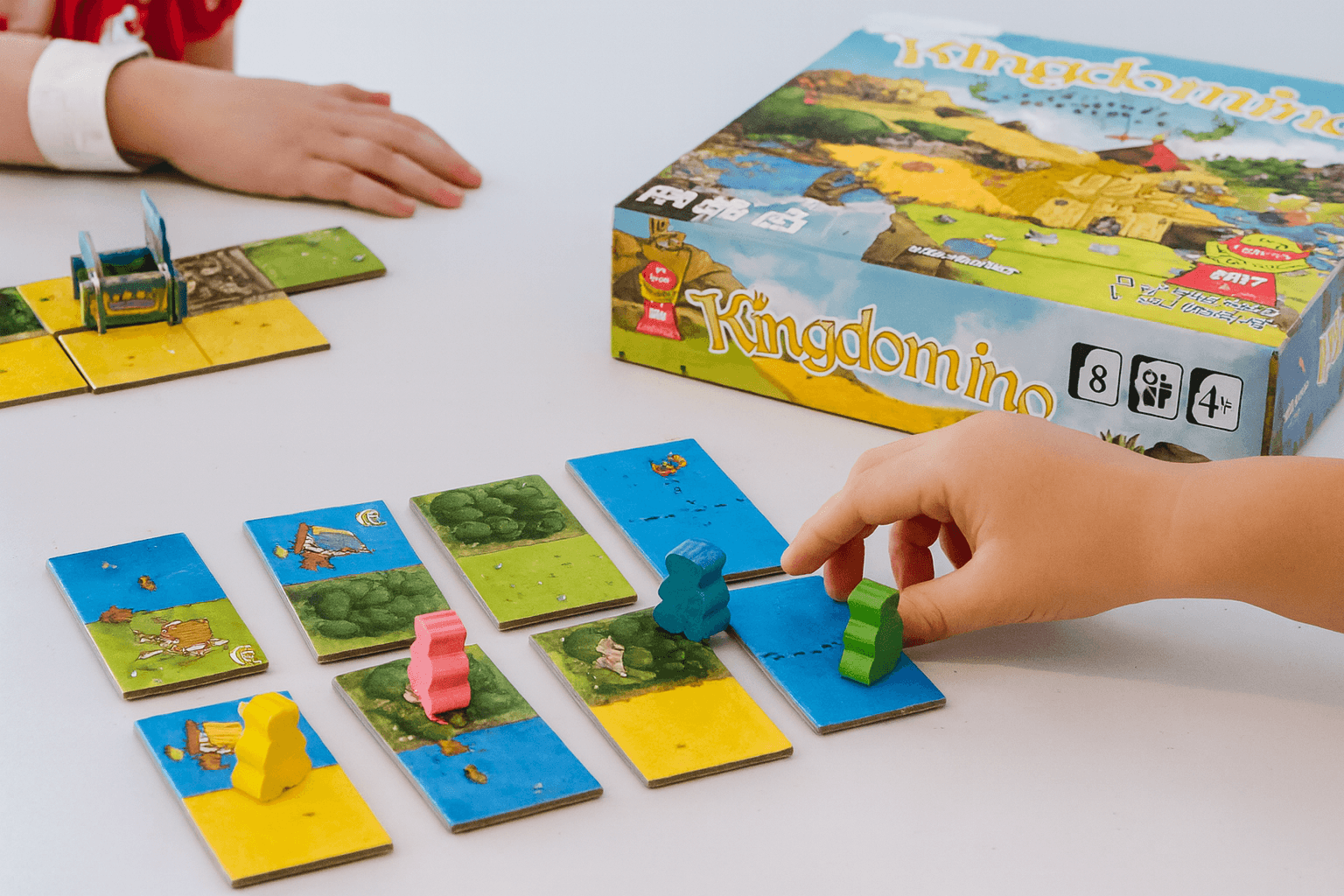
Kingdomino is a fun and strategic tile-laying game for 2 to 4 players that’s easy to learn and great for families. We recently taught our 4 year old daughter how to play, and she did great! Her focus was on the matching, where as our 7 year old was more focused on the strategy. Either way, we all had fun playing together which is why this game is great for families.
Each player takes on the role of a ruler trying to expand their kingdom by connecting matching landscape tiles, like forests, fields, lakes, and mines. Some tiles include crowns, which are key to scoring points.
On each turn, players choose a new domino tile and place it in their kingdom, matching at least one side to a similar terrain. The twist is that the order in which players choose tiles affects who picks first next round, so timing and planning are important.
The game ends when each player has completed a 5-by-5 grid of tiles. Points are scored based on the size of matching areas and the number of crowns they contain. The player with the most points wins the game.
Kingdomino combines simple rules with clever strategy, making it a perfect choice for game night with kids and adults alike.
Ticket to Ride: My First Journey
A Travel-Themed Game for Kids
Recommended Age: 6+ (Try as early as 3)
Playtime: 20–30 minutes
Skills Developed: Planning, color matching, critical thinking, map awareness
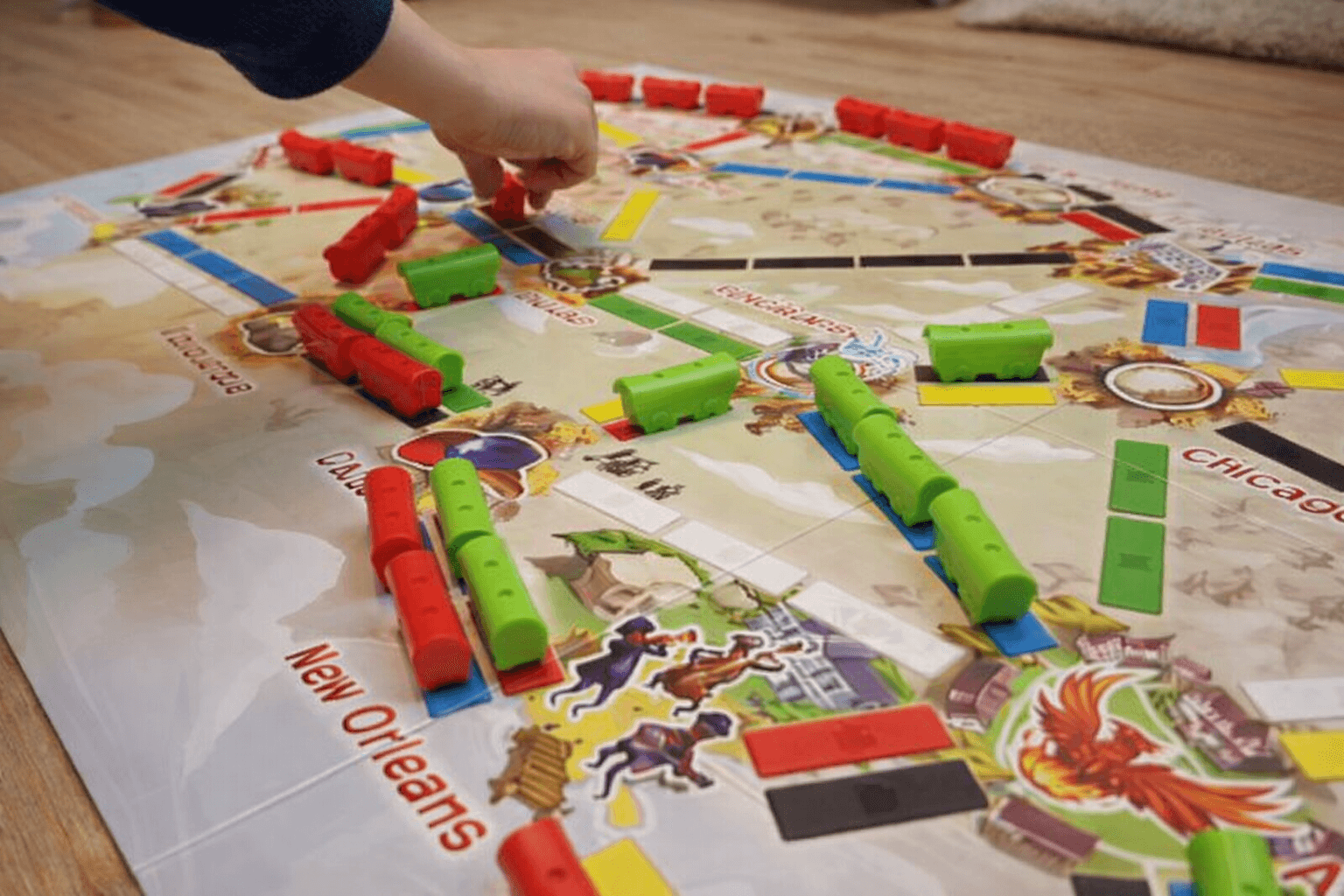
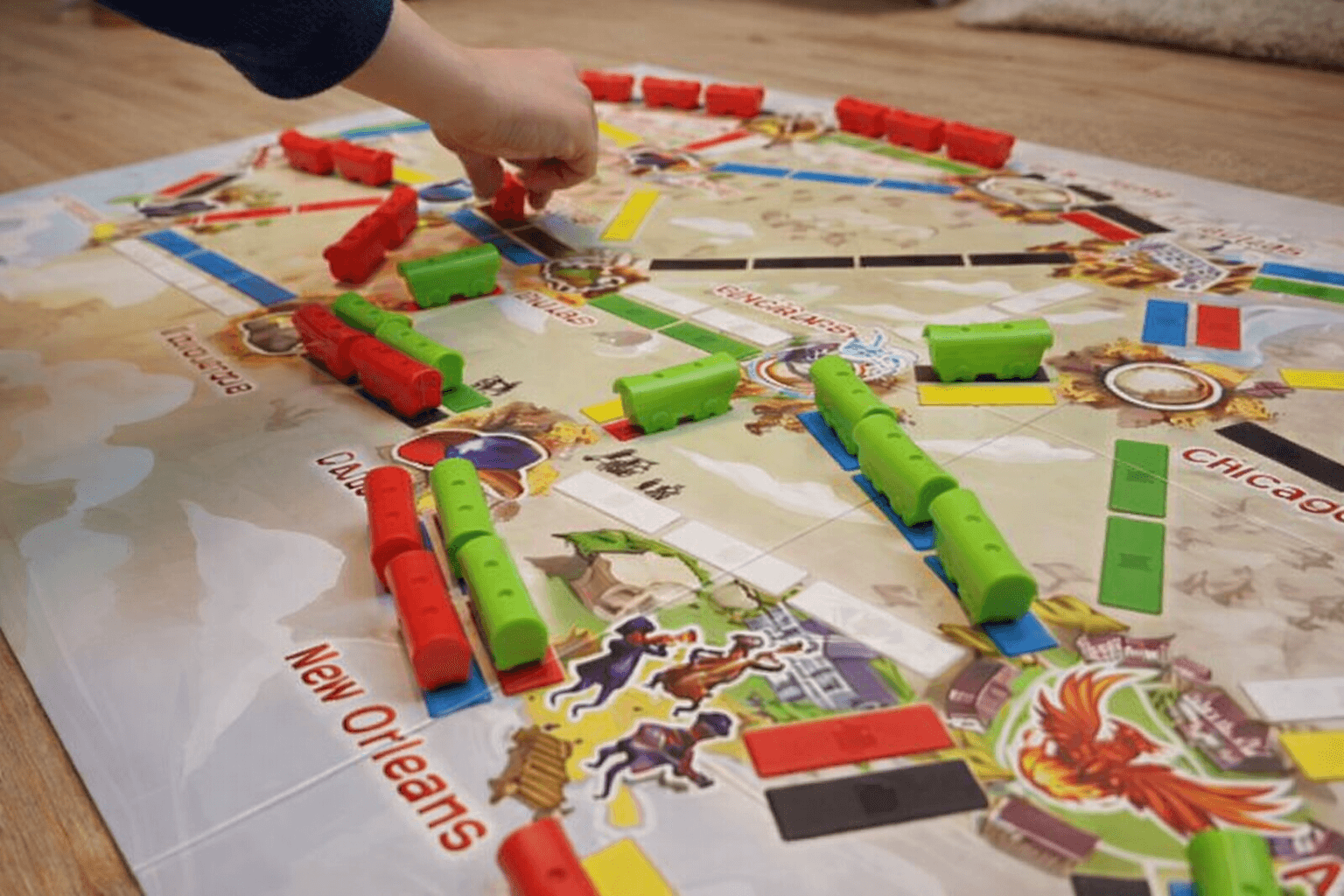
Ticket to Ride: My First Journey is a kid-friendly version of the classic Ticket to Ride board game, designed for younger players ages 6 and up. We started our kids playing this game as young as 2 and 3. In this simplified version, players race to complete train routes across a map of the United States by collecting matching train cards and claiming tracks between cities.
Each player starts with a few destination tickets showing two cities they need to connect. On their turn, players either draw more train cards or use cards of the same color to claim a route on the board. When a route is claimed, players place their plastic trains on the track. Once a player connects the cities on one of their tickets, they earn a ticket card and draw a new one.
The first player to complete six tickets wins the game. With its colorful board, easy rules, and shorter playtime, My First Journey is a great introduction to strategy games and geography for young kids and families.
🛒 Find Ticket to Ride: My First Journey on Amazon
Rainbow Pirates
Colorful Strategy and Family Fun
Recommended Age: 7+ (Try as early as 4)
Playtime: 20–30 minutes
Skills Developed: Strategic thinking, color sequencing, memory, decision-making
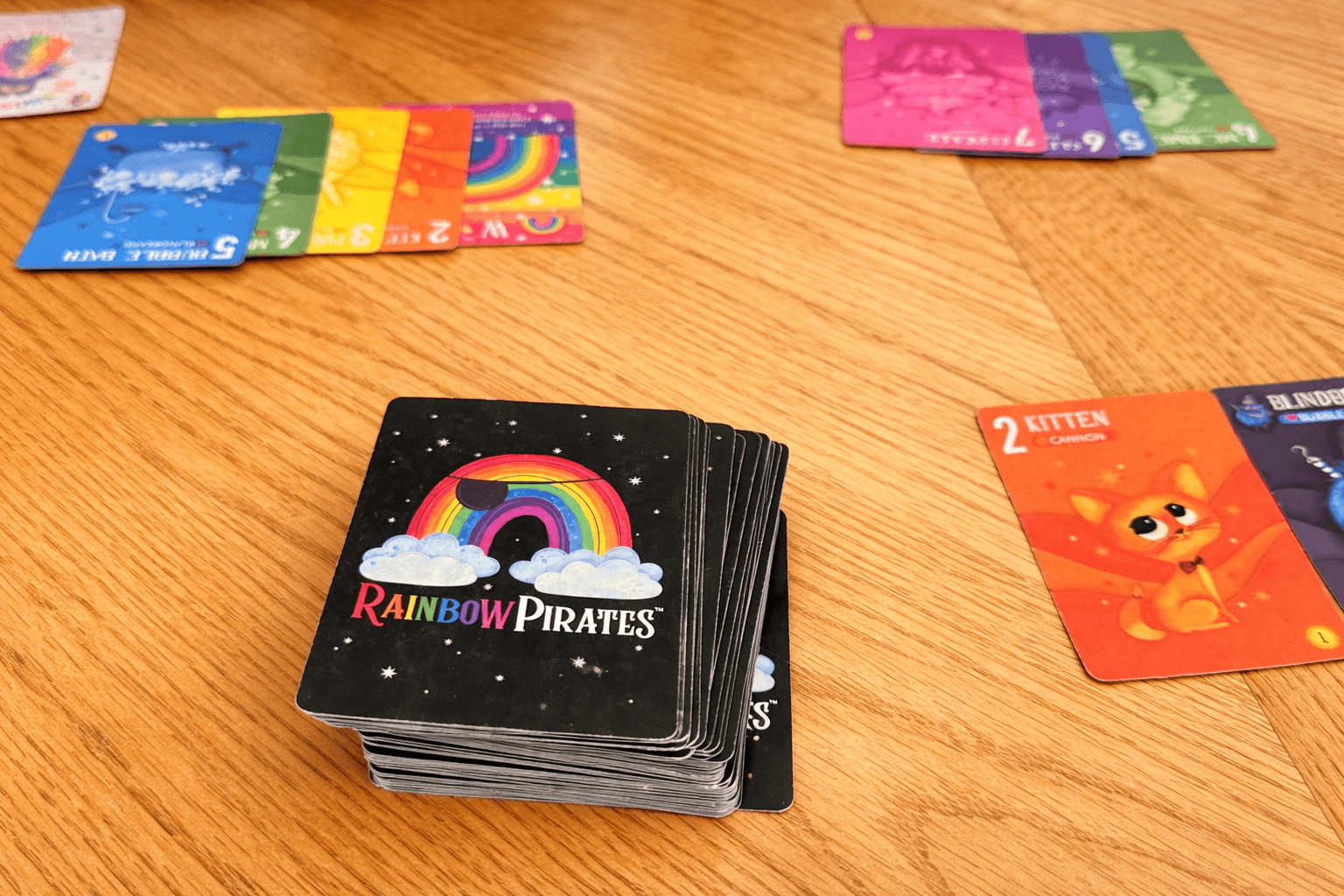
Rainbow Pirates is one of our family's favorite card games because it's easy to learn while still offering plenty of strategy for both kids and adults (In fact, our 5-year-old often beats us!). If you're new to the game, we also have a complete How to Play Rainbow Pirates guide that walks you through the rules before you play.
Players take turns collecting and playing rainbow-colored cards to build color sequences on their board. Longer sequences score more points. But watch out because opponents can play action cards to steal your cards, break up your sets, or block your progress.
The game ends when one player has made two full rainbows of cards and then gets rid of the cards in their hand. The players total up their points and the player with the most points wins.
With vibrant artwork, a mix of luck and planning, and a dash of pirate mischief, Rainbow Pirates is a fun and fast-paced game the whole family can enjoy.
We have played this game soooo many times with my 7 year old. My 3 and 4 year old would start out playing on my team so they could learn the game. My 4 year old daughter can now play this game on her own and actually knows and understands how to play strategically. It is so fun! It just shows that the age on the box doesn't matter. You can start games at an early age and adjust how you play until they learn the basics and then continue to add more details until you are playing the game how it is intended to play.
🛒 Find Rainbow Pirates on Amazon
Blockness
Build, Plan, and Outsmart Opponents
Recommended Age: 8+ (Try as early as 5)
Playtime: 15–25 minutes
Skills Developed: Spatial reasoning, foresight, problem-solving, logical planning
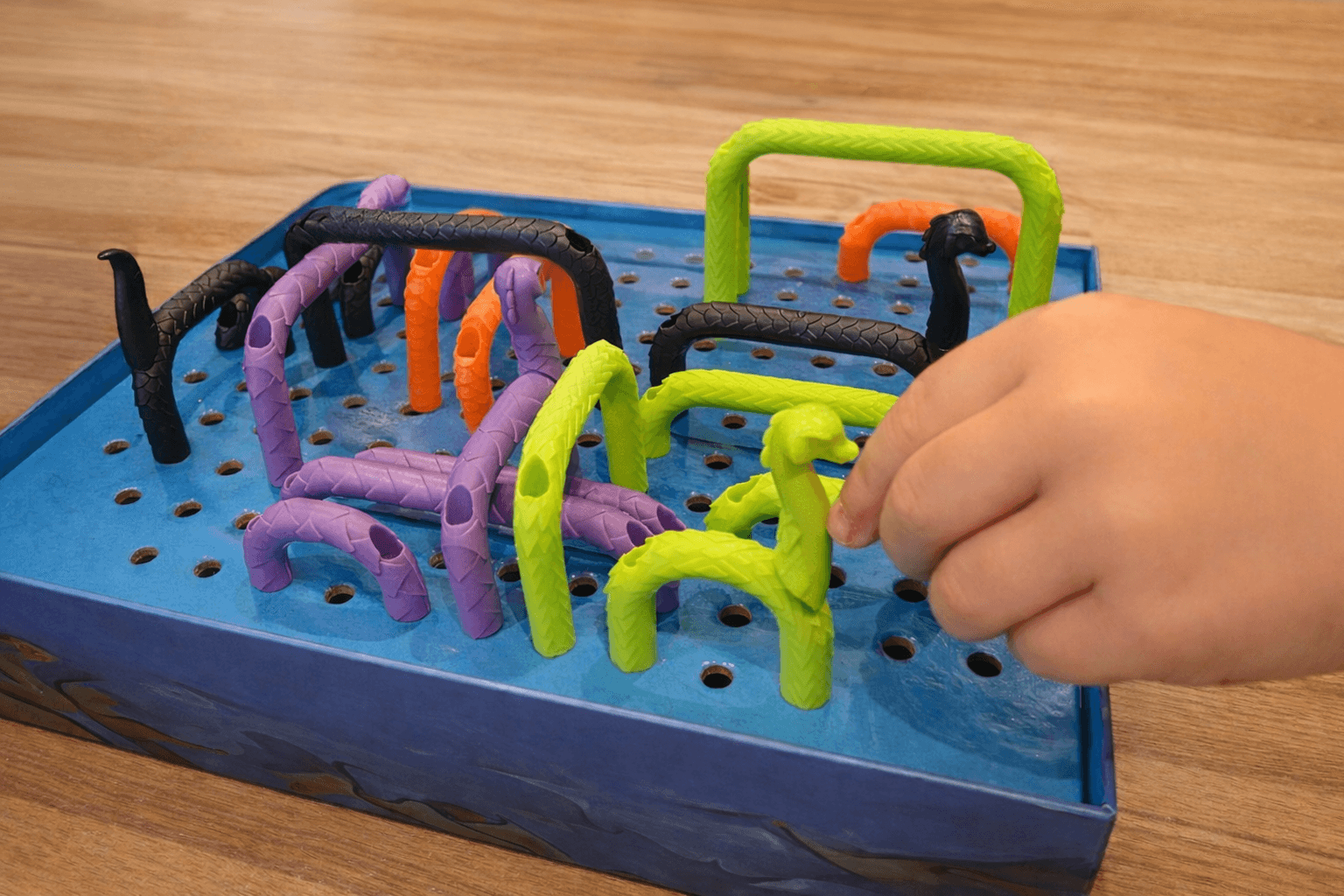
Blockness is a fun and eye-catching strategy game where players compete to build the longest dragon on the board. Designed for ages 8 and up, it’s easy to learn but full of clever choices.
Each player starts with a set of colorful dragon body segments and takes turns adding them to the board, trying to stretch their dragon as far as possible. The catch is that dragons can’t cross over each other, so space gets tight as the board fills up. Players need to think ahead and block their opponents while leaving room for their own dragon to grow.
The game ends when no more pieces can be played, and the player with the most segments on the board wins. With its 3D pieces and quick gameplay, Blockness is a great mix of spatial thinking, strategy, and family fun.
How to Introduce Strategy Games to Young Kids
When introducing strategy games to young kids, the key is to make the experience fun, inclusive, and low-pressure. Start with cooperative games where the whole family works together toward a shared goal. This helps children learn about teamwork, turn-taking, and decision-making without the stress of competition. For younger siblings, consider letting them “team up” with an adult or older child so they can participate and learn the rules at their own pace. Most importantly, keep the focus on having fun rather than winning. Celebrate small victories, creative moves, or teamwork moments to keep your child excited about playing and learning new games.